
Japaneseぶぶ漬け(ぶぶづけ)
Bubuzuke
Other spellings and namesぶぶ漬 / Obuzuke (おぶ漬け) / Bubu (ぶぶ) / Obū (おぶー) / Bubuzuke demo dō dosu (ぶぶ漬けでもどうどす)
In short
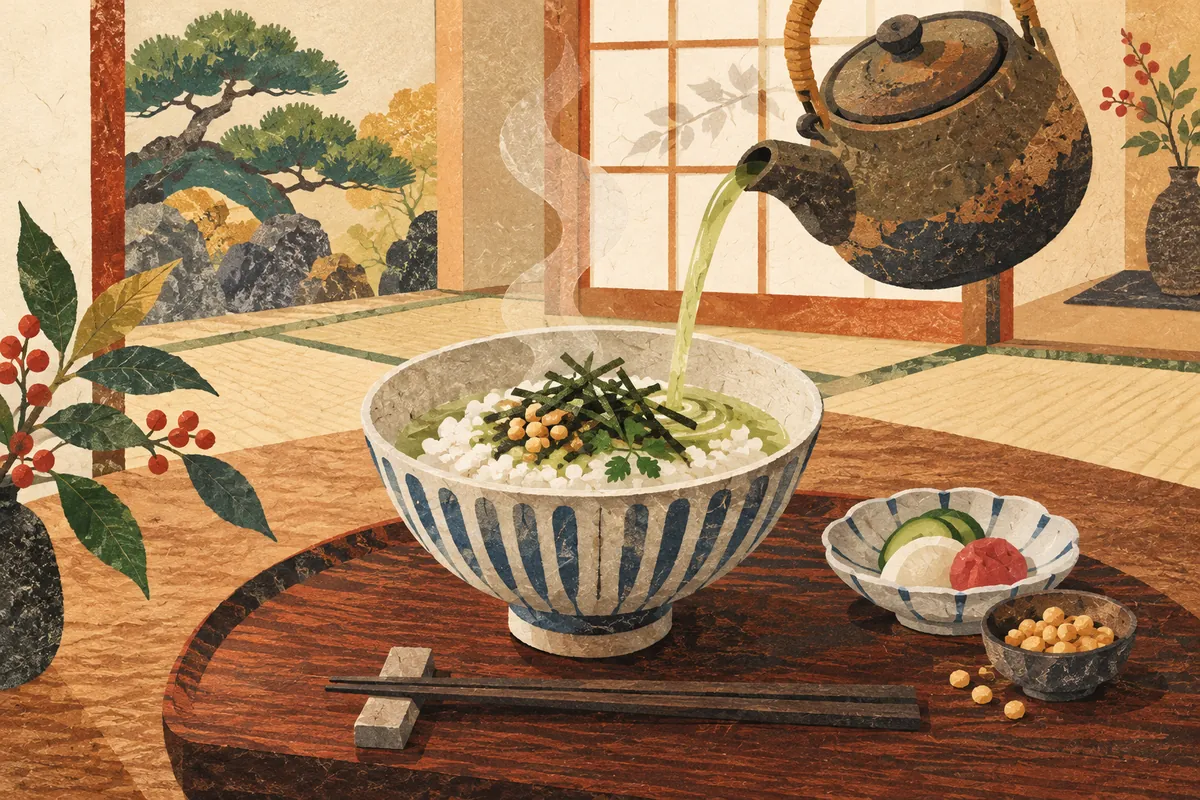
Bubuzuke (ぶぶ漬け) means ochazuke (rice with tea poured over it), and bubu (ぶぶ) is a word for tea or hot water. A well-known story says that if you are offered bubuzuke with "Bubuzuke demo dō dosu?" ("How about some bubuzuke?"), it is a signal that your host wants you to leave. However, one survey found that very few people had ever actually been told this, so it seems best to regard the story as a popular myth.Key points in 30 seconds
Bubuzuke means ochazuke; the term is used in Kyoto and elsewhere in Kansai
Bubu is a children's and women's word for tea or hot water, with examples from the Edo period
In Kyō-kotoba (Kyoto dialect), bubu means "tea"
A survey found that only about 1 in 1,000 people had actually experienced the "go home" signal
Bubuzuke means ochazuke
Bubuzuke (ぶぶ漬け) means chazuke-meshi, rice with tea poured over it, and is the term used in Kyoto and elsewhere in Kansai. Kyoto guides and explanations of Kyō-kotoba also introduce bubuzuke as ochazuke.
The tiny rice-cracker pellets used in chazuke are called bubu-arare (ぶぶあられ), meaning arare for bubuzuke, as used in Kyoto. As a word, bubuzuke also lives on in the names of dishes and ingredients.
Bubu means tea or hot water
In Kyō-kotoba, bubu (ブブ) means "tea," used as in ブブでも飲もか。 ("Bubu demo nomo ka"—"Shall we have some tea?").
Japanese dictionaries also describe bubu as a children's and women's word for tea or hot water, with examples in the 1721 jōruri play Onna Goroshi Abura no Jigoku and in Edo-period sharebon (humorous books about the pleasure quarters).
Bubu is an old word that appears in literature from the Edo period, and dictionaries list it as a children's and women's word not limited to any region. Rather than a word unique to Kyoto, it is better thought of as an old word that is still introduced as Kyō-kotoba in Kyoto today.
Why is it called bubu?
There are several explanations for the name. One is that bubu means piping-hot tea and comes from the sound of blowing on tea to cool it, while tea at just the right temperature is called obū (おぶー).
Another explanation is that in the kagai (geisha districts), having no work and being idle was called ocha o hiku ("grinding tea"), so people avoided the word ocha ("tea") and said bubu or obū instead, also calling ochazuke bubuzuke or obuzuke. There is no single established etymology; please take each of these as just one theory.
Words related to bubu
| Word | Meaning |
|---|---|
| ぶぶ (bubu) | Tea (Kyō-kotoba). Dictionaries list it as a children's and women's word for tea or hot water |
| おぶー (obū) | Tea at just the right temperature to drink, or a way of avoiding the word ocha in the kagai |
| ぶぶ漬け・おぶ漬け (bubuzuke, obuzuke) | Ochazuke |
| ぶぶあられ (bubu-arare) | Tiny rice-cracker pellets used in chazuke |
Is "Bubuzuke demo dō dosu?" a signal to go home?
A well-known story says that if you are visiting someone's home and are offered bubuzuke with ぶぶ漬けでもどうどす ("Bubuzuke demo dō dosu?"—"How about some bubuzuke?"), it is a signal that it is time for you to leave. It is sometimes presented as a ritual expression in which offering bubuzuke to a guest is a roundabout way of urging them to go home.
On the other hand, some people say they have never heard of anyone actually experiencing this, even in Kyoto, and the story is also called the "bubuzuke legend." A survey by a researcher born and raised in Kyoto (reported in 2025) found that only about 1 in 1,000 people connected with Kyoto had actually experienced bubuzuke meaning "please go home," and all of them were elderly. It has been pointed out that the image of Kyō-kotoba as "mean" probably includes things based on exaggeration.
Why it is best read as a popular myth
What is clear is that bubu is a word for tea or hot water, and that bubuzuke is the term used in Kyoto and elsewhere in Kansai for ochazuke. The story about a signal to go home is often told, but cases confirmed as actual experiences are very few, so it seems best to regard it as a popular myth.
Using this story to declare that "Kyoto people never say what they really mean" goes far beyond the facts that can be confirmed. There is also a view that offering bubuzuke is originally an expression of modest kindness, and how it is taken varies by person and situation. If you are offered some, it is enough to judge by how it is said and by the other person's manner.
Mini quiz for this entry
Check what you've read with 2 multiple-choice questions.
"Bubu demo nomo ka." In Kyō-kotoba (Kyoto dialect), what is the bubu in bubuzuke?
Which 1721 jōruri play does a Japanese dictionary cite as the earliest example of bubu, meaning tea or hot water?
Sources and verification
Content checked: October 11, 2026
Updated: October 11, 2026
References are in Japanese.