
Japanese悪王子町(あくおおじちょう)
Akuōji-chō
Other spellings and namesあくおうじちょう / Moto-Akuōji-chō (元悪王子町) / Akuōji Shrine (悪王子社)
In short
Akuōji-chō is a town name in Shimogyō Ward, read あくおおじちょう (Akuōji-chō) as a town name. Akuōji means "powerful," and the name is said to come from the Akuōji Shrine, which enshrined the fierce spirit (aramitama) of Susanoo-no-Mikoto. The shrine moved from southeast of Shijō-Karasuma to north of Gojō-Karasuma, and it now stands in the grounds of Yasaka Shrine.Key points in 30 seconds
Aku (悪) here means "powerful," not "bad"
The Akuōji Shrine moved from Moto-Akuōji-chō to Akuōji-chō and now stands in the grounds of Yasaka Shrine
The main hall of Yasaka Shrine's Akuōji Shrine was designated an Important Cultural Property of Japan in 2020
Sources differ on spelling the reading as あくおおじ or あくおうじ
Aku means "powerful"
Akuōji means "powerful," and the name Akuōji-chō comes from the Akuōji Shrine that once stood here, enshrining the fierce spirit (aramitama) of Susanoo-no-Mikoto.
Moto-Akuōji-chō is also one of the town names derived from temples and shrines, and aku (悪) here means "mighty" or "fierce."
From the characters alone, people tend to imagine an "evil prince" (悪 = evil, 王子 = prince), but the aku in this town name is not the aku of good and evil; it is used to express the strength of a deity's power. Among Kyoto's hard-to-read place names, this is one where people stumble not only over the reading but also over the meaning.
A shrine that moved again and again
The Akuōji Shrine first stood in what is now Moto-Akuōji-chō, southeast of Shijō-Karasuma. It was later moved to Akuōji-chō, north of Gojō-Karasuma, and after several more moves it now stands in the grounds of Yasaka Shrine. Two town names, Moto-Akuōji-chō and Akuōji-chō, remain in Shimogyō Ward.
Today's Akuōji Shrine is in the grounds of Yasaka Shrine, and a branch spirit (bunrei) of its deity is enshrined in Moto-Akuōji-chō. Even though the shrine itself moved to Higashiyama, its tie to its original site is still kept.
What is distinctive is that even after the shrine left, the name of each place where it stood remained as a town name, with moto (元, "former") added to mark the original site. By following the town names, you can trace the shrine's moves on a map.
The moves of the Akuōji Shrine
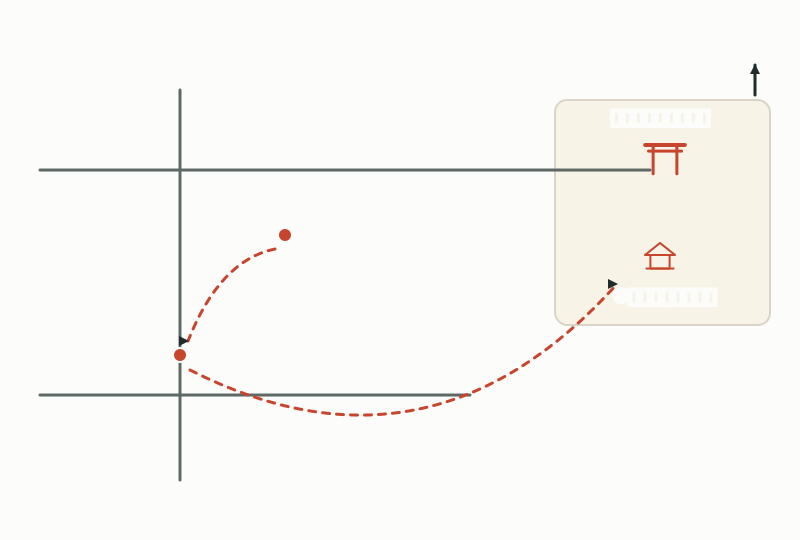
The moves of the Akuōji Shrine and the places that keep its name
| Order | Location | Present name / town name |
|---|---|---|
| First | Southeast of Shijō-Karasuma | Moto-Akuōji-chō (もとあくおうじちょう, Shimogyō Ward). A branch spirit is enshrined here |
| Next | North of Gojō-Karasuma | Akuōji-chō (あくおおじちょう, Shimogyō Ward) |
| Now, after several more moves | Grounds of Yasaka Shrine (Gion-machi Kitagawa, Higashiyama Ward) | Akuōji Shrine, Yasaka Shrine |
Now in the grounds of Yasaka Shrine
The "Main Hall of the Akuōji Shrine, Yasaka Shrine" was designated an Important Cultural Property of Japan on December 23, 2020 (Reiwa 2). It is built in the one-bay nagare-zukuri style (ikkensha nagare-zukuri) with a copper-sheet roof, and it dates from 1878, in the Meiji period.
The subsidiary shrines in the grounds of Yasaka Shrine follow the main hall in having added eaves (hisashi) and shelves, creating a distinctive shrine landscape. The shrine that gave the town its name is still worshipped at Yasaka Shrine, and the building itself is protected as a cultural property.
"Ōji" spelled おおじ or おうじ
In the kana readings of the town names, Akuōji-chō is given as あくおおじちょう and Moto-Akuōji-chō as もとあくおうじちょう. On the other hand, some write Akuōji-chō as あくおうじちょう, so the spelling differs from source to source.
The shrine at Yasaka Shrine is read あくおうじしゃ (Akuōji-sha). When writing or looking up the town name as an address, remember あくおおじちょう for the town; for the shrine's name, あくおうじしゃ. Both towns, incidentally, fall within the attendance zones of Rakuō Elementary School and Shimogyō Junior High School.
Walking it: from Shijō-Karasuma to Yasaka Shrine
To trace the shrine's journey, start at the Shijō-Karasuma intersection and head to Moto-Akuōji-chō on its southeast side, where a branch spirit of the Akuōji Shrine is enshrined. Next, go south along Karasuma-dōri to Akuōji-chō, north of Gojō-Karasuma. Both are near Karasuma-dōri between Shijō-dōri and Gojō-dōri, so it is fun to look for the names on the town-name plates on utility poles and buildings as you walk.
Finally, head east along Shijō-dōri to Yasaka Shrine. Visit the Akuōji Shrine in its grounds and you will meet the shrine that gave the town its name. For information on viewing and worship, check Yasaka Shrine's latest announcements.
Mini quiz for this entry
Check what you've read with 2 multiple-choice questions.
How does Kyoto City's town-name list read 悪王子町 in Shimogyō Ward?
In the town name 悪王子町 (Akuōji-chō), what is aku (悪) said to mean?
Sources and verification
Content checked: October 11, 2026
Updated: October 11, 2026
References are in Japanese.