
Japanese古都京都の文化財と17の構成資産
Historic Monuments of Ancient Kyoto: The 17 Component Sites
Other spellings and namesHistoric Monuments of Ancient Kyoto (Kyoto, Uji and Otsu Cities) / Kyoto World Heritage Site / 古都京都の文化財
In short
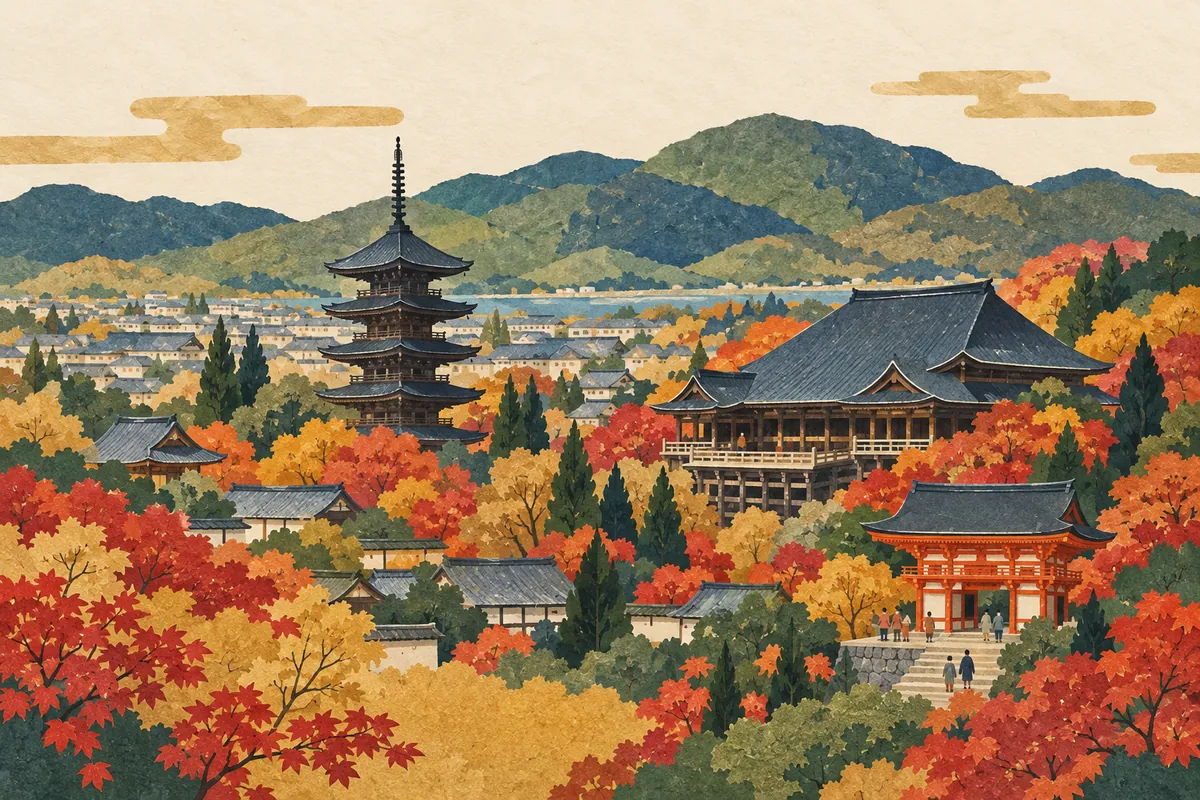
The World Cultural Heritage Site "Historic Monuments of Ancient Kyoto" is made up of 17 temples, shrines, and a castle—14 in Kyoto City, 2 in Uji City, and 1 in Ōtsu City, Shiga Prefecture—and was inscribed in 1994. It includes 198 buildings and 12 gardens, and all the sites except Nijō Castle are religious sites.Key points in 30 seconds
17 component sites (14 in Kyoto City, 2 in Uji City, 1 in Ōtsu City)
Inscribed in December 1994 as Japan's fifth World Heritage Site
Includes 198 buildings and 12 gardens
The Kyoto Imperial Palace, Katsura Imperial Villa, and Shugakuin Imperial Villa are not among the component sites
A World Heritage Site that is not a single building
The "Historic Monuments of Ancient Kyoto" consist of 17 temples, shrines, and a castle in Kyoto City, Uji City, and Ōtsu City.
The "Historic Monuments of Ancient Kyoto," made up of these 17 temples, shrines, and a castle, were inscribed in 1994.
Where are the 17 sites?
The component sites are 17 temples, shrines, and a castle spread across two prefectures and three cities: Kyoto City and Uji City in Kyoto Prefecture, and Ōtsu City in Shiga Prefecture. Of these, 14 are in Kyoto City.
Three are outside Kyoto City. Byōdō-in and Ujigami Shrine are in Uji City, and Enryaku-ji is in Sakamoto-honmachi, Ōtsu City, Shiga Prefecture. When people hear "Kyoto's World Heritage," they tend to think only of temples and shrines in the city, but the full set is complete only when you travel as far as Mount Hiei and Uji.
The 17 sites span three cities
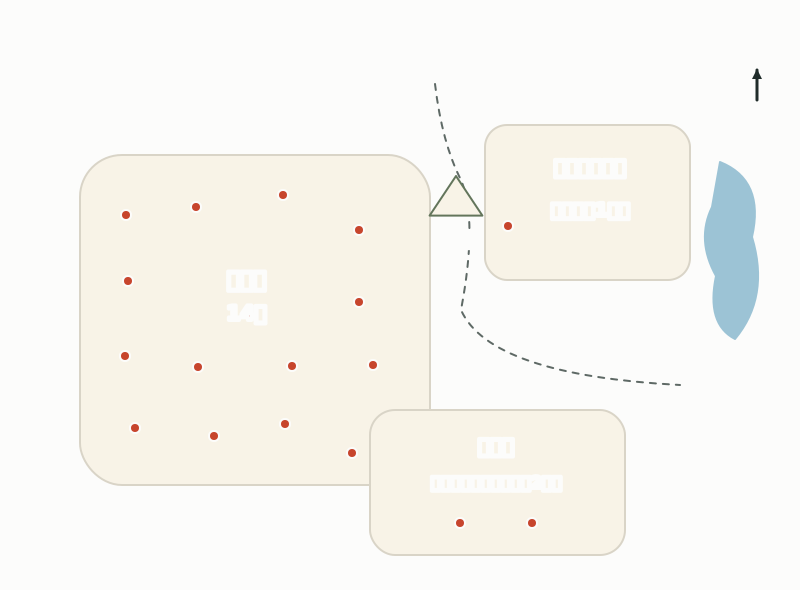
The 17 component sites of the Historic Monuments of Ancient Kyoto (by city)
| City | Component site (common name) |
|---|---|
| Kyoto City (14 sites) | Kamowakeikazuchi Shrine (Kamigamo Shrine) |
| Kyoto City | Kamomioya Shrine (Shimogamo Shrine) |
| Kyoto City | Kyōō Gokoku-ji (Tō-ji) |
| Kyoto City | Kiyomizu-dera |
| Kyoto City | Daigo-ji |
| Kyoto City | Ninna-ji |
| Kyoto City | Kōzan-ji |
| Kyoto City | Saihō-ji (Koke-dera, the Moss Temple) |
| Kyoto City | Tenryū-ji |
| Kyoto City | Rokuon-ji (Kinkaku-ji) |
| Kyoto City | Jishō-ji (Ginkaku-ji) |
| Kyoto City | Ryōan-ji |
| Kyoto City | Hongan-ji (Nishi Hongan-ji) |
| Kyoto City | Nijō Castle |
| Uji City (2 sites) | Byōdō-in |
| Uji City | Ujigami Shrine |
| Ōtsu City, Shiga Prefecture (1 site) | Enryaku-ji |
What was recognized as a "treasure of the world"?
The Statement of Outstanding Universal Value, compiled in 2012, recognizes that Kyoto was Japan's capital and cultural center from its founding in 794 until the mid-19th century, and that the sites illustrate the development of wooden architecture, especially religious architecture, and of the Japanese garden, which influenced landscape gardening around the world. The site was inscribed under criteria (ii) and (iv).
The 17 sites include 198 buildings and 12 gardens, most of them built or created between the 10th and 17th centuries. All except Nijō Castle—16 sites—are religious sites; 16 are owned by religious corporations, and one (Nijō Castle) is owned by Kyoto City.
Because many of the buildings have been repaired with strict respect for their original form, decoration, and materials, it was also valued that you can see, down to the details, what they looked like when they were built. On the other hand, fire is considered the greatest threat. The buildings are equipped with automatic fire alarms and fire-extinguishing systems, and in some cases the owners have formed their own fire brigades that work with the fire department.
The Historic Monuments of Ancient Kyoto in numbers
| Item | Number / area |
|---|---|
| Component sites | 17 (16 temples and shrines, 1 castle) |
| Buildings | 198 (38 National Treasures, 160 Important Cultural Properties) |
| Gardens | 12 (8 Special Places of Scenic Beauty, 4 Places of Scenic Beauty) |
| Total area of the property | 1,056 hectares |
| Surrounding buffer zone | 3,579 hectares |
Isn't the Imperial Palace included? A common misconception, and how the city is protected
The list of 17 sites does not include the Kyoto Imperial Palace, Katsura Imperial Villa, or Shugakuin Imperial Villa. All of them are historic sites that represent Kyoto, yet surprisingly few people know that they are not component sites of the World Heritage Site "Historic Monuments of Ancient Kyoto." Kyoto City considers that there are cultural assets other than the component sites whose value rivals that of World Heritage, and it has been studying and considering adding them to the inscription.
World Heritage is protected not only as buildings but together with the surrounding landscape. A buffer zone is set around each of the 17 sites, and these are in turn surrounded by historic environment adjustment areas where development is regulated. Kyoto City in 2007 and Uji City in 2000 are said to have introduced new landscape policies that tightened building height restrictions.
Mini quiz for this entry
Check what you've read with 2 multiple-choice questions.
How many temples, shrines, and castles make up the Historic Monuments of Ancient Kyoto World Heritage Site?
Which of these events happened in 1994?
Sources and verification
Content checked: October 11, 2026
Updated: October 11, 2026
References are in Japanese.