
Japanese蚕ノ社(かいこのやしろ)
Kaiko-no-yashiro
Other spellings and namesKaikonoyashiro / Kaiko-no-yashiro Station / Konoshima-ni-imasu-amaterumitama Shrine / Silkworm Shrine / 蚕ノ社 / 蚕の社
In short
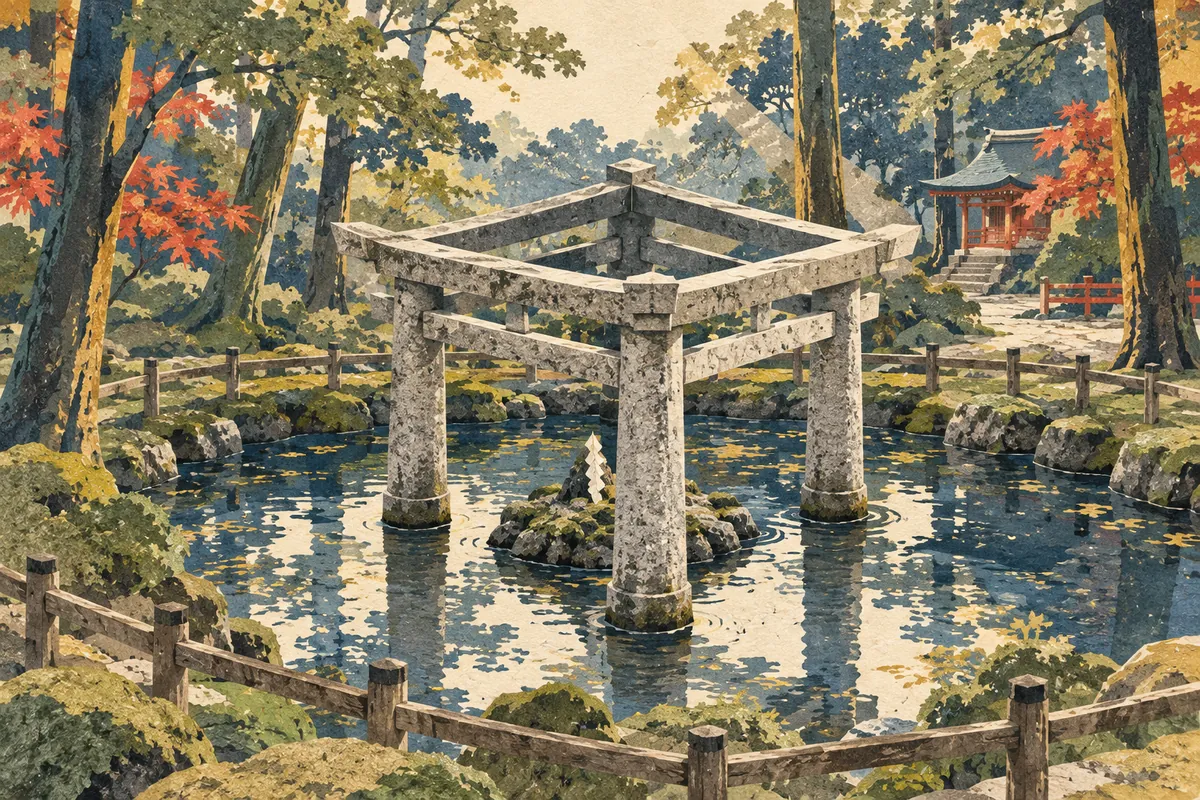
蚕ノ社 is read Kaiko-no-yashiro ("silkworm shrine"). It is the popular name of Konoshima-ni-imasu-amaterumitama Shrine in Uzumasa, Ukyō Ward, and is also a Randen station name. The name is said to come from the Kokai Shrine (養蚕神社) in its grounds, which enshrines the silkworm. It is an ancient shrine regarded as the clan shrine of the Hata clan, who excelled at sericulture and weaving, and it is also known for its Mihashira Torii, which combines three torii gates.Key points in 30 seconds
Read Kaiko-no-yashiro; Randen station number A6
Official name: 木嶋坐天照御魂神社 (Konoshima-ni-imasu-amaterumitama Jinja)
Said to be named after the Kokai Shrine (養蚕神社) in its grounds
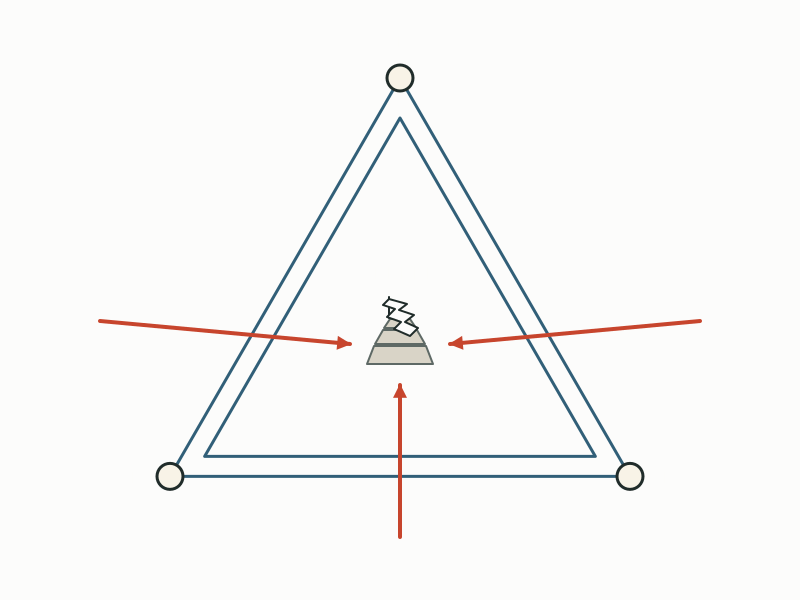
Has a Mihashira Torii, three torii combined in an equilateral triangle
The popular name of an ancient shrine in Uzumasa
蚕ノ社 (Kaiko-no-yashiro) is the popular name of 木嶋坐天照御魂神社 (Konoshima-ni-imasu-amaterumitama Jinja) in Uzumasa, Ukyō Ward. On Keifuku Electric Railroad's Arashiyama Main Line, there is a station of the same name, Kaiko-no-yashiro (A6), between Randen-Tenjingawa and Uzumasa-Kōryūji.
The spelling varies slightly. The Randen station name uses the katakana ノ (no), as in 蚕ノ社, while the shrine's popular name is sometimes written with the hiragana の, as in 蚕の社. Both are read Kaiko-no-yashiro. The official name is also sometimes written with the popular name added, as 木嶋坐天照御魂神社(蚕ノ社).
The shrine is located in Uzumasa-Morigahigashi-chō, Ukyō Ward, about a 5-minute walk from Uzumasa-Tenjingawa Station on the Tōzai subway line. By Randen, get off at Kaiko-no-yashiro (A6), the stop after Randen-Tenjingawa (A5).
Names related to 蚕ノ社 and their readings
| Name | Reading |
|---|---|
| 蚕ノ社 (station name and popular name) | Kaiko-no-yashiro (かいこのやしろ) |
| 木嶋坐天照御魂神社 (official name) | Konoshima-ni-imasu-amaterumitama Jinja (このしまにますあまてるみたまじんじゃ) |
| 養蚕神社 (subsidiary shrine) | Kokai Jinja (こかいじんじゃ) |
Named after the Kokai Shrine in its grounds
The name Kaiko-no-yashiro is said to come from the Kokai Shrine (養蚕神社) in its grounds, which enshrines the silkworm.
Popularly called Kaiko-no-yashiro, this shrine is an ancient one regarded as the clan shrine of the Hata clan, who had excellent skills in sericulture, weaving, and dyeing. The subsidiary shrine to the right of the main hall, Kokai Shrine (養蚕神社), enshrines the ancestral deity of weaving, and it is said to still be worshipped by silk-reeling businesses today.
As an ordinary word, 養蚕 (sericulture) is read yōsan, but this subsidiary shrine is read Kokai Jinja. So the popular name 蚕ノ社 and the subsidiary shrine 養蚕神社 place side by side two instances of 蚕 (silkworm), each read differently.
Uzumasa, land of the Hata clan
Uzumasa, where Kaiko-no-yashiro stands, is a place closely tied to the Hata clan. The place name Uzumasa is said to come from the Hata clan, thought to have come from the Korean Peninsula, presenting silk and other textiles to the court piled so high that they were granted the title Uzumasa, which was then written with the characters 太秦.
At nearby Ōsake Shrine, a figure regarded as the Hata clan's ancestor is enshrined, and Yuzuki no Kimi and Hata no Sake no Kimi are said to have later been enshrined there together as "deities of sericulture." Hachioka-dera (today's Kōryū-ji), built by Hata no Kawakatsu, is also nearby. Walking one station from Kaiko-no-yashiro to Uzumasa-Kōryūji Station lets you trace the memories of the Hata clan, linked with silk and weaving, all at once.
Northwest of Kaiko-no-yashiro is the Izumishikibu-chō site, where 22 pit dwellings from the middle Yayoi period to the middle Kofun period have been found. Korean-style pottery and early Sue ware were excavated from dwellings of the middle Kofun period, drawing attention as clues to the lives of the immigrants who came to this area. The nearby Amazuka Kofun (a keyhole-shaped burial mound from the first half of the 6th century) is also thought to be the tomb of a Hata clan chieftain.
The Mihashira Torii, three torii combined
West of the main hall stands the Mihashira Torii (three-pillared torii), which combines three torii in an equilateral triangle and is considered one of "Kyoto's three unusual torii." At the center of the three torii, a gohei (sacred paper wand) stands on piled stones. It is now fenced off and cannot be approached, but it is said that people could once worship it from three directions.
The shrine grounds are a historic site designated by Kyoto City. Excavations found remains from the late Yayoi to the early Kofun period (the Izumishikibu-chō site), along with the shrine's stone paving and a spring, and showed that spring water was channeled south through a ditch. This suggests that the shrine was deeply connected with water.
The Mihashira Torii seen from directly above
- Read Kaiko-no-yashiro; official name Konoshima-ni-imasu-amaterumitama Jinja
- The name is said to come from the Kokai Shrine (養蚕神社) in its grounds
- Randen's Kaiko-no-yashiro Station (A6), or about a 5-minute walk from Uzumasa-Tenjingawa subway station
- West of the main hall stands the Mihashira Torii, three torii combined in an equilateral triangle
Mini quiz for this entry
Check what you've read with 3 multiple-choice questions.
How is 蚕ノ社, the popular name of a shrine in Uzumasa that is also a Randen station name, read?
The Mihashira Torii (three-pillared torii) west of the main hall of Kaiko-no-yashiro (Konoshima-ni-imasu-amaterumitama Shrine) combines three torii in what shape?
The name Kaiko-no-yashiro ("silkworm shrine") is said to come from which shrine within the grounds of Konoshima-ni-imasu-amaterumitama Shrine?
Sources and verification
Content checked: October 11, 2026
Updated: October 11, 2026
References are in Japanese.