
National Treasure Buddhist Statues in Kyoto City
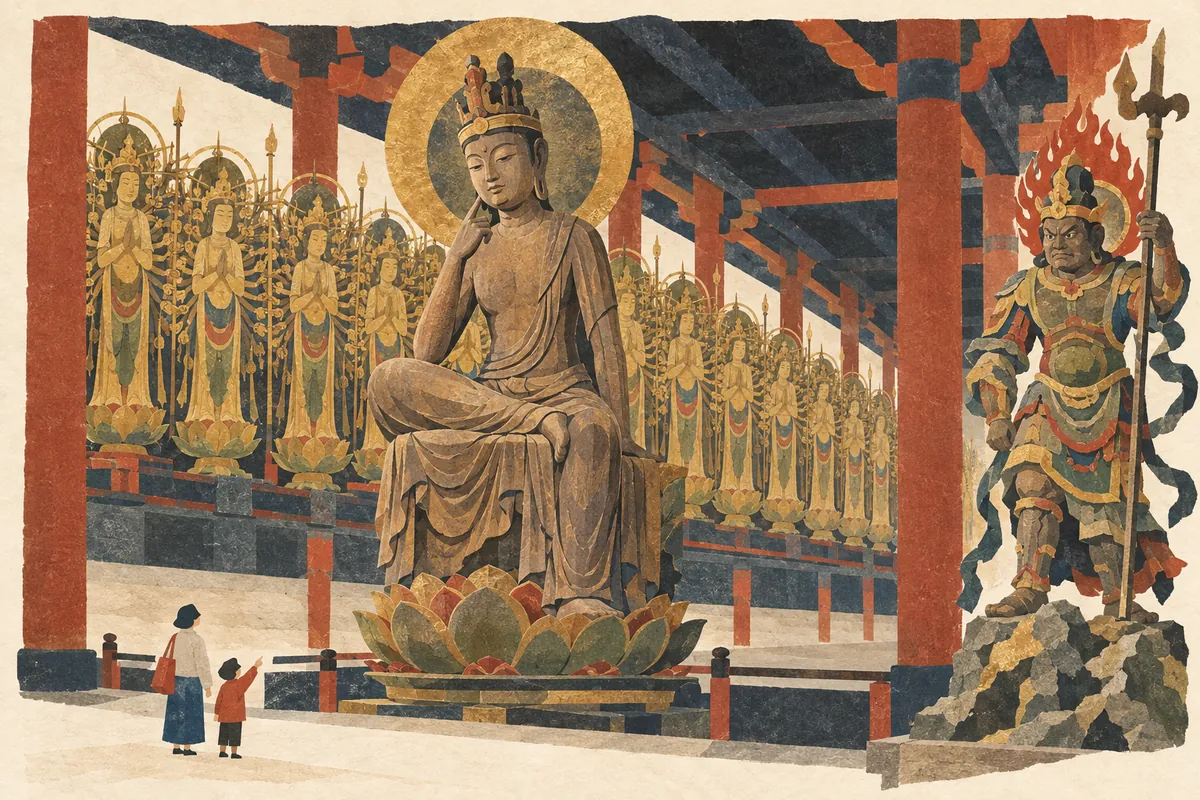
Key points
By ward, Ukyō has the most with 13, followed by Minami, home of Tō-ji, with 8
Tō-ji's Kōdō holds 4 National Treasure items made up of 15 statues: items and statues are counted separately
The 2 Asuka-period items are Kōryū-ji's Miroku statues; the 2 made in China are at Tō-ji and Seiryō-ji
Some can be seen at any time, while others are hidden Buddhas or are on deposit at a museum
Items and statues
National Treasure sculptures are counted in ken (items), and several statues are sometimes grouped together as 1 item. The standing Thousand-Armed Kannon of Sanjūsangen-dō are 1,001 statues counted as 1 item, the standing Twenty-Eight Attendants are 28 statues as 1 item, and Kōryū-ji's standing Twelve Divine Generals are 12 statues as 1 item. In Tō-ji's Kōdō, 4 items comprising 15 statues are National Treasures: the Five Great Wisdom Kings (5 statues), the seated Five Great Bodhisattvas (4 statues), the seated Bonten and half-seated Taishakuten (2 statues), and the standing Four Heavenly Kings (4 statues). Statues of Shinto deities and portrait statues are also included under "sculpture," and Tō-ji's seated Hachiman in the guise of a monk and seated goddesses (3 statues as 1 item) and the seated Kōbō Daishi by Kōshō are also National Treasures.
Number of National Treasure sculptures in Kyoto City (by temple)
- Tō-ji (Kyōōgokoku-ji)
- Kōryū-ji
- Myōhō-in (Sanjūsangen-dō)
- Jingo-ji
- Ninna-ji
- Daigo-ji
- Seiryō-ji
List (1): 15 items in Minami, Higashiyama, and Kamigyō wards
Besides the Kōdō's rittai mandara (three-dimensional mandala), Tō-ji's National Treasures are also in the Mieidō, the Treasure House, and the Chinju Hachimangū shrine. In Higashiyama Ward, all 4 items of Sanjūsangen-dō are together in the Hondō, and the principal image of Rokuharamitsu-ji, an Eleven-Headed Kannon, is a hidden Buddha unveiled only once every 12 years. The Six Kannon Bosatsu statues of Senbon Shakadō (including one standing Jizō Bosatsu) became a National Treasure in 2024 (Reiwa 6) and are the newest item in the city.
National Treasure sculptures in Kyoto City (1): 15 items in Minami, Higashiyama, and Kamigyō Wards
| Temple (ward) | Designated name (number of statues) | Period | Viewing |
|---|---|---|---|
| Tō-ji (Kyōōgokoku-ji), Minami Ward | Wooden statues of the Five Great Wisdom Kings (enshrined in the Kōdō), 5 statues | Heian | Always on view in the Kōdō (fee charged) |
| Tō-ji | Wooden seated statues of the Five Great Bodhisattvas (enshrined in the Kōdō), 4 statues | Heian | Always on view in the Kōdō (fee charged) |
| Tō-ji | Wooden seated Bonten and half-seated Taishakuten (enshrined in the Kōdō), 2 statues | Heian | Always on view in the Kōdō (fee charged) |
| Tō-ji | Wooden standing statues of the Four Heavenly Kings (enshrined in the Kōdō), 4 statues | Heian | Always on view in the Kōdō (fee charged) |
| Tō-ji | Wooden standing Tobatsu Bishamonten, 1 statue | Tang | During the spring and autumn openings of the Treasure House |
| Tō-ji | Wooden seated Kōbō Daishi (by Kōshō, enshrined in the Mieidō), 1 statue | Kamakura | Unveiled in the Mieidō during the Shōjinku service every morning from 6:00 and on the 21st of every month |
| Tō-ji | Wooden seated Fudō Myōō (enshrined in the Mieidō), 1 statue | Heian | Closed to the public (hidden Buddha) |
| Tō-ji | Wooden seated Hachiman in the guise of a monk and seated goddesses, 3 statues | Heian | Enshrined in the Chinju Hachimangū. Check with the temple about viewing |
| Myōhō-in (Sanjūsangen-dō), Higashiyama Ward | Wooden seated Thousand-Armed Kannon (by Tankei), 1 statue | Kamakura | Always on view in the Hondō (fee charged) |
| Myōhō-in (Sanjūsangen-dō) | Wooden standing Thousand-Armed Kannon, 1,001 statues | Heian to Kamakura | Always on view in the Hondō (fee charged) |
| Myōhō-in (Sanjūsangen-dō) | Wooden standing statues of the Twenty-Eight Attendants, 28 statues | Kamakura | Always on view in the Hondō (fee charged) |
| Myōhō-in (Sanjūsangen-dō) | Wooden statues of the Wind God and Thunder God, 2 statues | Kamakura | Always on view in the Hondō (fee charged) |
| Rokuharamitsu-ji, Higashiyama Ward | Wooden standing Eleven-Headed Kannon (enshrined in the Hondō), 1 statue | Heian | Hidden Buddha. Unveiled in the Year of the Dragon (once every 12 years) |
| Hōshō-ji, Higashiyama Ward | Wooden standing Thousand-Armed Kannon, 1 statue | Heian | Enshrined in the Hondō. Check with the temple about viewing |
| Daihōon-ji (Senbon Shakadō), Kamigyō Ward | Wooden statues of the Six Kannon Bosatsu and a wooden standing Jizō Bosatsu, 7 statues (6 Kannon, 1 Jizō) | Kamakura | Always on display in the Reihōden treasure house (fee charged) |
List (2): 14 items in Ukyō and Nishikyō wards
Ukyō Ward accounts for 13 of the 14 items, and Kōryū-ji's 6 include the Hōkan Miroku (Crowned Miroku), called "National Treasure No. 1." The standing Shaka Nyorai of Seiryō-ji is a statue Chōnen brought back from China, and the objects placed inside the statue are also National Treasures.
National Treasure sculptures in Kyoto City (2): 14 items in Ukyō and Nishikyō Wards
| Temple (ward) | Designated name (number of statues) | Period | Viewing |
|---|---|---|---|
| Kōryū-ji, Ukyō Ward | Wooden Miroku Bosatsu in half-lotus contemplation (Hōkan Miroku), 1 statue | Asuka | Always on view in the Reihōden treasure house |
| Kōryū-ji | Wooden Miroku Bosatsu in half-lotus contemplation (Hōkei Miroku, or Naki Miroku), 1 statue | Asuka | In the Reihōden and elsewhere. Check with the temple about viewing of each statue |
| Kōryū-ji | Wooden seated Amida Nyorai (enshrined in the Kōdō), 1 statue | Heian | In the Reihōden and elsewhere. Check with the temple about viewing of each statue |
| Kōryū-ji | Wooden standing Fukūkenjaku Kannon, 1 statue | Heian | In the Reihōden and elsewhere. Check with the temple about viewing of each statue |
| Kōryū-ji | Wooden standing Thousand-Armed Kannon, 1 statue | Heian | In the Reihōden and elsewhere. Check with the temple about viewing of each statue |
| Kōryū-ji | Wooden standing statues of the Twelve Divine Generals, 12 statues | Heian | In the Reihōden and elsewhere. Check with the temple about viewing of each statue |
| Jingo-ji, Ukyō Ward | Wooden standing Yakushi Nyorai (enshrined in the Hondō), 1 statue | Heian | Enshrined in the Kondō. Check with the temple about viewing |
| Jingo-ji | Wooden seated statues of the Five Great Kokūzō Bosatsu (enshrined in the Tahōtō), 5 statues | Heian | During the spring and autumn unveilings at the Tahōtō (in autumn, the three-day weekend in October) |
| Ninna-ji, Ukyō Ward | Wooden Amida Nyorai with two attendants (former principal image of the Kondō), 3 statues | Heian | During the spring and autumn treasure exhibitions at the Reihōkan |
| Ninna-ji | Wooden seated Yakushi Nyorai (by Ensei and Chōen, former principal image of the Kitain), 1 statue | Heian | Enshrined in the Reimeiden. Check with the temple about viewing |
| Seiryō-ji, Ukyō Ward | Wooden standing Shaka Nyorai (enshrined in the Hondō), 1 statue, with objects placed inside the statue | Northern Song | In the Hondō. Shown on the 8th of every month and in April, May, October, and November |
| Seiryō-ji | Wooden seated Amida Nyorai with two attendants (former principal image of Seika-ji), 3 statues | Heian | During the Reihōkan openings in April, May, October, and November |
| Hōkongō-in, Ukyō Ward | Wooden seated Amida Nyorai (by Ingaku), 1 statue | Heian | Enshrined in the Hondō. Check with the temple for viewing days |
| Hōbodai-in Gantoku-ji, Nishikyō Ward | Wooden bodhisattva in half-lotus position (said to be Nyoirin Kannon), 1 statue | Heian | Principal image. Check with the temple about viewing |
List (3): 6 items in Fushimi, Yamashina, and Sakyō wards
The seated Five Wisdom Buddhas of Anshō-ji in Yamashina Ward became a National Treasure in 2019 (Reiwa 1).
National Treasure sculptures in Kyoto City (3): 6 items in Fushimi, Yamashina, and Sakyō Wards
| Temple (ward) | Designated name (number of statues) | Period | Viewing |
|---|---|---|---|
| Daigo-ji, Fushimi Ward | Wooden Yakushi Nyorai with two attendants (principal image of the Kami-Daigo Yakushidō), 3 statues | Heian | In the Heisei-kan of the Reihōkan. Shown during the spring and autumn special exhibitions |
| Daigo-ji | Wooden standing Kokūzō Bosatsu, 1 statue | Heian | Check with the temple |
| Hōkai-ji, Fushimi Ward | Wooden seated Amida Nyorai (enshrined in the Amidadō), 1 statue | Heian | Always on view in the Amidadō (fee charged) |
| Anshō-ji, Yamashina Ward | Wooden seated statues of the Five Wisdom Buddhas, 5 statues | Heian | On deposit at the Kyoto National Museum. Display depends on the period |
| Kurama-dera, Sakyō Ward | Wooden standing Bishamonten, Kichijōten, and Zennishi Dōji, 3 statues | Heian | Always on view on opening days at the Reihōden (Kuramayama Museum) (fee charged) |
| Sanzen-in, Sakyō Ward | Wooden seated Amida Nyorai with two attendants (enshrined in the Amidadō of the Ōjō Gokuraku-in), 3 statues | Heian | Always on view in the Ōjō Gokuraku-in (fee charged) |
Breakdown by period
Dividing the 35 items designated through October 2026 by period, the Heian period accounts for most, with 25 items, followed by the Kamakura period with 5, the Heian to Kamakura period with 1, and the Asuka period with 2. The 2 Asuka-period items are Kōryū-ji's two Miroku Bosatsu in half-lotus contemplation, the oldest National Treasure sculptures in the city. The remaining 2 items were made in China: Tō-ji's standing Tobatsu Bishamonten in the Tang dynasty and Seiryō-ji's standing Shaka Nyorai in the Northern Song.
Always on view, special openings, and deposits
- Sanjūsangen-dō (Higashiyama Ward, about a 7-minute walk from Keihan Shichijō Station): 600 yen for adults, 400 yen for junior high and high school students, and 300 yen for elementary school students (as of October 2026).
- Tō-ji (Minami Ward): in the regular season, the Kondō and Kōdō cost 800 yen for adults, 400 yen for high school students, and 300 yen for junior high school students and younger (while the first floor of the five-story pagoda is open, a combined ticket with the pagoda costs 1,200 yen for adults, 700 yen for high school students, and 500 yen for junior high school students and younger). The Treasure House opens in spring (March 20–May 25) and autumn (September 20–November 25).
- Hōkai-ji (Hino, Fushimi Ward): viewing inside the Amidadō is 500 yen for adults, 400 yen for high school students, and 200 yen for junior high and elementary school students.
- Sanzen-in (Ōhara, Sakyō Ward): 700 yen for adults, 400 yen for junior high and high school students, and 150 yen for elementary school students and younger.
- Kurama-dera (Kurama, Sakyō Ward): admission to the Reihōden is 200 yen (plus a separate 500 yen aizanhi mountain-conservation fee). Closed on Tuesdays and in winter (December 12 to the end of February).
- Kōryū-ji's Reihōden (Uzumasa, Ukyō Ward) is open 9:00–17:00 (until 16:30 from December to February) with no closing days, and the Reihōden of Senbon Shakadō is a permanent display with a fee. Check the fees with each temple.
- Special openings and deposits: Ninna-ji's Reihōkan autumn 2026 treasure exhibition (October 3–November 29) costs 500 yen for adults and is free for high school students and younger. The seated Five Wisdom Buddhas of Anshō-ji are sometimes shown in the Kyoto National Museum's regular exhibition, but from October 6 to November 29, 2026, the regular exhibition is suspended because of a special exhibition.
Mini quiz for this entry
About how many National Treasure statues of the Thousand-Armed Kannon stand in Sanjūsangendō?
Tō-ji's National Treasure standing statue of Tobatsu Bishamonten is a statue from which country and period?
The seated Five Wisdom Buddhas (5 statues), which became a National Treasure in 2019 (Reiwa 1) and are now on deposit at the Kyoto National Museum, belong to which temple?
Sources and verification
Content checked: October 22, 2026
Updated: October 22, 2026
References are in Japanese.
- 京都市文化財保護課「京都市内文化財件数」(令和8年4月1日現在)
- 文化庁「国指定文化財等データベース」(国宝・重要文化財(美術工芸品)、彫刻、国宝、所有者住所 京都府で検索)
- 文化庁 国指定文化財等データベース「木造千手観音立像(蓮華王院本堂安置)」
- 文化庁 国指定文化財等データベース「木造兜跋毘沙門天立像(毘沙門堂安置)」
- 文化庁 国指定文化財等データベース「木造五智如来坐像」(安祥寺)
- 文化庁 国指定文化財等データベース「木造弥勒菩薩半跏像」(広隆寺)
- 文化庁 国指定文化財等データベース「木造釈迦如来立像・像内納入品一切」(清凉寺)
- 文化庁 国指定文化財等データベース「木造六観音菩薩像」(大報恩寺)
- 文化庁 国指定文化財等データベース「木造僧形八幡神坐像・女神坐像」(教王護国寺)
- 文化庁 国指定文化財等データベース「木造弘法大師坐像〈康勝作〉」(教王護国寺)
- 東寺「拝観のご案内」
- 東寺「宝物館」
- 東寺「よくあるご質問」
- 東寺「御影堂」
- 東寺「境内のご案内(鎮守八幡宮ほか)」
- 三十三間堂「拝観案内」
- 三十三間堂「仏像」
- 六波羅蜜寺「本尊 十一面観音立像」
- 仁和寺「仏像」
- 仁和寺「境内のご案内」
- 仁和寺「霊宝館 秋季名宝展(令和8年)」
- 醍醐寺「霊宝館」
- 醍醐寺「2026年 秋期特別展」
- 法界寺「参拝のご案内」
- 鞍馬寺「霊宝殿」
- 鞍馬寺「入山のご案内」
- 三千院「文化財」
- 京都国立博物館「安祥寺 五智如来坐像のお知らせ」(2019年)
- 京都国立博物館「名品ギャラリー(平常展示)2026年10月」
- 京都市観光協会 京都観光Navi「広隆寺」
- 京都市観光協会 京都観光Navi「広隆寺霊宝殿」
- 京都市観光協会 京都観光Navi「清凉寺」
- 京都市観光協会 京都観光Navi「霊宝館 秋期特別公開【清凉寺】」
- 京都市観光協会 京都観光Navi「五大虚空蔵菩薩像御開帳【神護寺】」
- 京都市観光協会 京都観光Navi「三千院」
- 京都市観光協会 京都観光Navi「法界寺」
- 京都市観光協会 京都観光Navi「大報恩寺(千本釈迦堂)」
- 京都市観光協会 京都観光Navi「法性寺」
- 京都市観光協会 京都観光Navi「宝菩提院願徳寺」
- 京都市観光協会 京都観光Navi「法金剛院」