
Japanese瀬田川・宇治川・淀川へ続く水の道
The Waterway from the Seta River to the Uji and Yodo Rivers
Other spellings and namesUji River / Yodo River / Katsura River / Kizu River
In short
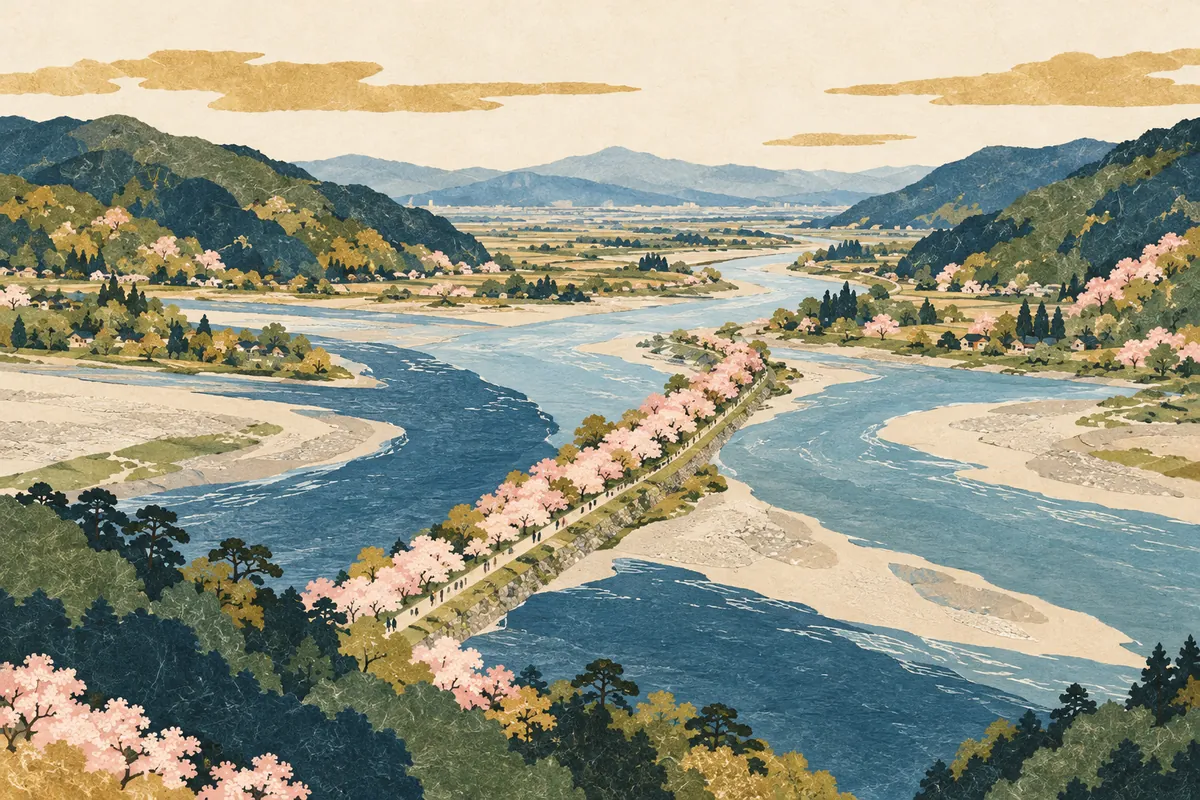
Water flowing out of Lake Biwa changes its name to the Seta River and then the Uji River, and near the border between Kyoto and Osaka prefectures it joins the Katsura and Kizu rivers to become the Yodo River. Under the River Act, the Seta and Uji rivers are also treated as part of the "Yodo River," and the different names reflect the land and history of the basin.Key points in 30 seconds
The Seta River is the only natural river flowing out of Lake Biwa
Lake Biwa's water flows from the Seta River into the Uji River; under the River Act, both are the "Yodo River"
The Katsura, Uji, and Kizu rivers meet near the Kyoto–Osaka prefectural border
From Lake Biwa to the Uji River
Water flowing out of Lake Biwa becomes the Seta River, and once it enters Kyoto Prefecture it is called the Uji River.
The three rivers—the Katsura, Uji, and Kizu—meet in southern Kyoto Prefecture and flow into Osaka Bay as the Yodo River.
Only one river flows out of Lake Biwa?
117 first-class rivers, such as the Yasu, Ane, and Ado rivers, flow directly into Lake Biwa, but the only river that flows out of it naturally is the Seta River. So during heavy rain, the incoming water is first stored in the lake.
The amount of outflow is regulated by the Seta River Weir (Seta-gawa Araizeki). The first one, the Nangō Weir, was completed in 1905 (Meiji 38) with 32 gates; it was opened and closed by raising and lowering square timbers by hand, and opening it fully took about 24 hours. The present weir was completed in 1961 (Shōwa 36) and regulates the water level of Lake Biwa as well as floods and droughts downstream.
The Lake Biwa Canal, completed in 1890 (Meiji 23), also carries Lake Biwa's water to Kyoto and is still a source of tap water today. Since the canal is a man-made waterway, it helps to remember that "the only natural river outlet is the Seta River."
Legally, both the Seta and the Uji are the "Yodo River"
Water leaving Lake Biwa changes its name to the Seta River and then the Uji River, and after joining the Katsura and Kizu rivers it becomes the Yodo River. Under the River Act, however, the Seta and Uji rivers are defined as part of the "Yodo River." Calling it the Seta River in Shiga Prefecture and the Uji River once it enters Kyoto Prefecture is a matter of local naming.
The Yodo River basin spans six prefectures—Osaka, Hyōgo, Kyoto, Shiga, Nara, and Mie—covers 8,240 km², and has a main stream about 75 km long. After the confluence, it flows southwest across the Osaka Plain, branching off the Kanzaki River and the Ōkawa (the old Yodo River) along the way before emptying into Osaka Bay.
From Lake Biwa to the Yodo River: a diagram of the three-river confluence
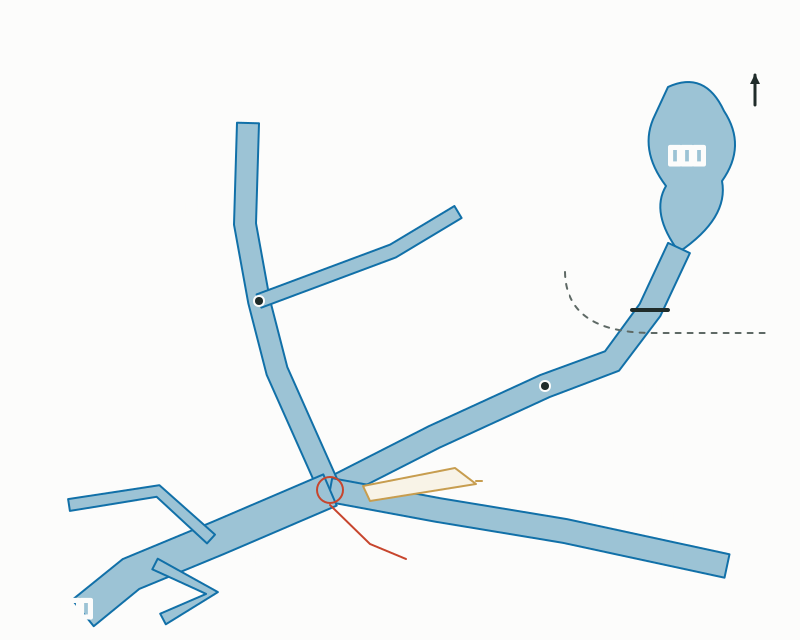
Comparing the lengths of the rivers that meet
Of the rivers that meet to form the Yodo River, the longest is the Katsura River. The Katsura, which flows from around Hirogawara in Sakyō Ward, Kyoto City, is 114 km long, and the Kizu River, which flows from the Nunobiki Mountains on the Mie–Nara border, is 99 km long; both are longer than the main stream of the Yodo River. The Kamo River, which flows through Kyoto City, is about 27 km long and joins the Katsura River near Shimotoba.
Lengths of the main rivers in the Yodo River system
- Katsura River
- Kizu River
- Yodo River (including the Seta and Uji rivers)
- Kamo River
- Seta River
Going to see the confluence of the three rivers
The three rivers meet around the border between Yawata City and Ōyamazaki Town in Kyoto Prefecture. On the Sewari-tei levee, which separates the Uji and Kizu rivers, a row of Somei-Yoshino cherry trees stretches for about 1.4 km, and it is part of the national Yodogawa River Park. It is about a 10-minute walk north from Iwashimizu-hachimangū Station on the Keihan line.
The nearby Sakura Deaikan has an observation tower about 25 m above the ground, offering a 360-degree view of the area where the three rivers meet. It gets crowded during the spring cherry blossom season, and the tower's fees and conditions of use may change, so it is a good idea to check the Yodogawa River Park information before you go.
Mini quiz for this entry
Check what you've read with 2 multiple-choice questions.
After leaving Lake Biwa as the Seta River, what is the river called in Kyoto Prefecture?
Which three rivers merge before flowing onward as the Yodo River?
Sources and verification
Content checked: October 11, 2026
Updated: October 11, 2026
References are in Japanese.