
The Shinsengumi and Mibu
Other spellings and namesMibu Rōshigumi
Key points
The March theory rests on the signboard on the Yagi family's gatepost; the August theory, on documents saying the name was granted by the court liaison officials for service in the coup of the 18th day of the 8th month
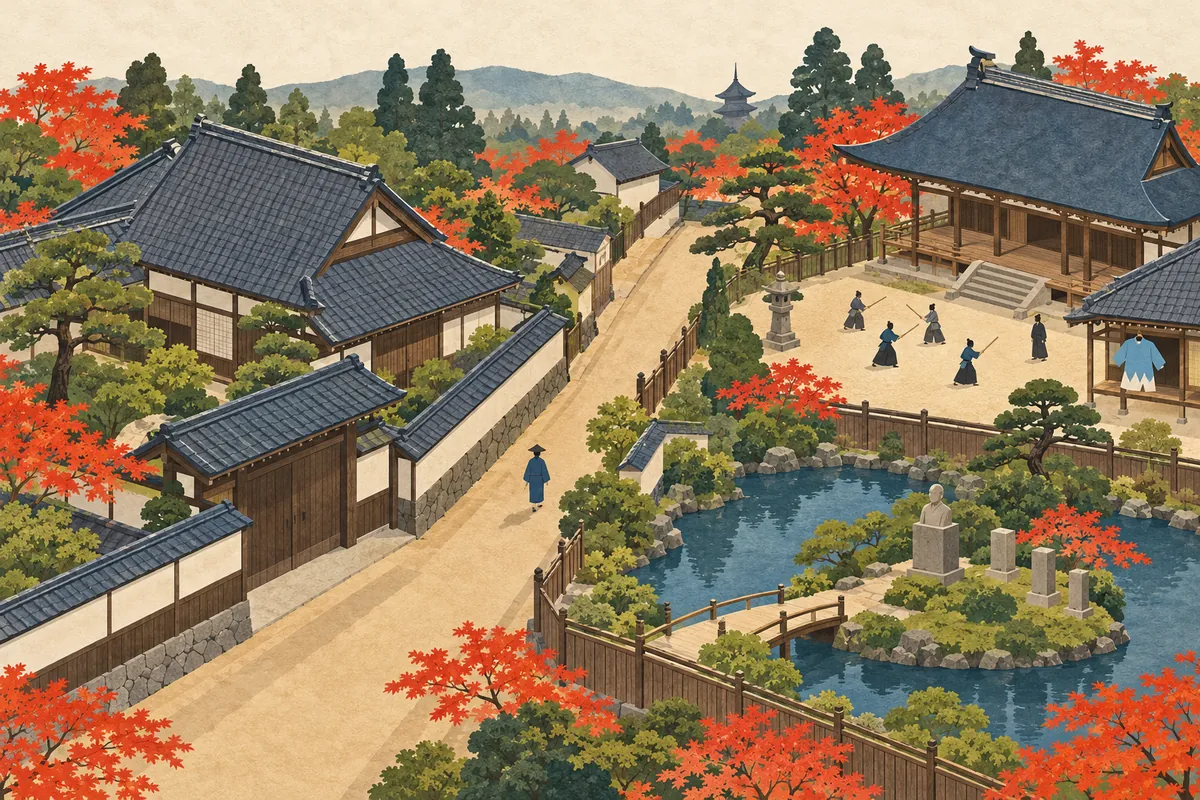
The Yagi Residence, with its late Edo gatehouse and main house, is a Kyoto City designated tangible cultural property
The Mibu Mound at Mibu-dera has a bust of Kondō Isami and the graves of 11 members including Serizawa Kamo
From Mibu the headquarters moved to Nishi Hongan-ji and then to Fudōdō village, where the unit stayed only about half a year
The Rōshigumi come to Kyoto and lodge in Mibu
In 1863 (Bunkyū 3), the Edo shogunate gathered masterless samurai (rōnin) to form the "Rōshigumi." Its stated purpose was to guard the shogun on his visit to Kyoto; 234 men answered a call for 50, so it was also called the "Three Hundred," and among them were Kondō Isami, Hijikata Toshizō, and Serizawa Kamo. The party entered Kyoto on February 23 and lodged in the village of Mibu, west of the city, split among the homes of country samurai (gōshi) such as the Yagi and Maekawa families.
Kiyokawa Hachirō, who had proposed the group, gathered its leading members at Shintoku-ji in Mibu and declared in a speech that they would carry out "revere the emperor, expel the barbarians" (sonnō jōi) here in Kyoto. The shogunate recalled the Rōshigumi to Edo, but Kondō, Serizawa, and others remained in Kyoto, were placed under Matsudaira Katamori, lord of the Aizu domain and Kyoto Protector, called themselves the "Mibu Rōshigumi" or "Rōshigumi in the custody of the Aizu domain," and took up patrolling the city.
The name "Shinsengumi" and the killing of Serizawa Kamo
There are two theories on when the name Shinsengumi began. The March theory comes from the Yagi family, who hold that the group's birthday is March 16, 1863 (Bunkyū 3), when a nameplate reading "Lodging of the Shinsengumi, under Matsudaira Higo-no-kami" was hung on the gatepost; Mibu-dera also dates the founding to March 1863. The August theory comes from historical documents: the name was granted by the court's liaison officials (buke tensō) in recognition of their service when they turned out at the Aizu domain's request in the coup of August 18, 1863, and until then they had been called the Mibu Rōshigumi and the like.
Late on the night of September 18 of the same year, in the inner room of the Yagi house, the commander Serizawa Kamo, Hirayama Gorō, and two others were cut down. They were killed by Kondō Isami, Hijikata Toshizō, and others.
Historic sites in Mibu
Along Bōjō-dōri, which runs north–south past the front (main) gate of Mibu-dera, the Yagi and Maekawa residences that served as headquarters still stand. The Yagi Residence's gatehouse (nagayamon) dates from 1804 (Bunka 1) and its main house from 1809 (Bunka 6); as a surviving site of the late Edo period it became a Kyoto City designated tangible cultural property on June 1, 1983 (Shōwa 58).
The grounds of Mibu-dera were used as the members' training ground, where they drilled in martial arts and artillery. There are also anecdotes of Okita Sōji playing with children in the grounds and of members watching Mibu Kyōgen. Mibu Kyōgen is a masked pantomime begun by the priest Engaku, and temple tradition dates its start to a service he held in 1300 (Shōan 2). It became a national Important Intangible Folk Cultural Property in 1976 (Shōwa 51), and performances are held in spring, autumn, and at Setsubun.
Shinsengumi Sites around Mibu
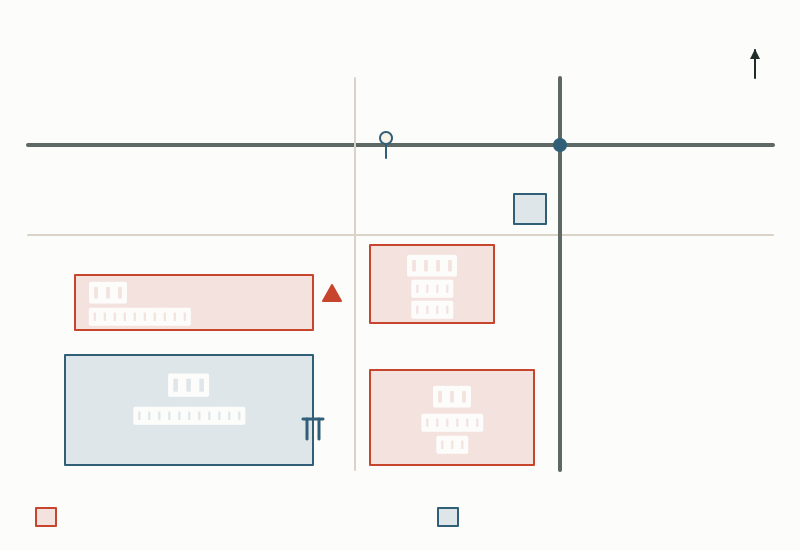
Shinsengumi Sites in Mibu (as of October 2026)
| Name | What is there | Opening and fees |
|---|---|---|
| Yagi Residence (24 Mibu Naginomiya-chō, Nakagyō Ward) | The first headquarters: the inner room where Serizawa Kamo was assassinated and the lintel (kamoi) with marks said to be sword cuts from that night | 9:00–17:00 (reception until 16:00). 1,100 yen for adults and junior high and high school students (guided explanation with matcha and a tonsho-mochi rice cake), 800 yen for children. Tour only: 600 yen for junior high and high school students, 300 yen for children |
| Former Maekawa Residence (49 Mibu Kaya Gosho-chō, Nakagyō Ward) | One of the headquarters. Furutaka Shuntarō is said to have been tortured in its storehouse, the start of the Ikedaya Incident, and Yamanami Keisuke to have committed seppuku here | Main house closed. The east storehouse (admission fee) and the shop in the earthen-floored entrance are open on weekends and holidays |
| Mibu-dera (31 Mibu Naginomiya-chō, Nakagyō Ward) | The Mibu Mound with the members' graves, and the history room in the basement of the Amidadō | Grounds free. The Mibu Mound and history room require the Amidadō admission (400 yen for adults, 200 yen for elementary, junior high, and high school students, 9:00–16:00) |
| Shintoku-ji (48 Mibu Kaya Gosho-chō, Nakagyō Ward) | The temple where Kiyokawa Hachirō of the Rōshigumi made his speech | Normally closed. Opened specially for the first time in the summer 2023 "Kyoto Summer Trip" program |
| Kōen-ji (37 Shijō Ōmiya-chō, Ayanokōji Ōmiya nishi-iru, Shimogyō Ward) | A Jōdo-sect temple that had the Shinsengumi's stables near its gate. Members were buried here through the connection between the priest Ryōyo and Yamanami Keisuke | Graves can be visited (9:00–17:00) |
The bust and graves at the Mibu Mound
The Mibu Mound (Mibuzuka) is the burial place of Shinsengumi members, on an island in the pond on the east side of the grounds of Mibu-dera. It holds a bust of Kondō Isami and a memorial for his hair, the graves of Serizawa Kamo and Hirayama Gorō, the grave of the accountant Kawai Kisaburō, and a collective grave for seven members including those who died in the Ikedaya Incident; 11 members are enshrined in all. The bust was erected in 1971 (Shōwa 46) by the actor Ueda Kichijirō, and a memorial service is held in front of it every year on July 16, the date Mibu-dera observes as the day of the Ikedaya Incident.
The headquarters at Nishi Hongan-ji and Fudōdō village
In 1865 (Keiō 1), when membership passed 130 and Mibu became too cramped, the headquarters moved to the area around the drum tower and the north assembly hall of Nishi Hongan-ji. The temple tried to prevent the move but was overruled, and the members fired cannon in the grounds, among other things.
On June 15, 1867 (Keiō 3), they moved to a newly built headquarters on land provided by Nishi Hongan-ji in the village of Fudōdō, Kadono district (around today's Aburanokōji-dōri Shiokōji, Shimogyō Ward). With the restoration of imperial rule in December of that year, however, they left after only about six months, and after defeat at the Battle of Toba-Fushimi in January of the following year they withdrew to the Kantō region. The exact location of this headquarters is not known; the landmarks are the monument "Near Here: Site of the Shinsengumi's Last Residence in Kyoto," erected in 2009 at Nishinotōin-dōri Shiokōji-sagaru, Shimogyō Ward, and a monument in front of a hotel at Aburanokōji-dōri Shiokōji-sagaru.
The "birthplace of the Shinsengumi" stone markers
Two stone markers stand in front of the Yagi Residence: a slender marker reading "Shinsengumi Site" erected by the Kyoto City Education Association in July 1931 (Shōwa 6), and a monument reading "Shinsengumi Headquarters Site" erected in 2000 (Heisei 12) by Yagi Kikuma, 15th head of the Yagi family. The Yagi family calls the residence the "Birthplace of the Shinsengumi, Former Site of the Mibu Headquarters."
Getting to the Yagi Residence and Mibu-dera
Mibu is the area a short walk west of the Shijō Ōmiya intersection. From Ōmiya Station on the Hankyu Kyoto Line or Shijō Ōmiya Station on the Randen (Keifuku Electric Railroad), go west along Shijō-dōri and turn south onto Bōjō-dōri; the Yagi Residence and Mibu-dera are about 10 minutes on foot. From the "Mibudera-michi" city bus stop, head south on Bōjō-dōri: 1 minute to the Yagi Residence and about 3 minutes to Mibu-dera. From Tanbaguchi Station on the JR Sagano Line, it is about 12 minutes on foot north along Senbon-dōri. Kōen-ji is 3 minutes on foot from the "Shijō Ōmiya" city bus stop.
Mini quiz for this entry
Which is the correct order in which the Shinsengumi's headquarters moved?
Who erected the slender "Shinsengumi Site" stone marker (1931) that stands in front of the Yagi Residence?
Sources and verification
Content checked: October 18, 2026
Updated: October 18, 2026
References are in Japanese.
- 壬生寺「新選組」
- 壬生寺「境内のご案内」
- 壬生寺「壬生寺の歴史」
- 壬生寺「壬生狂言」
- 壬生寺「アクセス」
- 八木家「八木家と新選組」
- 八木家「新選組 壬生屯所旧跡」
- 八木家「八木家の歴史」
- 八木家「拝観のご案内」
- 京都市「いしぶみデータベース NA070 新選組遺蹟」
- 京都市「いしぶみデータベース NA107 新選組屯所遺蹟」
- 京都市「いしぶみデータベース SI067 新選組洛中最後の屋敷跡」
- 京都市文化市民局「大政奉還150周年記念プロジェクト 幕末コラム 第2回 浪士組から新選組(木村幸比古)」
- 京都府立京都学・歴彩館「総合資料館収蔵品展 古文書 『新選組』の名称」
- 京都市観光協会 京都観光Navi「龍馬ゆかりの地 二条城〜壬生界わい」
- 京都市観光協会 京都観光Navi「龍馬ゆかりの地 西本願寺太鼓楼・新選組不動堂村屯所跡ほか」
- 京都市観光協会 京都観光Navi「壬生寺」
- 京都市観光協会 京都観光Navi「光縁寺」
- 京都市埋蔵文化財研究所「第265回京都市考古資料館文化財講座 世界遺産を掘る 第7回 西本願寺」
- 京都市・京都市観光協会「第48回『京の夏の旅』キャンペーン開催について(令和5年6月1日)」
- 京都市中京区役所「中京区の学区の紹介 朱雀第三学区」