
DICTIONARY CATEGORY
History & People
Heian-kyo, the Muromachi shogunate, Hideyoshi, the end of the Edo period. The eras and people who reshaped Kyoto.
9 entries9 entries
History & People
Heian-kyo, the Muromachi shogunate, Hideyoshi, the end of the Edo period. The eras and people who reshaped Kyoto.
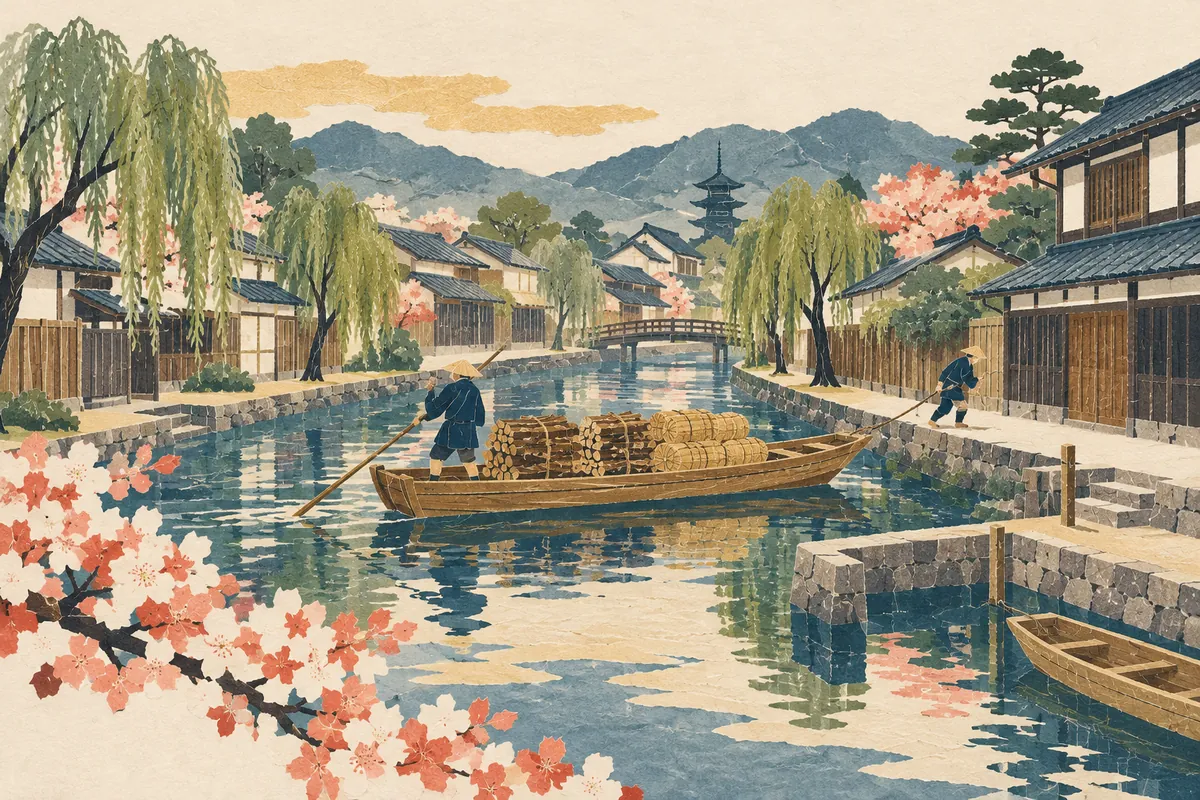
Suminokura Ryoi and Kyoto's Water Transport
Suminokura Ryōi was a merchant who, at the beginning of the Edo period, opened the Ōi River and the Takase River and created waterways for carrying goods to inland Kyoto. He is known as the man who turned rivers into part of the city's logistics network.
Read more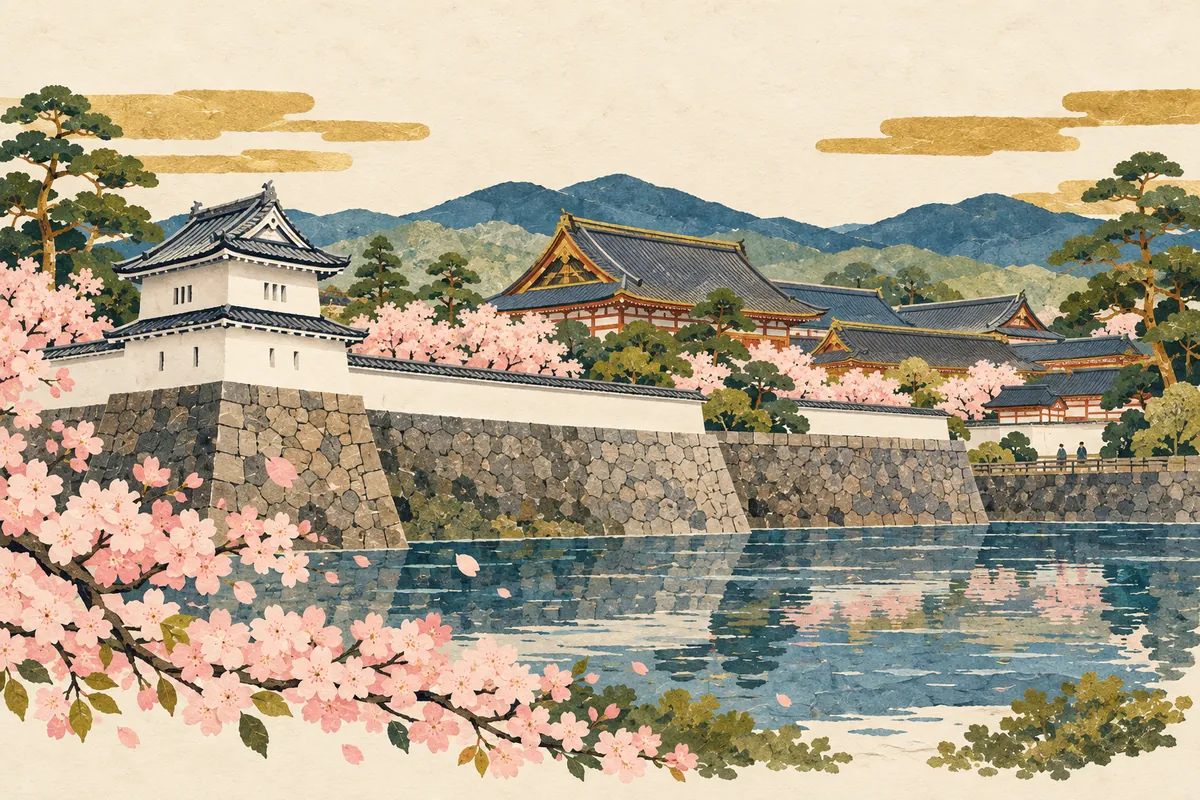
Nijo Castle and the Tokugawa Shoguns' Kyoto
Nijō Castle was built by Tokugawa Ieyasu to guard the Kyoto Imperial Palace and to serve as the shogun's lodging when visiting Kyoto. It reached its present size for Emperor Go-Mizunoo's imperial visit, and at the end of the Edo period it was the stage for Tokugawa Yoshinobu's Taisei Hōkan, the return of political power to the imperial court. After the Meiji era it became a detached imperial palace and was granted to Kyoto City in 1939; six buildings of the Ninomaru Palace are National Treasures.
Read more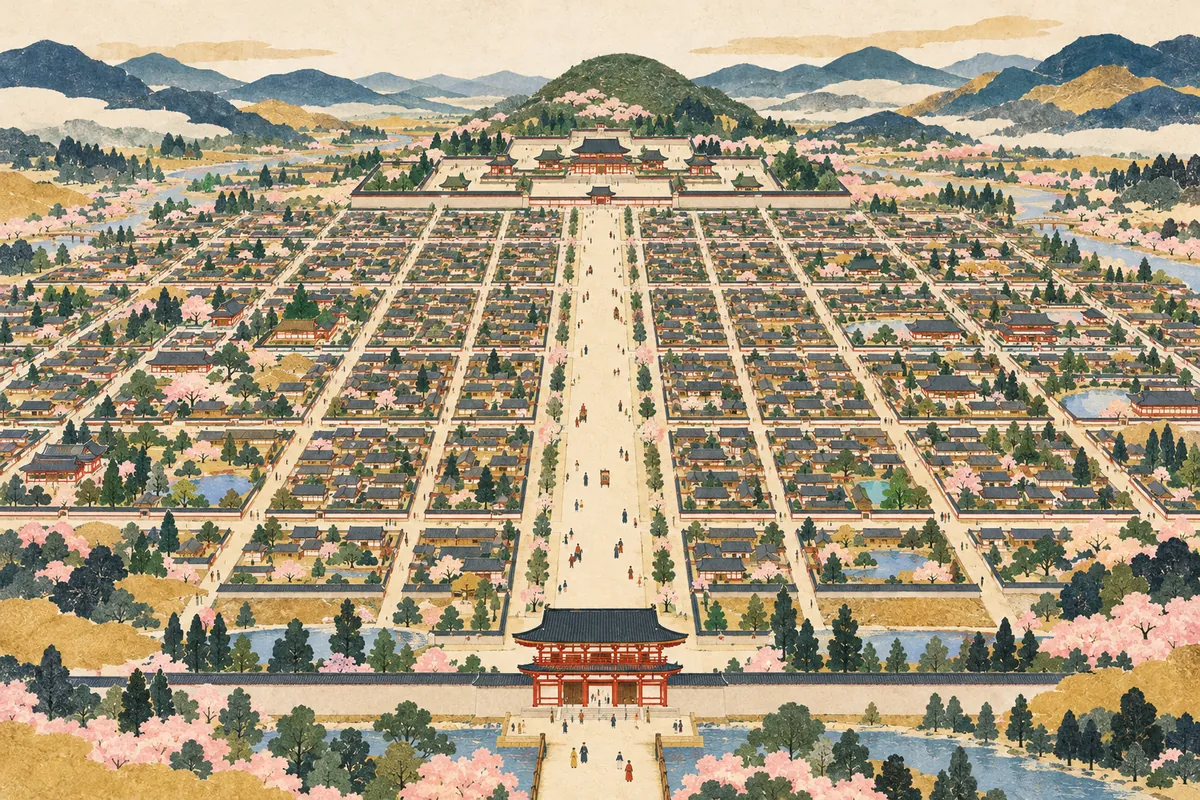
Heian-kyō's City Plan and Suzaku-ōji
Suzaku-ōji (朱雀大路, Suzaku Avenue) was a great avenue about 84 meters wide that ran north–south through the center of Heian-kyō, roughly corresponding to present-day Senbon-dōri. Heian-kyō was built in 794 on the model of Chang'an in China; it was divided by Suzaku-ōji into the Sakyō (Left Capital) and Ukyō (Right Capital), and laid out in a checkerboard grid using the units jō, bō, ho, and chō. It was a capital where you could describe a location by numbers alone, as in "Sakyō Sanjō Shibō Nichō" (Left Capital, 3rd jō, 4th bō, 2nd chō).
Read more
Rokuhara: From Taira Stronghold to Kamakura Shogunate Tandai
Rokuhara is a place name that referred to the area east of the Kamo River, from today's Matsubara-dōri to around Shichijō. In the late Heian period, the mansions of the Taira clan gathered here, and after the Jōkyū War the Kamakura shogunate's Rokuhara Tandai was established here as a base for watching over the imperial court and governing western Japan. Traces of the Taira mansions survive today in town names such as Tamon-chō, Kadowaki-chō, and Ikedono-chō.
Read more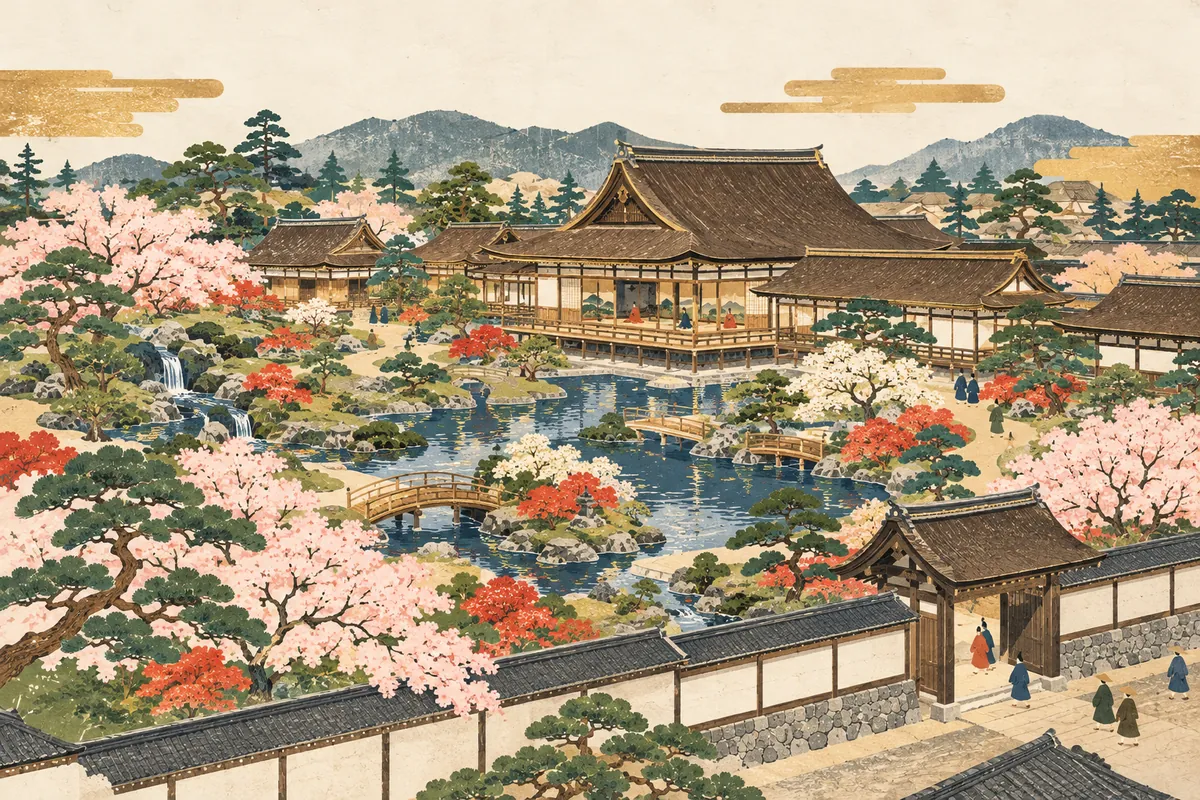
The Muromachi Shogunate and the Hana no Gosho
The Hana no Gosho (花の御所, "Palace of Flowers") was the name for the shogun's residence made up of Muromachi-dono (also called Muromachi-dai), completed in 1378 by Ashikaga Yoshimitsu, the third Muromachi shogun, at Kitakōji (today's Imadegawa-dōri) and Muromachi, together with the Hanatei to its north, where he moved the following year. It was named for its beautiful garden, which drew water from the Kamo River and was planted with many flowers, and the name "Muromachi shogunate" itself comes from Muromachi-dono. The site is in Kamigyō Ward, in the area bounded by Imadegawa-dōri, Kamidachiuri-dōri, Karasuma-dōri, and Muromachi-dōri.
Read more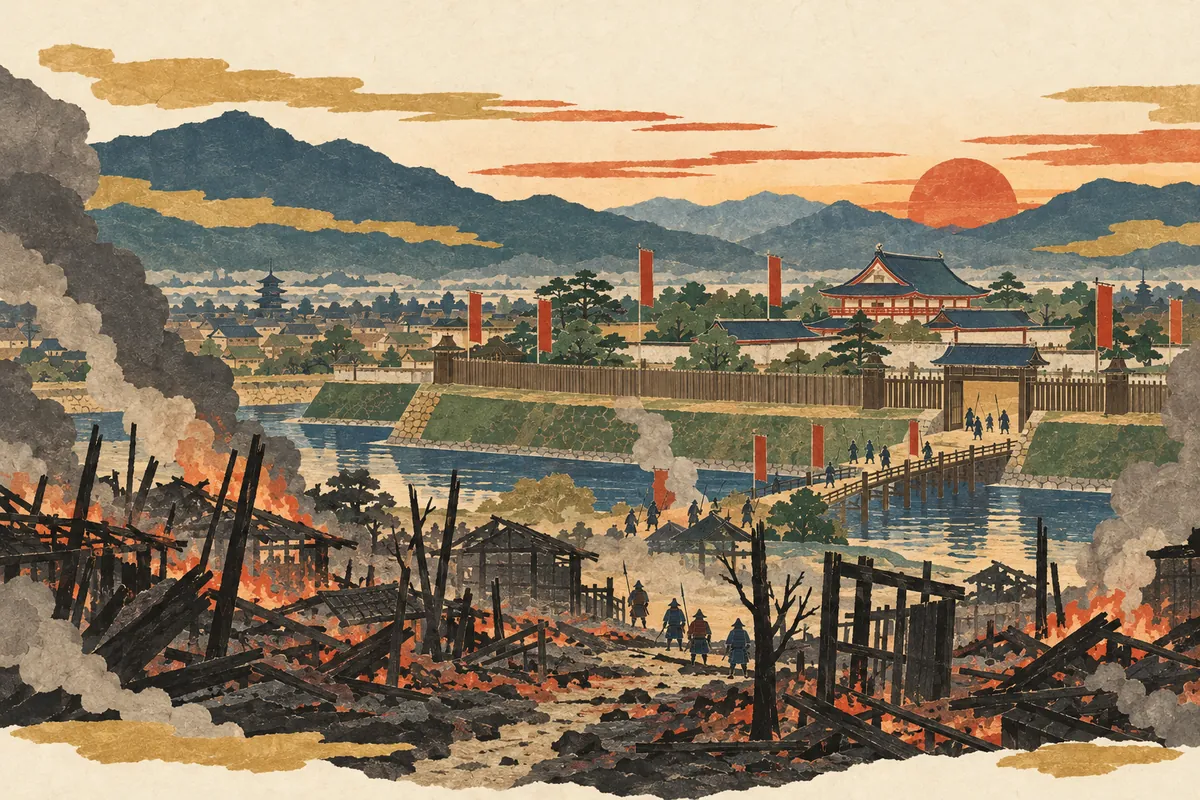
The Onin War and the Name Nishijin
The Ōnin–Bunmei War was a civil war that began in 1467 and lasted about 11 years until 1477, with Kyoto as its main battlefield. The Eastern Army built a fortified camp called the Okamae around the Hana no Gosho, and most of the town of Kamigyō burned. The name Nishijin ("Western Camp") comes from the Western Army, led by Yamana Sōzen, setting up camp around Horikawa-Kamidachiuri.
Read more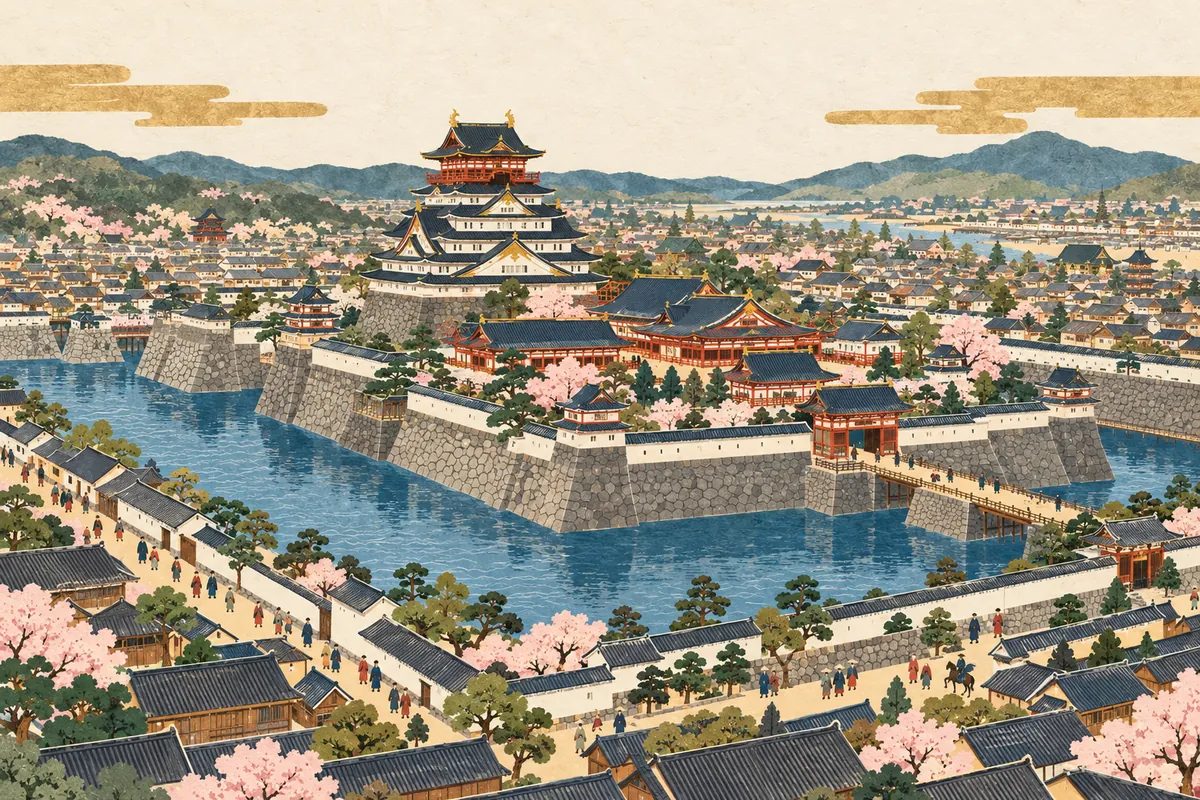
Toyotomi Hideyoshi's Remaking of Kyoto and the Jurakudai
Toyotomi Hideyoshi built the Jurakudai at Uchino, the former site of Heian-kyō's Daidairi (Greater Imperial Palace), and greatly remade the city of Kyoto by building the Odoi earthworks and the Great Buddha Hall in Higashiyama. The Jurakudai was completed in 1587 but demolished just eight years later; today its traces survive in town names such as Josui-chō and Ukita-chō and in the name jurakutsuchi (Juraku clay).
Read more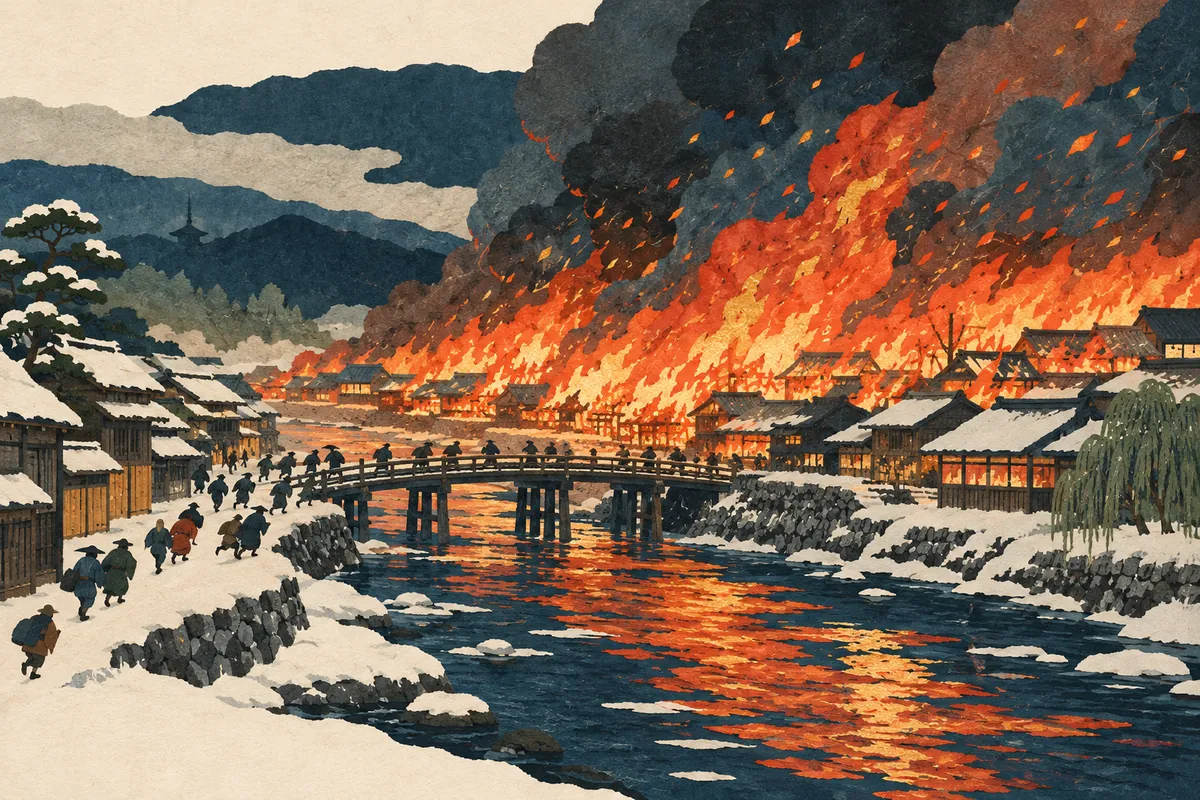
The Great Tenmei Fire and the Burning of Kyoto
The Great Tenmei Fire was the largest fire in Kyoto's history. It broke out early in the morning of the 30th day of the first month of 1788 (by the old lunar calendar) at Donguri-zushi, east of the Kamo River. Driven by an east wind, it crossed the Kamo River and burned almost all of the city of the time, from Kuramaguchi-dōri in the north to Shichijō-dōri in the south and Senbon-dōri in the west; about 37,000 houses burned and about 65,000 households lost their homes. The Imperial Palace, Nijō Castle, and both the Higashi and Nishi Hongan-ji temples also burned.
Read more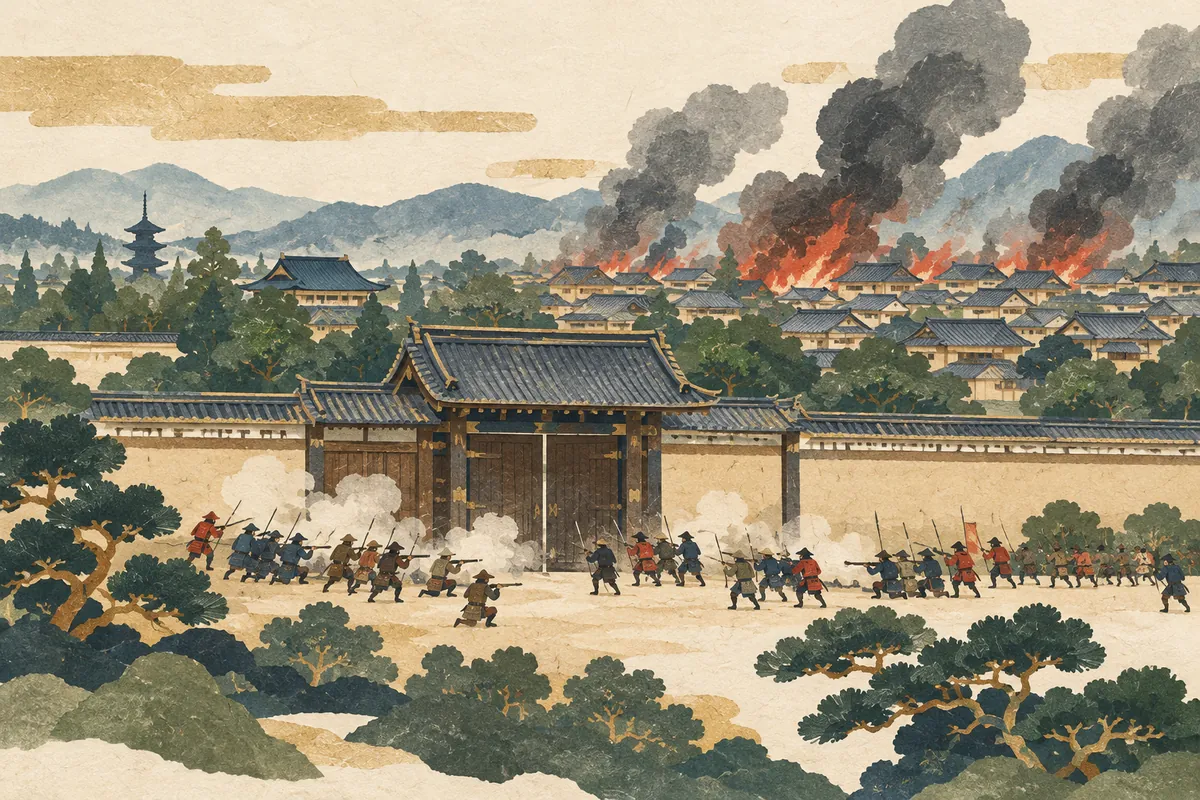
Kyoto in 1864: The Ikedaya Incident and the Kinmon Incident
In Kyoto in 1864 (Genji 1), the Ikedaya Incident on June 5 was followed on July 19 by the Kinmon Incident, in which the Chōshū domain fought the forces of Aizu, Satsuma, and the shogunate at the Hamaguri Gate and elsewhere around the Kyoto Imperial Palace. The Dondon-yake fire that spread from the fighting damaged about 800 neighborhoods and 27,000 households, from Marutamachi-dōri in the north to Shichijō-dōri in the south.
Read more