
Kyoto's Important Intangible Folk Cultural Properties
Key points
The designation covers local events and performing arts, unlike Important Intangible Cultural Properties, which recognize people with skills
The first designation was Mibu Kyōgen in 1976, and the most recent was the Kuta Hanagasa Odori in 1997
Four are also on UNESCO's list: the yamahoko events since 2009, and Rokusai Nenbutsu and two others as part of "Furyu-odori" since 2022
Mibu Kyōgen's spring and autumn performances cost 1,000 yen for adults and 500 yen for junior high and high school students; the Setsubun performances are free
Folk Cultural Properties vs. Important Intangible Cultural Properties
Folk cultural properties are traditions that people have created and handed down in their daily lives: manners and customs, folk performing arts, and folk techniques related to food, clothing, and housing, livelihoods, faith, annual events, and so on, together with the clothing and tools used in them. Of these, the national government designates especially important intangible ones as Important Intangible Folk Cultural Properties; there are 342 nationwide.
Important Intangible Cultural Properties, which have a similar name, cover the "skills" themselves, such as theater, music, and craft techniques, and the system recognizes the people who have mastered those skills (the so-called Living National Treasures) or groups. Important Intangible Folk Cultural Properties, by contrast, are designated events and performing arts handed down in local communities, and each has a preservation body. Besides the national designations, Kyoto City has 3 designated or registered by Kyoto Prefecture and 60 registered by Kyoto City. The Kyoto City registrations include Kennin-ji's Yotsugashira Chakai tea ceremony, registered in 2012.
The 6 in Kyoto City at a glance
Of the 6, 5 are classified as folk performing arts, and the Yamahoko Events of the Gion Matsuri as manners and customs. Mibu Kyōgen was the first designation in Kyoto Prefecture.
National Important Intangible Folk Cultural Properties in Kyoto City
| Name | Designated | Preservation body |
|---|---|---|
| Mibu Kyōgen | May 4, 1976 | Mibu Dainenbutsu Kōchū |
| Yamahoko Events of the Kyoto Gion Matsuri | February 3, 1979 | Gion Matsuri Yamahoko Rengōkai (public interest incorporated foundation) |
| Rokusai Nenbutsu of Kyoto | January 11, 1983 | Federation of Kyoto Rokusai Nenbutsu Preservation Groups (15 groups) |
| Saga Dainenbutsu Kyōgen | January 14, 1986 | Saga Dainenbutsu Kyōgen Preservation Society |
| Yasurai-bana | January 8, 1987 | Federation of Yasurai Odori Preservation Groups (4 groups) |
| Kuta Hanagasa Odori | December 15, 1997 | Kuta Hanagasa Odori Preservation Society |
Mibu Kyōgen and Saga Dainenbutsu Kyōgen
Mibu Kyōgen is handed down at Mibu-dera in Nakagyō Ward, and according to the temple's tradition it was begun in 1300 (Shōan 2) by the priest Engaku Shōnin to convey the teachings of Yūzū Nenbutsu to large numbers of people in an easy-to-understand way. Its proper name is "Mibu Dainenbutsu Kyōgen," and it has long been nicknamed "Mibu-san no Kandenden." All the performers wear masks and perform without dialogue to the accompaniment of a waniguchi (gong), shime-daiko drum, and flute. Thirty plays are performed today, and the Dainenbutsudō where they are staged is an Important Cultural Property building rebuilt in 1856 (Ansei 3).
Saga Dainenbutsu Kyōgen is a silent drama performed in the kyōgen hall of Seiryō-ji (Saga Shakadō) in Ukyō Ward, and is one of the three great nenbutsu kyōgen, together with those of Mibu and Senbon. Its repertoire includes Noh-like "katamon" pieces and kyōgen-like "yawarakamon" pieces, and "Shaka Nyorai," based on the temple's principal image, Shaka Nyorai, is performed only at Saga. It was interrupted for a time from 1964 (Shōwa 39) because of a lack of successors, but was revived in 1975 (Shōwa 50). It is performed around the Otaimatsu-shiki torch ceremony on March 15 and in spring and autumn.
Rokusai Nenbutsu, Yasurai-bana, and the Kuta Hanagasa Odori
Rokusai Nenbutsu developed from nenbutsu odori, dances in which people beat gongs and drums while chanting the nenbutsu and wasan (Buddhist hymns), by also taking in arts from Noh and kabuki, and it is handed down in 15 places in Kyoto. "Rokusai" refers to the six sainichi (days of abstinence) in each month. Dedicatory performances take place at temples and shrines in various places from August to early September, mostly in the evening. Some temples also perform on the night of August 16, the night of the Gozan Okuribi.
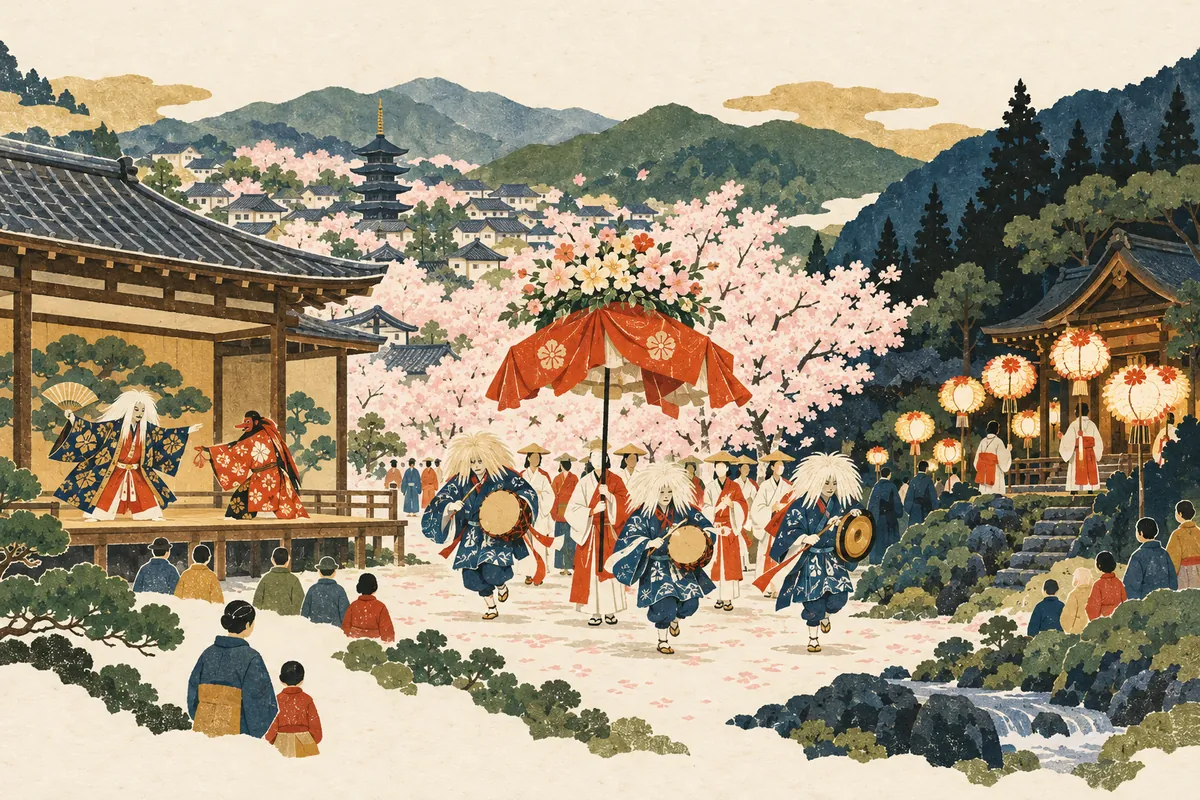
Yasurai-bana is a spring event handed down in four districts of northern Kyoto (Rakuhoku), including Murasakino and Kamigamo. A procession raises large fūryū umbrellas decorated with flowers, and dancers wearing shaguma (red or black wigs) beat gongs and drums as they dance at street corners around the town. It is a festival to calm the deities of epidemics (ekijin), and it also has the meaning of a chinkasai (flower-calming festival). The Yasurai Matsuri at Imamiya Shrine is held on the second Sunday of April, and the other three districts dance in their own places, worshipping from afar without stopping at the shrine.
The Kuta Hanagasa Odori is a dance handed down by the five hamlets of Kuta, in the mountains at the northernmost tip of Sakyō Ward on the border with Shiga Prefecture, divided into two groups, upper and lower. The "hanagasa" are lanterns decorated with artificial flowers such as chrysanthemums and peonies; on August nights they are lit and held in the hand as people dance at Kaminomiya Shrine, Ōkawa Shrine, and Shikobuchi Shrine. The dance gives a glimpse of the fūryū odori that were popular in the 16th century, centered on Kyoto. On November 30, 2022, Rokusai Nenbutsu, Yasurai-bana, and the Kuta Hanagasa Odori were inscribed on UNESCO's Intangible Cultural Heritage list as part of "Furyu-odori."
The Yamahoko Events of the Gion Matsuri
The Yamahoko Events of the Kyoto Gion Matsuri were designated in 1979 as a series of events held in the festival of Yasaka Shrine, from the lot drawing (kujitori) on July 2 to the Yamahoko Junkō processions on July 17 and 24 and the Gion-bayashi music. The yamahoko floats that take part in the procession themselves became an Important Tangible Folk Cultural Property, "Gion Matsuri Yamahoko," in 1962. The events were inscribed on UNESCO's Intangible Cultural Heritage list in 2009, and since 2016 they have been listed as one of the "Yama, Hoko, Yatai, float festivals" of Japan.
Getting there and when to see them
Mibu-dera (31 Mibu Nagi-no-miya-chō, Nakagyō Ward) is about a 3-minute walk from the "Mibudera-michi" city bus stop and about a 10-minute walk from Hankyū Ōmiya Station and Randen Shijō-Ōmiya Station. Mibu Kyōgen's spring Dainenbutsu-e (April 29–May 5) and its autumn special performances on the October holiday weekend run 13:00–17:30, and admission is 1,000 yen for adults and 500 yen for junior high and high school students, with same-day unreserved seating only (as of October 2026). On the day before Setsubun in February and on Setsubun itself, only "Setsubun" is performed, every hour from 17:00, and admission is free.
Imamiya Shrine (21 Murasakino Imamiya-chō, Kita Ward) is right by the "Imamiya Jinja-mae" city bus stop, and Seiryō-ji (46 Saga Shakadō Fujinoki-chō, Ukyō Ward) is about a 1-minute walk from the "Saga Shakadō-mae" stop of city buses and Kyoto Bus. Kuta is in the mountains, about 8 km even from the nearest bus stop. For Rokusai Nenbutsu, check the dates and times in each year's announcements before you go.
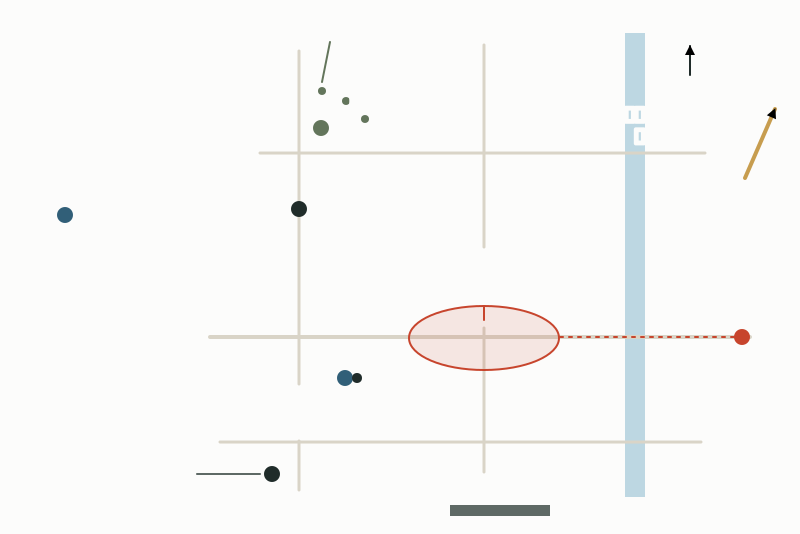
Where to See Kyoto City's Important Intangible Folk Cultural Properties (Schematic Map)
Mini quiz for this entry
What is characteristic of how "Mibu Kyōgen," an Important Intangible Folk Cultural Property handed down at Mibu-dera in Nakagyō Ward, is performed?
In the "Kuta Hanagasa Odori" handed down in Kuta, Sakyō Ward, what is the "hanagasa" that the dancers hold in their hands?
In the Saga Dainenbutsu Kyōgen handed down at Seiryō-ji, which play is performed only at Saga?
Sources and verification
Content checked: October 22, 2026
Updated: October 22, 2026
References are in Japanese.
- 文化庁「民俗文化財」
- 文化庁「無形文化財」
- 京都市文化財保護課「京都市内文化財件数(令和8年4月1日現在)」
- 文化庁「国指定文化財等データベース 壬生狂言」
- 文化庁「国指定文化財等データベース 京都祇園祭の山鉾行事」
- 文化庁「国指定文化財等データベース 京都の六斎念仏」
- 文化庁「国指定文化財等データベース 嵯峨大念仏狂言」
- 文化庁「国指定文化財等データベース やすらい花」
- 文化庁「国指定文化財等データベース 久多の花笠踊」
- 壬生寺「壬生狂言」
- 壬生寺「交通アクセス」
- 京都市観光協会「京都観光Navi 壬生寺」
- 京都市観光協会「京都観光Navi 今宮神社」
- 京都市観光協会「京都観光Navi 清凉寺」
- 京都市観光協会「京都観光Navi 志古淵神社」
- 京都総合観光案内所「2026年 六斎念仏踊り 一覧」(2026年7月10日)
- 京阪グループ「京都ツウのススメ 第176回 大念仏狂言」(2023年4月)
- 大本山 建仁寺「四頭茶会」