
Japanese花脊(はなせ)
Hanase
Other spellings and names花背
Key points
Town names are written 花脊; Hanase Elementary and Junior High School and Kyoto Bus stops write 花背
Four villages merged into one village in 1889 (Meiji 22), which became part of Sakyō Ward, Kyoto City, in 1949 (Shōwa 24)
The Hanase Matsuage is held every year on the night of August 15 in Hanase-Yamasu-chō
About 90 minutes by Kyoto Bus route 32 (for Hirogawara) from Demachiyanagi Ekimae
Read Hanase, written both 花脊 and 花背
花脊 is read Hanase (はなせ). The four town names in addresses are listed below, and all are in the school zone of Hanase Elementary and Junior High School (as of April 2025).
The character for se is 脊 in the town names and in the Hanase Branch Office of the Sakyō Ward Office, but 背 in Kyoto Municipal Hanase Elementary and Junior High School and in Kyoto Bus stop names (Hanase Tōge, Hanase Yama-no-ie-mae, Hanase Kōryū-no-mori-mae, and others). The name of the village created in the Meiji era is also found written both 花背村 and 花脊村. Today 花脊 is generally used in residential addresses and similar contexts, and both spellings are read Hanase.
Some bus stops are easy to misread from their romanized names. The Kyoto Bus stop 大布施 is written only as Ofuse in roman letters, but this simply omits the long vowel; it is read Ōfuse (おおふせ), the same as the town name.
The town names of Hanase and the Kyoto Bus stops that share their names
| Town name | Reading | Kyoto Bus stops that include the name |
|---|---|---|
| 花脊別所町 | はなせべっしょちょう (Hanase-Bessho-chō) | Bessho Kami-no-chō, Bessho Naka-no-chō, Bessho Shimo-no-chō |
| 花脊大布施町 | はなせおおふせちょう (Hanase-Ōfuse-chō) | 大布施 (Ōfuse) |
| 花脊八桝町 | はなせやますちょう (Hanase-Yamasu-chō) | Yamasu-guchi, Yamasu Kō-mae, Yamasu-bashi |
| 花脊原地町 | はなせはらちちょう (Hanase-Harachi-chō) | Harachi Naka-no-chō |
A mountain village north of Kurama, beyond Hanase Pass
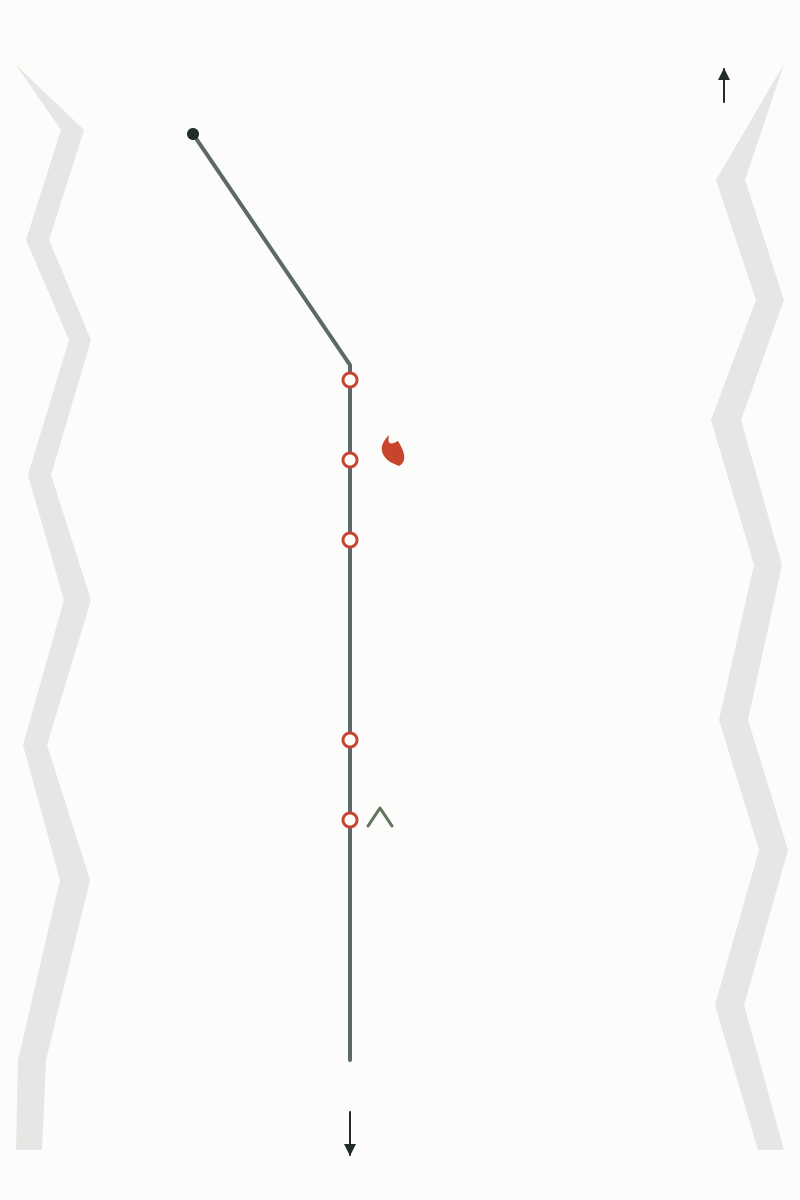
Hanase lies north of Kurama. Beyond Hanase Pass, its hamlets are scattered from north to south along the Bessho River and the upper Katsura River. The Kyoto Bus stops also run, from south to north, through Bessho, Ōfuse, Yamasu, and Harachi, and beyond them to the north is Hirogawara.
In the mid-12th century, Bujō-ji (ぶじょうじ), with the mountain name Daihizan, was founded in what is now Harachi-chō and became a sacred site for shugenja, ascetics who trained in the mountains. At Bessho, at the southern end, the Hanase sutra mounds from the late Heian to early Kamakura period have been found.
The hamlets of Hanase and Kyoto Bus route 32
How the former Hanase Village came to be, and its name
Hanase is made up of four former villages: Bessho, Ōfuse, Yamasu, and Harachi Shinden. Until the medieval period it belonged to Kuwata District in Tanba Province, and in the Edo period it became part of Otagi District in Yamashiro Province. In 1889 (Meiji 22), the four villages merged into one village, which is said to have been named after Hanase Pass. The origin of the pass's own name is not clear. The village was incorporated into Sakyō Ward, Kyoto City, in 1949 (Shōwa 24).
Because the mountain land produced little rice, charcoal making flourished, and by the mid-Edo period charcoal output reached a thousand bales a year. The road over Hanase Pass was opened in 1899 (Meiji 32), and buses began running on it in the early Shōwa era.
The Hanase Matsuage on August 15
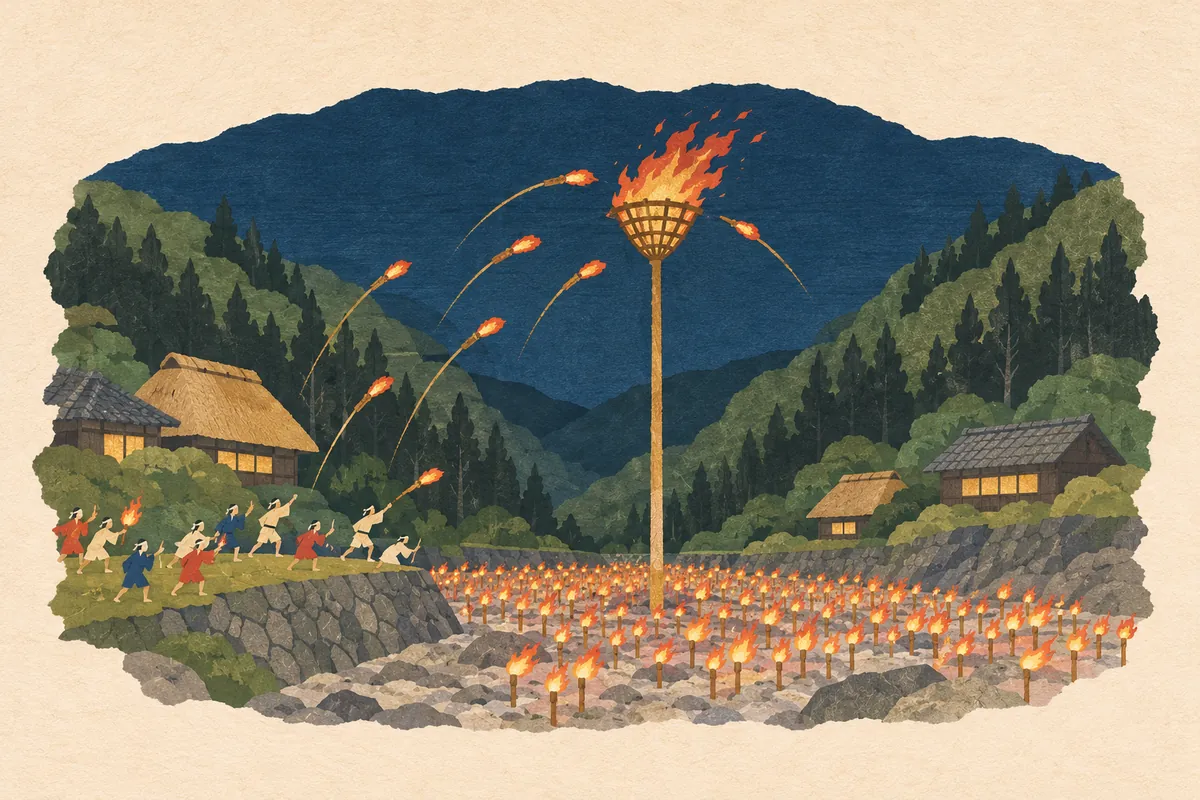
The Hanase Matsuage is a fire ritual held every year on the night of August 15 in Hanase-Yamasu-chō, and it is an Intangible Folk Cultural Property of Kyoto City. Once the roughly one thousand torches standing on the riverbank have all been lit, the men throw burning torches up toward the large basket-shaped umbrella (ōkasa) on top of a 20-meter pole called a torogi (とろぎ). When the ōkasa catches fire and blazes up, it is pulled down to end the ritual. It has been handed down as a Shinto rite for the Atago deity, with prayers for protection from fire and for a rich harvest of the five grains.
In 2026 it was held on Saturday, August 15, from 9 p.m., and anyone could watch for free. The venue is the area around the Hanase Kōryū-no-mori-mae Kyoto Bus stop. Because it is held at night, a day trip by regular route bus is not possible, so visitors go by private car or use the viewing buses that Kyoto Bus advertises.
Matsuage is also held at Kuta on August 23 and at Hirogawara on August 24 (as of November 2026). Kyoto City's six national Important Intangible Folk Cultural Properties include the Kuta Hanagasa Odori, but not matsuage.
Getting there by Kyoto Bus
To reach Hanase, take Kyoto Bus route 32 for Hirogawara from Demachiyanagi Ekimae; it travels via Kurama and Hanase Pass. From Demachiyanagi to Hanase Kōryū-no-mori-mae takes about 90 minutes (as of November 2026). Before you go, check the times for both the outbound and return trips in the Kyoto Bus timetable.
Mini quiz for this entry
At the Hanase Matsuage held on the night of August 15, what do the men aim at when they hurl up their burning torches?
Which was not one of the four villages that merged in 1889 (Meiji 22) to form the village of Hanase?
Sources and verification
Content checked: November 8, 2026
Updated: November 8, 2026
References are in Japanese.