
Japanese洛北・洛東・洛西・洛南(らくほく・らくとう・らくさい・らくなん)
Rakuhoku, Rakutō, Rakusai, Rakunan
Other spellings and namesRakuhoku / Rakutō / Rakusai / Rakunan
Key points
洛 (raku) is said to liken Kyoto to the old Chinese capital Luoyang, and is the same 洛 as in Rakuchū and Rakugai
洛西 is listed as Rakusei (らくせい) in Japanese dictionaries but read Rakusai (らくさい) in station and local event names
Yamashina is sometimes counted as Rakutō and sometimes as Rakunan
The names survive in Rakuhoku High School, Rakutō High School, Rakusai New Town, Rakunan High School, and more
The readings and what 洛 means
洛北 is read Rakuhoku (らくほく), 洛東 Rakutō (らくとう), and 洛南 Rakunan (らくなん). 洛西 appears as Rakusei (らくせい) in the headwords of Japanese dictionaries. However, Rakusaiguchi Station on the Hankyu Kyoto Line is read らくさいぐち, and the Rakusai Sakura Festival held in the Rakusai area of Nishikyō Ward is written らくさい too. In place and facility names, Rakusai is the reading in use.
洛 (raku) is said to be a name that likens Kyoto to Luoyang, an ancient capital of China. For Rakutō, it is also explained as likening the Kamo River to the Luo River in China. It is the same 洛 as in Rakuchū (洛中), which means the inside of the capital, and Rakuhoku, Rakutō, Rakusai, and Rakunan refer to the suburbs lying outside it to the north, east, west, and south. Among early examples, the word Rakutō appears in Honchō Mudaishi, a collection of Chinese-style poems from the end of the Heian period, and the Kyoto guide Kyō Habutae (1685) lists the "Eight Views of Saga in Rakusai" (洛西嵯峨八景).
Where do they begin and end? The rough extent
The four names have no fixed boundaries. One way of describing them uses today's streets such as Kitaōji-dōri and Kujō-dōri, and an older way uses the main avenues of Heian-kyō; both are said to leave the extent unclear. Rakuhoku, once farming villages on the outskirts, has become built up and turned into residential areas. The area of Rakutō is also called Higashiyama or Ōtō (鴨東, おうとう).
Rough locations of Rakuhoku, Rakutō, Rakusai, and Rakunan
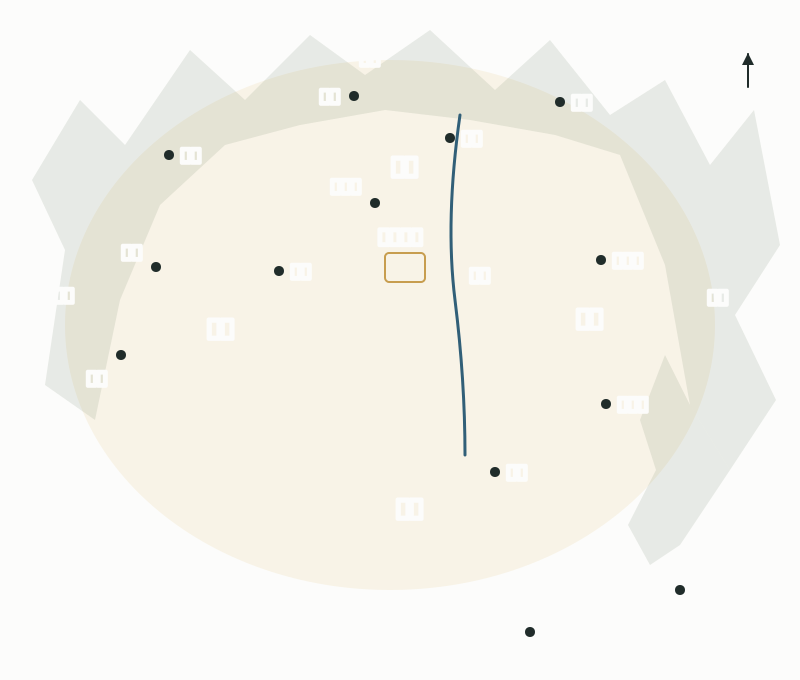
Rough extent of Rakuhoku, Rakutō, Rakusai, and Rakunan, with places often given as examples
| Name | Reading | Rough extent | Places given as examples |
|---|---|---|---|
| 洛北 | らくほく (Rakuhoku) | Usually north of Kitaōji-dōri. In the past it also meant north of Ichijō Ōji in Heian-kyō | Kamigamo, Takagamine, Shūgakuin, Iwakura, Yase, Ōhara, Kurama |
| 洛東 | らくとう (Rakutō) | East of the Kamo River, or the foot of the Higashiyama hills east of Higashiōji-dōri. Measured from Heian-kyō, east of Kyōgoku Ōji (roughly today's Teramachi-dōri) | From around Tōfuku-ji in the south to around Jishō-ji in the north. Yamashina is sometimes included |
| 洛西 | らくさい (Rakusai; dictionary headword らくせい, Rakusei) | Mainly west of Nishiōji-dōri. Measured from Heian-kyō, west of Heian-kyō (or of its eastern half, Sakyō) | Near Rokuon-ji, Omuro, Hanazono, Uzumasa, Saga, Arashiyama, Takao. The southern Nishiyama hills from Ōharano to Nagaoka Tenjin are sometimes included |
| 洛南 | らくなん (Rakunan) | South of Kujō-dōri (Kujō Ōji in Heian-kyō) | Fushimi, Momoyama. Yamashina, Daigo, and Uji are sometimes included |
洛 in the names of schools, stations, and facilities
The four names are still used in the names of schools, stations, and facilities (as of November 2026).
- Kyoto Prefectural Rakuhoku High School and its attached junior high school: Shimogamo Umenoki-chō, Sakyō Ward
- Kyoto Prefectural Rakutō High School: Anshu Kawamukai-chō, Yamashina Ward
- Kyoto Prefectural Rakusai High School: Ōharano Nishisakaidani-chō, Nishikyō Ward
- Rakusai New Town: Nishikyō Ward. Kyoto City's first large-scale housing development, where the first residents moved in in September 1976 (Shōwa 51); fiscal 2026 marked 50 years since the town opened
- Rakusai Branch of the Nishikyō Ward Office, and the Rakusai Bus Terminal bus stop
- Rakusaiguchi Station (らくさいぐち) on the Hankyu Kyoto Line
- Rakunan High School (private): Tōji-chō, Mibu-dōri Hachijō sagaru, Minami Ward
The name and the area do not always match
A 洛 in a name does not always line up exactly with the rough extent. Rakunan High School, for example, stands a little north of Kujō-dōri, outside the guideline of "south of Kujō-dōri." Yamashina, where Rakutō High School is, is also an area that is counted sometimes as Rakutō and sometimes as Rakunan.
In this dictionary's list of hard-to-read Kyoto place names, names in Kita and Sakyō wards are grouped under Rakuhoku, and names in Ukyō and Nishikyō wards under Rakusai, to make them easier to find. Dividing them by ward is only for convenience; there is no administrative area called Rakuhoku or Rakusai.
Mini quiz for this entry
How is 洛西口, the name of a station on the Hankyu Kyoto Line, read?
In an older usage based on Heian-kyō, Rakutō meant the area east of Kyōgoku Ōji. Which of today's streets roughly corresponds to Kyōgoku Ōji?
Sources and verification
Content checked: November 8, 2026
Updated: November 8, 2026
References are in Japanese.
- コトバンク「洛北」(デジタル大辞泉・精選版 日本国語大辞典・ブリタニカ国際大百科事典 小項目事典)
- コトバンク「洛東」(デジタル大辞泉・精選版 日本国語大辞典・ブリタニカ国際大百科事典 小項目事典)
- コトバンク「洛西」(デジタル大辞泉・精選版 日本国語大辞典・ブリタニカ国際大百科事典 小項目事典)
- コトバンク「洛南」(デジタル大辞泉・精選版 日本国語大辞典・ブリタニカ国際大百科事典 小項目事典)
- 阪急電鉄「洛西口駅」
- 京都市西京区役所洛西支所「第31回らくさいさくら祭2026の開催」(令和8年2月24日)
- 京都市西京区役所「市民しんぶん西京区版」No.368(令和8年8月15日)
- 京都府立洛北高等学校・洛北高等学校附属中学校
- 京都府立洛東高等学校
- 京都府立洛西高等学校
- 京都府「令和8年度 京都府私立高等学校一覧」