
Japanese上る・下る・東入る・西入る(あがる・さがる・ひがしいる・にしいる)
Agaru, Sagaru, Higashi-iru, Nishi-iru
Other spellings and names上ル・下ル / 東入・西入 / agaru sagaru
In short
In addresses in central Kyoto, agaru (上る) means going north, sagaru (下る) going south, higashi-iru (東入る) going east, and nishi-iru (西入る) going west. They have nothing to do with going up or down a slope; they tell you which way to go from the intersection of two streets.Key points in 30 seconds
Agaru = north, sagaru = south, higashi-iru = east, nishi-iru = west
You travel along the first street, starting from its intersection with the second street
Set as the official way of writing addresses by a Kyoto Prefecture notice in 1889
Official documents use 上る, while town-name signs and the like also show 上ル
Words that tell you which way to go from an intersection
The words 上る, 下る, 東入る, and 西入る that appear in addresses in central Kyoto are direction words that take an intersection as their starting point. Going north is agaru (上る), going south is sagaru (下る), heading in to the east is higashi-iru (東入), and heading in to the west is nishi-iru (西入).
For example, Kyoto City Hall's address includes 寺町通御池上る (Teramachi-dōri Oike agaru), which means the place reached by going north along Teramachi-dōri from the intersection of Teramachi-dōri and Oike-dōri. The kanji 上る and 下る are read agaru and sagaru here, not noboru and kudaru, and they have nothing to do with going up or down a slope.
The directions of agaru, sagaru, higashi-iru, and nishi-iru
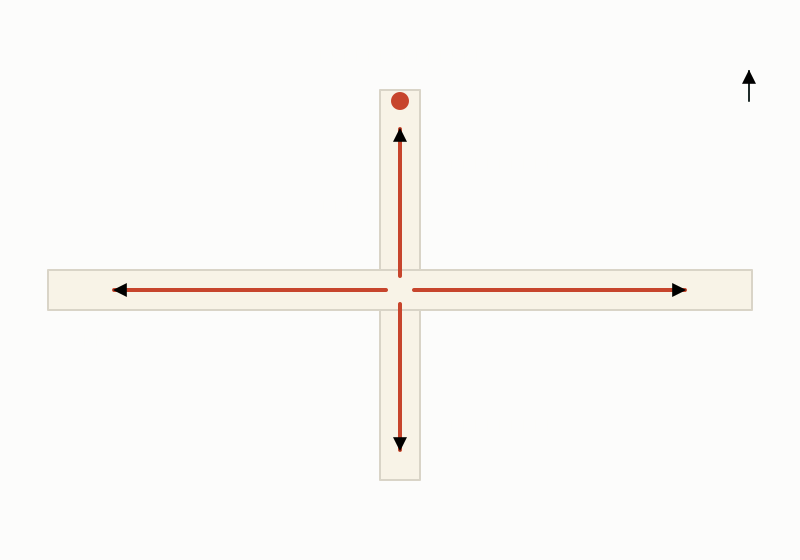
The four words and their directions
| Word | Reading | Direction | Street you travel along |
|---|---|---|---|
| 上る (上ル) | agaru (あがる) | North | Along a north–south street |
| 下る (下ル) | sagaru (さがる) | South | Along a north–south street |
| 東入る (東入) | higashi-iru (ひがしいる) | East | Along an east–west street |
| 西入る (西入) | nishi-iru (にしいる) | West | Along an east–west street |
Read the address as "street you travel" + "street you cross"
When an address lists two street names, think of the first street as the road you travel along and the second as the intersection where you start. With agaru or sagaru, the first street runs north–south; with higashi-iru or nishi-iru, it runs east–west.
Let's check this with ward office addresses. Kamigyō Ward Office's 今出川通室町西入 (Imadegawa-dōri Muromachi nishi-iru) is reached by going west along Imadegawa-dōri from the intersection of Imadegawa-dōri and Muromachi-dōri. Shimogyō Ward Office's 西洞院通塩小路上る (Nishinotōin-dōri Shiokōji agaru) is reached by going north along Nishinotōin-dōri from the intersection of Nishinotōin-dōri and Shiokōji-dōri. A spot on the north side of the Shijō-Kawaramachi intersection would be written 河原町通四条上る (Kawaramachi-dōri Shijō agaru).
Keep these separate from intersection names. Intersection names such as Shijō-Kawaramachi and Kawaramachi-Sanjō simply put two street names side by side, with no direction word. It is said that in the Heian period the east–west avenue was written first, and from the late Muromachi period onward the street on which the more influential town faced came first, so the order is decided differently from the reading order of addresses.
Reading street-name addresses using ward office locations
| Facility | Street-name part of the address | How to read it |
|---|---|---|
| Kyoto City Hall | 寺町通御池上る (Teramachi-dōri Oike agaru) | From the intersection of Teramachi-dōri and Oike-dōri, north along Teramachi-dōri |
| Kamigyō Ward Office | 今出川通室町西入 (Imadegawa-dōri Muromachi nishi-iru) | From the intersection of Imadegawa-dōri and Muromachi-dōri, west along Imadegawa-dōri |
| Nakagyō Ward Office | 西堀川通御池下る (Nishihorikawa-dōri Oike sagaru) | From the intersection of Nishihorikawa-dōri and Oike-dōri, south along Nishihorikawa-dōri |
| Shimogyō Ward Office | 西洞院通塩小路上る (Nishinotōin-dōri Shiokōji agaru) | From the intersection of Nishinotōin-dōri and Shiokōji-dōri, north along Nishinotōin-dōri |
Why is north "agaru" (going up)?
Agaru, "going up," is said to come from the fact that the Dairi, where the emperor lived, stood at the north of Heian-kyō.
However, the Dairi of Heian-kyō and today's Kyoto Imperial Palace are not on the same site. Around the time the capital moved to Heian-kyō, the palace stood about 2 kilometers west of the present one. An emperor first lived on the site of today's Kyoto Imperial Palace in 1331, and it became the official palace in 1392, after the Northern and Southern Courts were reunited. In addresses, agaru does not mean heading for a particular building; it is used as a direction word meaning north.
Since when have these words been used in addresses?
Kyoto Prefecture Notice No. 24 of March 1889 (Meiji 22) set the way of writing addresses as "Kyoto City, X Ward, X-dōri, X-kōji, X-chō, agaru or sagaru, or higashi-iru or nishi-iru, X-chō, house number X" (京都市何区何通何小路何町上ル下ル又は東入西入何町何番戸).
This notice is said to have fixed how town names in Kyoto City were to be given, and no earlier provision setting out agaru and sagaru can be found in the histories of the town names. In other words, everyday words for giving directions were officially adopted around this time as part of how addresses are written.
上る or 上ル, 東入る or 東入
There are several ways of writing these words. 上ル and 下ル, with the ending in katakana, can be seen on town-name signs and elsewhere, but official documents today use 上る and 下る with the ending in hiragana, and 東入 and 西入 are usually written without any ending (okurigana). In addresses, street names are written 〇〇通 ("X-dōri") without the final り, which is said to be added mainly on road signs.
Old town-name plates still show katakana forms such as 上ル. The meaning is the same in every form, so even if a sign and a document write it differently, you can assume they point to the same place.
Addresses with just the town name also work
Writing addresses with street names is a very Kyoto way of giving directions, but addresses written with only the town name and lot number, without any street names, are also widely used. Among the ward offices, too, Kita Ward Office is written 紫野東御所田町33-1 (Murasakino-Higashi-Goshoden-chō 33-1) and Fushimi Ward Office 鷹匠町39-2 (Takajō-machi 39-2), with no street names.
Delivery services and map apps sometimes fail to recognize the street-name part. Check the postal code, town name, and lot number, and once you are there, use agaru or nishi-iru as clues and walk from the intersection so you are less likely to get lost.
Mini quiz for this entry
Check what you've read with 3 multiple-choice questions.
In a central Kyoto address, which direction does agaru (上る) indicate?
Why can Kyoto addresses look unusually long?
In present-day government documents, how is the address term agaru—going north from an intersection—usually written?
Sources and verification
Content checked: October 11, 2026
Updated: October 11, 2026
References are in Japanese.