
Japanese京都の通り名歌
Kyoto's Street-Name Songs
Other spellings and namesMaru Take Ebisu / Marutake Ebisu (丸竹夷) / East–west street-name song / Teragoko (寺御幸) / まるたけえびす
In short
The street-name song Marutake Ebisu (丸竹夷), which begins "maru-take-ebisu-ni-oshi-oike," is a song for memorizing the east–west streets of central Kyoto in order from north to south. There is also Teragoko (寺御幸), which sings the north–south streets from east to west.Key points in 30 seconds
Marutake Ebisu sings the east–west streets from north to south
"Maru" is Marutamachi-dōri, and after "oshi" for Oshikōji-dōri comes "oike" for Oike-dōri
The north–south streets are sung from east to west in Teragoko
There are several versions of how the part south of Gojō-dōri is sung
East–west streets, from north to south
Street-name songs help people remember the streets of central Kyoto, which are laid out in a grid. There is Marutake Ebisu (丸竹夷, まるたけえびす), which sings the east–west street names from Marutamachi-dōri to Jūjō-dōri, and Teragoko (寺御幸, てらごこ), which sings the north–south street names in order from Teramachi-dōri to Senbon-dōri. In Kyoto, it is said, children customarily learn these songs to memorize the street names.
"Maru-take-ebisu-ni-oshi-oike" (まるたけえびすにおしおいけ) stands for Marutamachi-dōri, Takeyamachi-dōri, Ebisugawa-dōri, Nijō-dōri, Oshikōji-dōri, and Oike-dōri. Because the song strings together the first sounds of the street names in a catchy rhythm, you can learn it by sound first and then check the streets on a map from north to south to grasp where they are.
East–west streets remembered with "Maru Take Ebisu" (Marutamachi-dōri to Gojō-dōri)
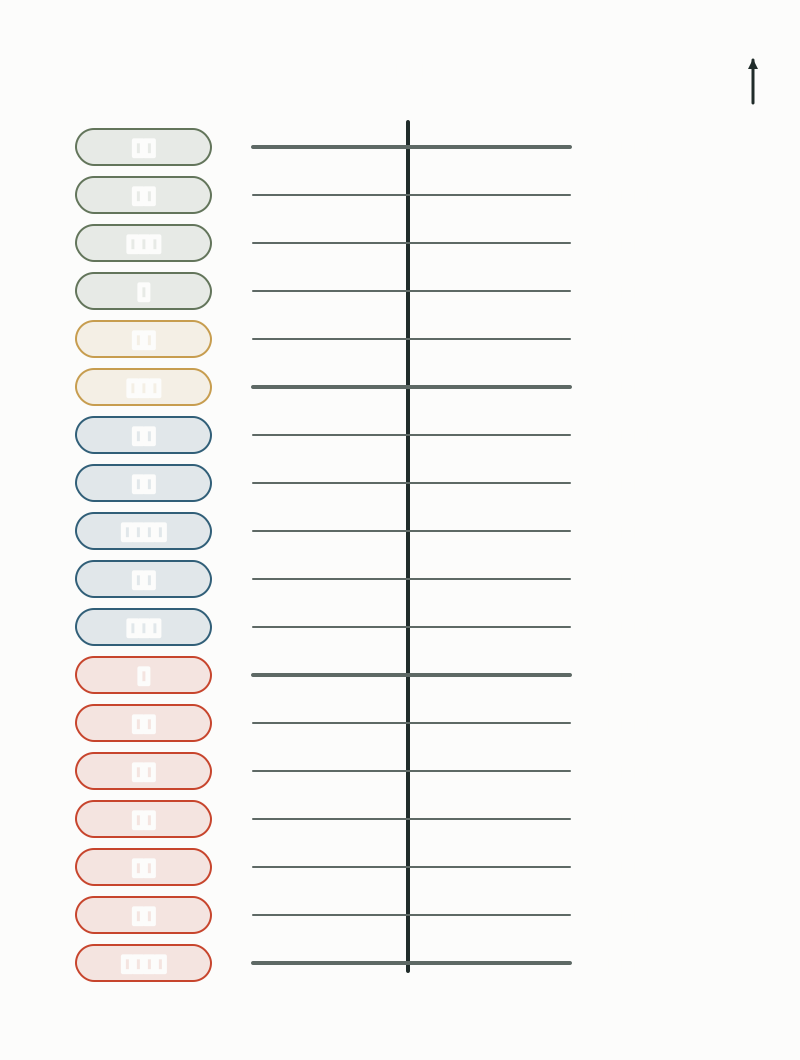
The order from Marutamachi-dōri to Jūjō-dōri
Lining up the east–west streets that correspond to the song from north to south gives the following order. In the song, "ni" is Nijō-dōri, "oshi" is Oshikōji-dōri, and "oike" is Oike-dōri. There are, however, various theories about the order and the street names in the song.
Since the song begins with Marutamachi-dōri, streets farther north, such as Imadegawa-dōri and Ichijō-dōri, do not appear. Also, the streets now called Yamamomo-dōri and Shiokōji-dōri on today's maps appear in the song under different names, Settayamachi-dōri and Santetsu-dōri. Knowing that some streets have different names in the song and on the map makes the second half less confusing.
East–west streets corresponding to Marutake Ebisu (north to south)
| No. | Street name | How it is sung (example) / notes |
|---|---|---|
| 1 | 丸太町通 (Marutamachi-dōri) | maru (まる) |
| 2 | 竹屋町通 (Takeyamachi-dōri) | take (たけ) |
| 3 | 夷川通 (Ebisugawa-dōri) | ebisu (えびす) |
| 4 | 二条通 (Nijō-dōri) | ni (に) |
| 5 | 押小路通 (Oshikōji-dōri) | oshi (おし) |
| 6 | 御池通 (Oike-dōri) | oike (おいけ) |
| 7 | 姉小路通 (Aneyakōji-dōri) | ane (あね) |
| 8 | 三条通 (Sanjō-dōri) | san (さん) |
| 9 | 六角通 (Rokkaku-dōri) | rokkaku (ろっかく) |
| 10 | 蛸薬師通 (Takoyakushi-dōri) | tako (たこ) |
| 11 | 錦小路通 (Nishikikōji-dōri) | nishiki (にしき) |
| 12 | 四条通 (Shijō-dōri) | shi (し) |
| 13 | 綾小路通 (Ayanokōji-dōri) | aya (あや) |
| 14 | 仏光寺通 (Bukkōji-dōri) | buk (ぶっ) |
| 15 | 高辻通 (Takatsuji-dōri) | taka (たか) |
| 16 | 松原通 (Matsubara-dōri) | matsu (まつ) |
| 17 | 万寿寺通 (Manjuji-dōri) | man (まん) |
| 18 | 五条通 (Gojō-dōri) | gojō (ごじょう) |
| 19 | 雪駄屋町通 (Settayamachi-dōri) | Also called Yamamomo-dōri (楊梅通) |
| 20 | 魚棚通 (Uonotana-dōri) | No longer exists; one theory says it was an old name for Rokujō-dōri |
| 21 | 六条通 (Rokujō-dōri) | |
| 22 | 三哲通 (Santetsu-dōri) | Also called Shiokōji-dōri (塩小路通) |
| 23 | 七条通 (Shichijō-dōri) | |
| 24 | 八条通 (Hachijō-dōri) | |
| 25 | 九条通 (Kujō-dōri) | |
| 26 | 十条通 (Jūjō-dōri) |
South of Gojō-dōri, versions differ
The second half of the song is less well known than the first, and its lyrics are not fixed. There are several versions of the part south of Gojō-dōri, and the lyrics there are said to be somewhat puzzling even to people from Kyoto. When the song was created is also unknown.
The "chara-chara" (ちゃらちゃら) part of the song is also said to stand for Zeniyamachi-dōri (Matoba-dōri) and Kagiyamachi-dōri. Uonotana-dōri, which appears in the song, no longer exists, and one theory says it was an old name for Rokujō-dōri. Since the second half does not fully match today's map, it is perhaps best enjoyed as "a record of old street names."
The north–south streets: Teragoko
For the north–south streets, there is Teragoko (寺御幸, てらごこ), which sings them in order westward from Teramachi-dōri. Listed from east to west, the corresponding streets are in the following order. Here too, there are said to be various theories about the order and the street names.
- Teramachi-dōri, Gokōmachi-dōri, Fuyachō-dōri, Tominokōji-dōri, Yanagi-no-banba-dōri, Sakaimachi-dōri, Ainomachi-dōri, Higashinotōin-dōri
- Kurumayachō-dōri, Karasuma-dōri, Ryōgaemachi-dōri, Muromachi-dōri, Koromo-no-tana-dōri, Shinmachi-dōri, Kamanza-dōri, Nishinotōin-dōri
- Ogawa-dōri, Aburanokōji-dōri, Samegai-dōri, Horikawa-dōri, Yoshiyachō-dōri, Inokuma-dōri, Kuromon-dōri, Ōmiya-dōri
- Matsuyamachi-dōri, Higurashi-dōri, Chiekōin-dōri, Jōfukuji-dōri, Senbon-dōri
Hear the song in front of Kyoto City Hall
In 2012, Kyoto City installed a guide device in front of City Hall that plays the street-name song. As of April 2026, the device is across from Kyoto City Hall, in front of the Honnōji Kaikan; turn the handle seven times and then press the button, and the song plays.
The street-name song is also used in local companies' commercials and in elementary school classes, and it is firmly rooted among residents. If you want to learn it by ear, listen once in front of City Hall and then walk along Oike-dōri or Teramachi-dōri, and the song and the streets will connect.
A tool for reading addresses
Street names are often used in Kyoto addresses. If you know the east–west order, then when you hear "〇〇通四条上る" ("on such-and-such street, north of Shijō"), you can guess that the destination is north of Shijō-dōri, heading toward Nishikikōji-dōri rather than Ayanokōji-dōri, the next street south. The song is not just for memorizing; it is also a compass for walking the city.
The north–south song can be used in the same way. For Kyoto City Hall's address, "寺町通御池上る" (Teramachi-dōri, north of Oike), Teramachi-dōri is the easternmost street that comes first in Teragoko, and Oike-dōri is sixth in Marutake Ebisu. Combining the positions from the two songs lets you picture the rough location before you even open a map.
Mini quiz for this entry
Check what you've read with 3 multiple-choice questions.
Which street-name song lists Kyoto's north–south streets in order from Teramachi-dōri to Senbon-dōri?
What does Kyoto's street-name song beginning maru-take-ebisu-ni-oshi-oike mainly help people remember?
In the phrase maru-take-ebisu-ni-oshi-oike, which street follows Oshikōji-dōri?
Sources and verification
Content checked: October 11, 2026
Updated: October 11, 2026
References are in Japanese.