
Japanese京都の住所が長い理由
Why Kyoto Addresses Are So Long
Other spellings and namesStreet-name addresses (通り名住所) / Kyoto-style addresses (京都式住所) / Kyoto address system
In short
Kyoto addresses look long because, in addition to the official town name and lot number, they sometimes include directions: "from the intersection of this street and that street, go this way." Behind this lie the history of towns forming along streets and the need to tell apart towns with the same name.Key points in 30 seconds
Street names and directions serve as clues to the location
Towns with the same name are sometimes distinguished by street names
A Kyoto Prefecture notice of 1889 (Meiji 22) set out the format including street names
Street names are used mainly in the city center; suburbs mostly use town names and lot numbers
Directions Built Into the Address
Kyoto City Hall's address, 中京区寺町通御池上る上本能寺前町488番地 (Nakagyō-ku, Teramachi-dōri Oike agaru, Kamihonnōjimae-chō 488), breaks down into the ward, the location given by street names, the town name, and the lot number. 寺町通御池上る (Teramachi-dōri Oike agaru) is a route: from the intersection of Teramachi-dōri and Oike-dōri, go north along Teramachi-dōri.
The town name and lot number alone are enough to fix the location, but the added route makes the address look a step longer than addresses in other cities. Even if the town name alone does not bring a place to mind, hearing the combination of streets lets people share a rough idea of where it is.
Breaking Down a Kyoto Address
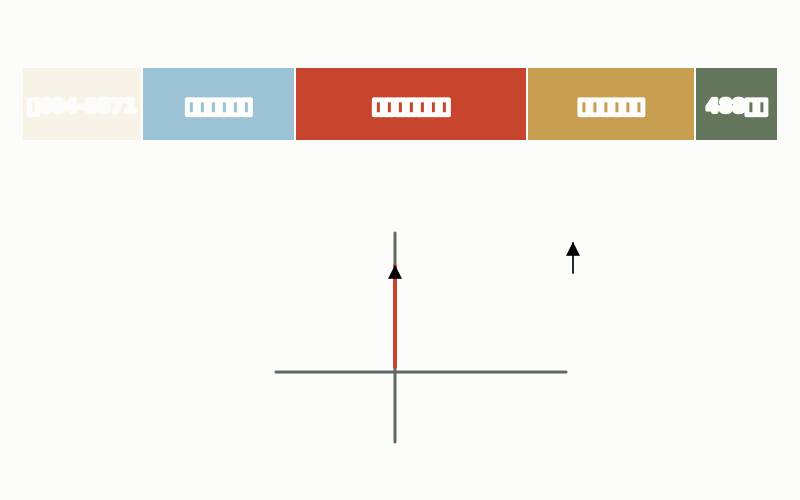
Breaking down Kyoto City Hall's address
| Part | Notation | Role |
|---|---|---|
| Postal code | 〒604-8571 | Indicates the delivery area |
| City and ward | 京都市中京区 (Kyoto-shi Nakagyō-ku) | Which of the 11 wards |
| Street names + direction | 寺町通御池上る (Teramachi-dōri Oike agaru) | Route from an intersection |
| Town name | 上本能寺前町 (Kamihonnōjimae-chō) | Official town |
| Lot number | 488番地 (488) | Number of the plot within the town |
Towns Grew Up Along Streets
In central Kyoto, towns have formed around streets. The towns that revived after the Ōnin War, unlike the ancient grid system (jōbō-sei), were ryōgawa-machi ("two-sided towns"), made up of the houses on both sides of a street.
Because each town itself is built facing a street, saying "which street, near which intersection" conveys where the town is. Including street names in addresses can be seen as a way of expressing location that suits how these towns came about. In the city center, east–west and north–south streets cross in a grid, so two street names work like coordinates.
This idea lives on in today's urban planning. In December 2004, Kyoto City expanded the mixed residential and business district in the city center, taking into account the streetscapes of ryōgawa-machi, formed by towns facing each other across a street as a single unit. The fact that a town unit straddles both sides of a street is reflected even in administrative boundaries.
Telling Same-Name Towns Apart by Street Name
Kyoto City has different towns with the same name. Even in census tabulations by town, users are advised that when towns with the same name exist within the same census statistical area, they should be identified by the street name attached to the town name. In the tables, such towns are marked with an asterisk (*) to draw attention to them.
Kyoto, for example, has two towns named Mukadeya-chō: one a town of kimono merchants and the other a town of joinery makers. When the town name alone makes them hard to tell apart, adding street names and directions prevents confusion. Long addresses are also a way of taking extra care not to mix up places.
Telling Same-Name Towns Apart by Street Name
The Format Was Set in 1889
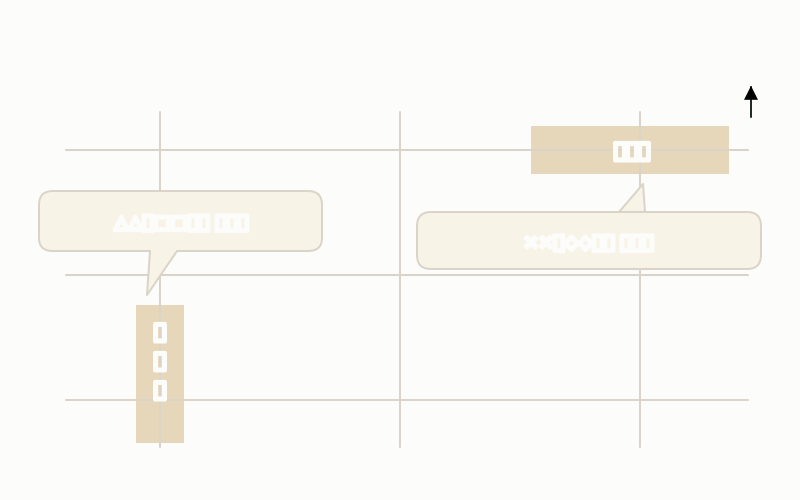
Kyoto Prefecture Notice No. 24 of March 1889 (Meiji 22) set the format for writing addresses as "Kyoto City, [ward], [street], [cross street], [town], agaru or sagaru, or higashi-iru or nishi-iru, [town], [house number]" (京都市何区何通何小路何町上ル下ル又は東入西入何町何番戸).
This pattern—ward, street, intersecting street, direction, town, and house number in order—is the prototype of today's long addresses. It is also said that this notice fixed how town names in Kyoto City are referred to.
Not Every Address Is Long
Street names are included mainly in the city center, where the grid remains. Comparing the addresses of ward offices, the Kamigyō, Nakagyō, and Shimogyō ward offices are written with street names, while the Kita and Fushimi ward offices use a town name and lot number, and the Higashiyama ward office uses a chōme (district number) form, such as Kiyomizu 5-chōme.
How ward office addresses are written
| Ward office | Address (after Kyoto City, … Ward) | Street names |
|---|---|---|
| Kamigyō Ward Office | 今出川通室町西入堀出シ町285 (Imadegawa-dōri Muromachi nishi-iru, Horidashi-chō 285) | Yes |
| Nakagyō Ward Office | 西堀川通御池下る西三坊堀川町521 (Nishihorikawa-dōri Oike sagaru, Nishisanbō Horikawa-chō 521) | Yes |
| Shimogyō Ward Office | 西洞院通塩小路上る東塩小路町608-8 (Nishinotōin-dōri Shiokōji agaru, Higashi-Shiokōji-chō 608-8) | Yes |
| Kita Ward Office | 紫野東御所田町33-1 (Murasakino Higashi-Goshoden-chō 33-1) | No |
| Higashiyama Ward Office | 清水五丁目130-6 (Kiyomizu 5-chōme 130-6) | No |
| Fushimi Ward Office | 鷹匠町39-2 (Takajō-chō 39-2) | No |
Tips for Writing and Looking Up Addresses
If you write the seven-digit postal code correctly, you can omit the city and ward names, but everything from the town area onward must always be written. For Kyoto addresses, too, the basics are to write the postal code, town name, and lot number accurately.
The street-name part is very handy for finding your way on the spot, but depending on how it is entered, map services may not recognize it well. When visiting a place for the first time, check the town name, lot number, and facility name as well. In official documents the directions are written 上る・下る (agaru, sagaru), while town-name signs and the like also use 上ル・下ル.
When reading an address, the first street is the one you travel along, and the next street marks the starting intersection. Some addresses, like the Kamigyō Ward Office's Imadegawa-dōri Muromachi nishi-iru, put an east–west street first. The meanings of the direction words and the order for reading them are explained with diagrams in the entry "Agaru, Sagaru, Higashi-iru, Nishi-iru."
Mini quiz for this entry
Check what you've read with 3 multiple-choice questions.
Why can Kyoto addresses look unusually long?
In a central Kyoto address, which direction does agaru (上る) indicate?
In Kyoto City's statistics, when towns in the same statistical district share a name, what are users advised to use to tell them apart?
Sources and verification
Content checked: October 11, 2026
Updated: October 11, 2026
References are in Japanese.