
Hamagurigomon
Other spellings and namesShinzaike Gate (Shinzaikegomon) / Hamaguri-mon
Key points
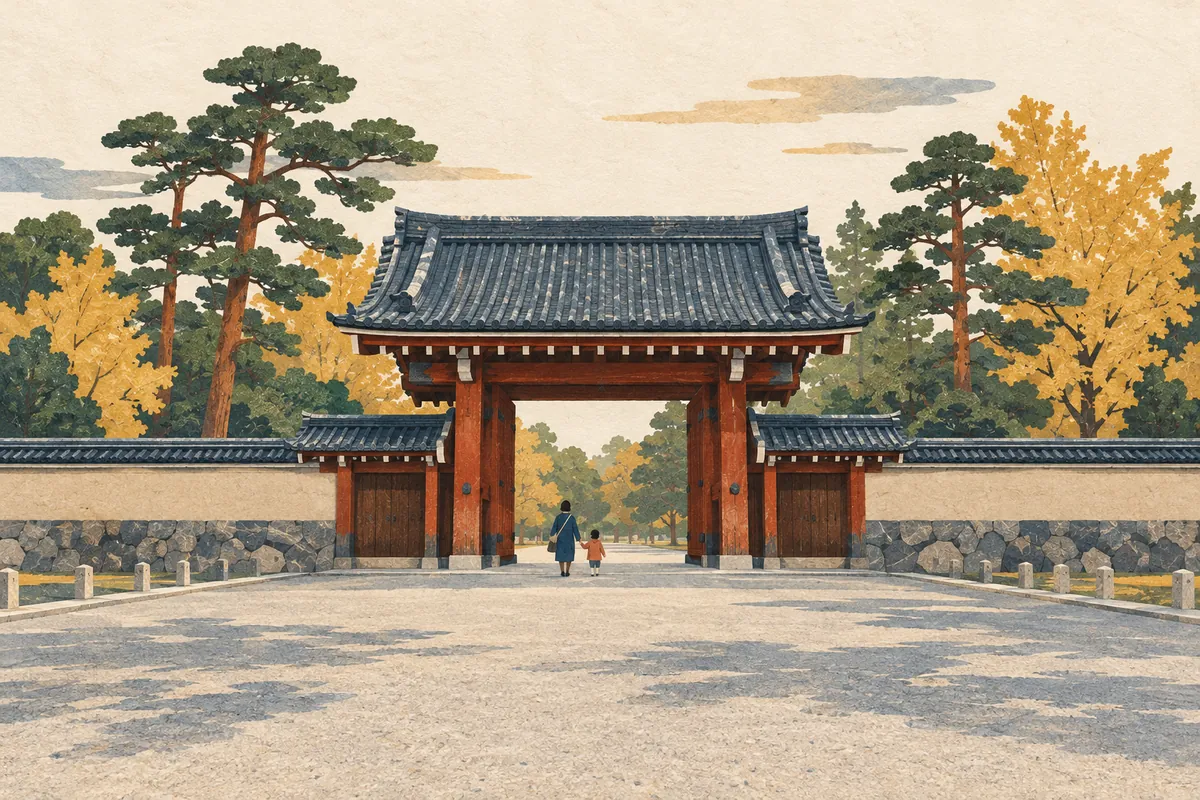
The middle one of the three gates on Karasuma-dōri, among the nine gates around Kyoto Gyoen
A map of 1677, older than the fires the name is usually tied to, already shows an open "Hamaguri-mon"
A scene of fierce fighting in the Kinmon Incident of 1864, between Chōshū and the Aizu, Satsuma, and other forces
Its present position dates from the Meiji-era Ōuchi Preservation Project, which moved the gates
Its official name, Shinzaikegomon
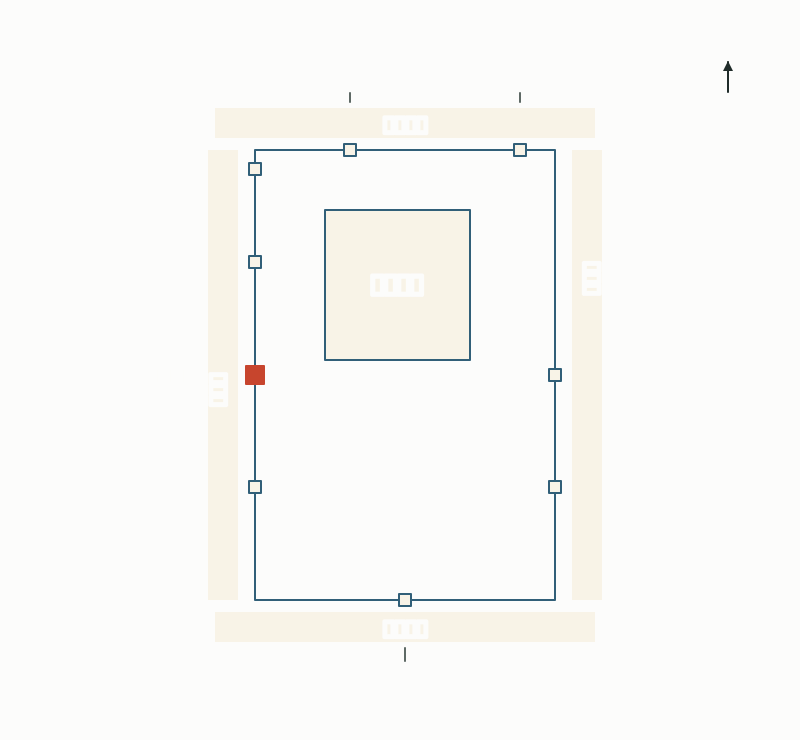
Kyoto Gyoen is the national garden surrounding the Kyoto Imperial Palace, bounded by Imadegawa-dōri to the north, Karasuma-dōri to the west, Marutamachi-dōri to the south, and Teramachi-dōri to the east. The perimeter has nine gates, and the Hamaguri Gate is the middle one of the three on the west side facing Karasuma-dōri.
Its official name is Shinzaikegomon, and "Hamaguri Gate" is the popular name. It is a four-legged gate (shikyakumon) with a formal tiled roof (hongawarabuki), and as soon as you pass through it the greenery of the Gyoen opens out. In the Edo period this area was the court nobles' quarter, where more than 140 residences of imperial princes and court nobles surrounded the palace.
The Nine Gates of Kyoto Gyoen
Where the name comes from, and a map of 1677
The commonly told origin is that this gate, normally kept closed, was opened during a great fire that reached the palace, and so it came to be called the Hamaguri Gate (蛤御門, "clam gate") after a clam that opens its shell when roasted. The accounts differ, however, on which fire that was: some say the Great Hōei Fire of 1708 (Hōei 5), others the Great Tenmei Fire of 1788 (Tenmei 8).
Then in May 2016, a researcher at the Institute of Japanese Culture at Kyoto Sangyo University announced that an old map made in 1677 (Enpō 5), the "Shinkai Dairi no Zu," already shows the gate under the name "Hamaguri-mon," and in an open state at that. The name Hamaguri-mon also appears in records from around 1694 (Genroku 7) and in a court noble's diary of 1707 (Hōei 4). The finding suggests that the name existed, and the gate may already have been open, before the Great Hōei Fire.
The fiercest fighting of the 1864 Kinmon Incident
On July 19, 1864 (Genji 1), the Chōshū domain, which had been driven out of Kyoto in the coup of August 18 the previous year, sent its three senior retainers to the capital at the head of troops in an attempt to regain its influence, and fought the allied forces of Aizu, Satsuma, and the shogunate around the Hamaguri Gate and the Sakaimachi Gate of the palace (today's Kyoto Gyoen). Chōshū was defeated. The battle is known as the Kinmon Incident, the Hamaguri Gate Incident, and also the Genji Kasshi Incident.
At the Hamaguri Gate the defending Aizu forces fell back, and Satsuma troops guarding the Inui Gate rushed to the scene, leading to fierce fighting. The Chōshū commander Kijima Matabee was killed in this battle, and Kusaka Genzui died in the Takatsukasa residence.
The fighting ended in a single day, but fires that broke out at the Chōshū residence and the Sakaimachi Gate spread through the city and became the great fire known as the Dondon-yake. It burned about 800 neighborhoods and 27,000 households, from Marutamachi-dōri in the north to Shichijō-dōri in the south and from Teramachi in the east to Higashihorikawa in the west.
Bullet marks in the beams and the Meiji-era move
Bullet marks from the fighting in the Kinmon Incident can still be seen on the weathered beams of the Hamaguri Gate. The doors are also said to bear bullet marks.
The present Hamaguri Gate is not quite where it stood in the Edo period. The Ōuchi Preservation Project begun in 1877 (Meiji 10) involved removing the court nobles' residences, building earthworks around the perimeter, laying new roads, and relocating the gates, and the work was completed ahead of schedule in 1883 (Meiji 16). The nine perimeter gates of the Gyoen were moved to their present positions in this project; the Hamaguri Gate of the late Edo period stood inside the perimeter, facing south.
The gate has been repaired repeatedly since, and repairs were begun in 1964 (Shōwa 39) together with the Seiwain Gate. The late-Edo gate does not survive exactly as it was.
The nine gates of Kyoto Gyoen
The Nine Gates of Kyoto Gyoen (Location and Nearest Station, Approximate)
| Gate | Street it faces | Approximate location | Nearest station (approx.) |
|---|---|---|---|
| Inui Gate (乾御門, Inuigomon) | Karasuma-dōri (northwest corner) | Near the north end of Karasuma-dōri. Children's playground on the north side inside the gate | Imadegawa subway station |
| Imadegawa Gate (今出川御門) | Imadegawa-dōri (north) | Slightly west of center on the north side. West of the Katsura-no-miya residence site | Imadegawa subway station |
| Ishiyakushi Gate (石薬師御門, Ishiyakushigomon) | Imadegawa-dōri (northeast corner) | Near the corner with Teramachi-dōri | Keihan Demachiyanagi Station (about 20 min on foot) |
| Nakadachiuri Gate (中立売御門, Nakadachiurigomon) | Karasuma-dōri (west) | Northern part of the west side. Closest to the Nakadachiuri rest house and parking lot, and to the reception for palace visits | Imadegawa subway station |
| Hamaguri Gate (蛤御門, Hamagurigomon) | Karasuma-dōri (west) | Center of the west side | Marutamachi and Imadegawa subway stations |
| Shimodachiuri Gate (下立売御門, Shimodachiurigomon) | Karasuma-dōri (west) | Southern part of the west side. West of the Demizu Stream | Marutamachi subway station |
| Sakaimachi Gate (堺町御門, Sakaimachigomon) | Marutamachi-dōri (south) | Center of the south side. A straight path leads to the Kenreimon gate | Marutamachi subway station |
| Teramachi Gate (寺町御門) | Teramachi-dōri (east) | Southern part of the east side. Southeast of the Sentō Imperial Palace | Keihan Jingū-Marutamachi Station (about 15 min on foot) |
| Seiwain Gate (清和院御門, Seiwaingomon) | Teramachi-dōri (east) | Center of the east side. South of the Kyoto State Guest House, near the Seiwain parking lot | Keihan Jingū-Marutamachi and Demachiyanagi stations |
From the gate on Karasuma-dōri around the Kinmon Incident sites
By city bus, the gate is just north of the "Karasuma Shimochōjamachi" stop. By the Karasuma subway line, it is about 5 minutes on foot to the Gyoen from either Marutamachi Station (exit 1) or Imadegawa Station (exit 3); the Hamaguri Gate lies midway between the two stations, so about 5–7 minutes' walk along Karasuma-dōri brings you there.
Kyoto Gyoen is open free of charge 24 hours a day, every day (as of October 2026). The Kan'in-no-miya Residence Site exhibition hall is free and open every day except Mondays (it opens when Monday is a public holiday) and the year-end and New Year period. The Shūsui-tei teahouse is open on Thursdays, Fridays, and Saturdays for a fee of 300 yen for high school students and older. There is a children's playground near the Inui Gate, and a rest house and restrooms inside the Nakadachiuri Gate.
To trace the Kinmon Incident, enter the Gyoen through the Hamaguri Gate and walk in order to the site where Kijima Matabee fell (about 2 minutes on foot from the gate), the Takatsukasa residence site, and the Sakaimachi Gate, for a loop around the scenes of the battle.
Mini quiz for this entry
What is said to be the origin of the name of the Hamaguri Gate (Hamaguri-gomon) in Kyoto Gyoen?
Which Chōshū commander was killed in the Kinmon Incident, with the spot where he fell marked inside the Gyoen about 2 minutes on foot from the Hamaguri Gate?
The Hamaguri Gate is said to be named for opening during a great fire, when it was normally kept shut. What evidence, announced in 2016, shows the name already existed before the Great Hōei Fire (1708)?
Sources and verification
Content checked: October 17, 2026
Updated: October 17, 2026
References are in Japanese.