
The Kyoto Imperial Palace and Satodairi
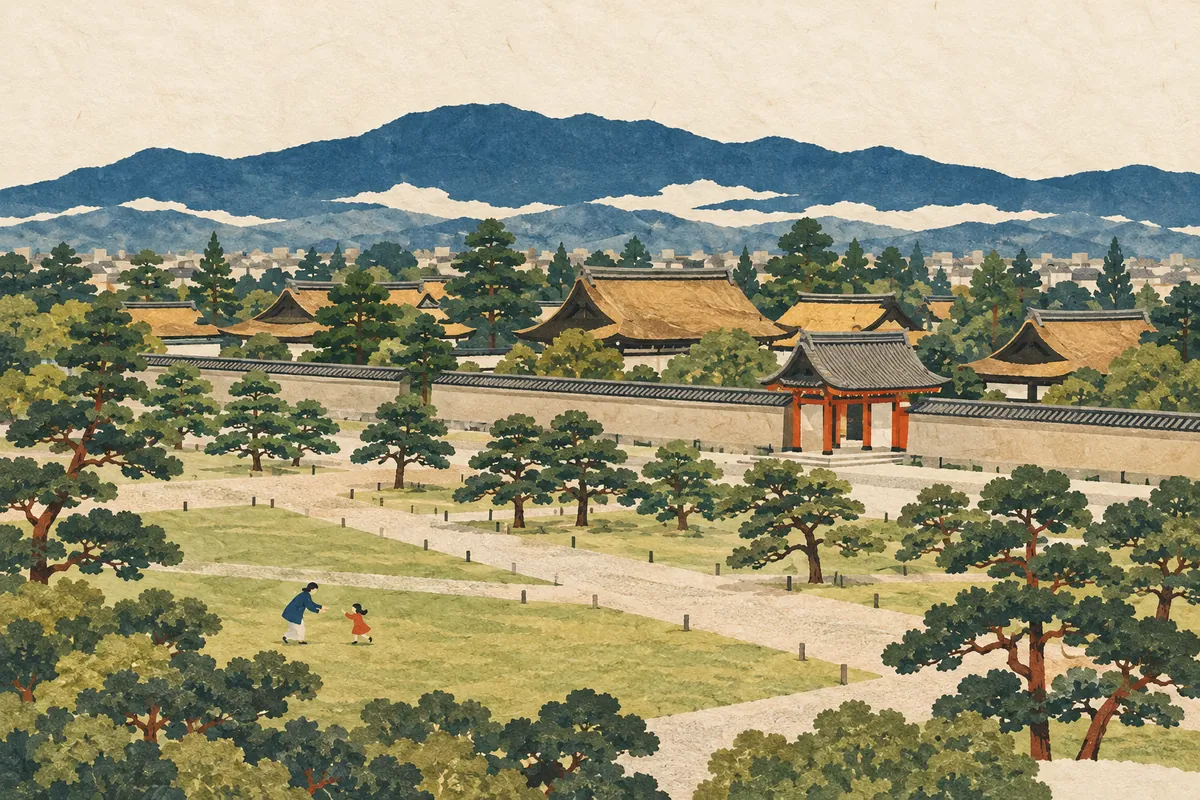
Key points
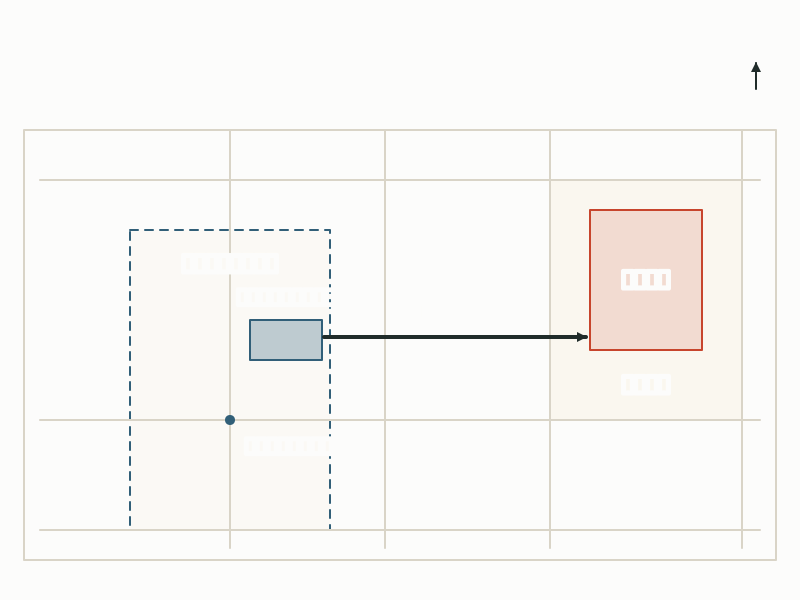
The Heian-kyō Dairi stood inside the Greater Palace (Daidairi) near Senbon Marutamachi, about 2 km west of the present palace
In place of the Dairi, rebuilt and burned again and again, one of the satodairi became today's palace
The present buildings are a rebuilding of 1855 (Ansei 2). The Shishinden and Seiryōden preserve Heian-period styles
The palace and the Gyoen are run by different bodies: the Imperial Household Agency and the Ministry of the Environment
The Heian-kyō Dairi stood at Senbon Marutamachi
In Heian-kyō, laid out by Emperor Kanmu in 794 (Enryaku 13), the Dairi (inner palace), the emperor's residence, stood together with state facilities such as the Daigokuden (Great Hall of State) and government offices inside a square precinct called the Daidairi (Greater Palace, or Heian Palace). The Daidairi was built around the Daigokuden at Senbon Marutamachi, and the Dairi lay slightly east of its center, around Demizu-dōri and Shimodachiuri-dōri between today's Senbon-dōri and Chiekōin-dōri. It was enclosed by a double structure of an outer earthen wall and an inner corridor, and inside the inner enclosure stood halls such as the Shishinden and the Kokiden that appears in The Tale of Genji.
The present Kyoto Imperial Palace is about 2 km east of this spot. At the Dairi site in Kamigyō Ward there are stone markers and explanatory boards for the Shishinden site, the Seiryōden site, and others, as well as the remains of the inner corridor, designated a Historic Site.
The Heian-kyō Greater Palace (Dairi) and the Present Kyoto Imperial Palace
Fires at the Dairi and the satodairi
The Dairi built with the move of the capital to Heian-kyō first burned down in 960 (Tentoku 4), and after that it was rebuilt and burned 18 times. Each time, the emperor moved to an aristocratic mansion in the city, and mainly the mansions of the Fujiwara regents' family served as temporary imperial residences. These are the satodairi (里内裏, "palace in the town"). Gradually the emperors stopped using the Dairi in the Heian Palace, and after a fire in 1227 (Antei 1) the Dairi was never again rebuilt on its original site.
The site of the Heian Palace continued to be used for ceremonies into the Muromachi period, but it became a wide open space known as Uchino, and later Toyotomi Hideyoshi built the Jurakudai on part of it.
How Tsuchimikado Higashinotōin-dono became the palace
The present Kyoto Imperial Palace derives from Tsuchimikado Higashinotōin-dono (also called Higashinotōin Tsuchimikado-dono), one of the satodairi. Since Emperor Kōgon was enthroned here in 1331 (Genkō 1), this site has been treated as the palace, and with the reunification of the Northern and Southern Courts in 1392 (Meitoku 3) it was fixed as the imperial residence. It remained the emperor's home for about 500 years, until Emperor Meiji moved to Tokyo in 1869 (Meiji 2).
Small at first, it was gradually enlarged, and in the Edo period it was rebuilt eight times by the Tokugawa shogunate, six of them because of fire. The palace burned in the Great Tenmei Fire of 1788 (Tenmei 8) as well, and in the Kansei-era Dairi built in 1790 (Kansei 2), the old Heian-period styles were revived in the Shishinden, Seiryōden, Higyōsha, and other halls. This Dairi, too, was struck by fire in 1854 (Kaei 7), and the present Kyoto Imperial Palace is the rebuilding of the following year, 1855 (Ansei 2), which reproduced the Kansei-era Dairi almost exactly. The Shishinden and Seiryōden are single-story wooden buildings roofed with cypress bark (hiwadabuki).
The palace preservation project and Kyoto Gyoen as a national garden
Around the palace, in the time of Hideyoshi and the Tokugawa, the residences of imperial princes and court nobles were gathered, and after the Great Hōei Fire (1708) the commoners' houses that had been mixed among them were moved out, forming a court nobles' quarter (kuge-machi) of more than 140 residences large and small. In the Kinmon Incident of 1864 (Genji 1), the area around the Hamaguri Gate on the west side of this quarter became a battlefield.
When many court nobles moved to Tokyo with the relocation of the imperial court in 1869, the court nobles' quarter fell into decay rapidly. Emperor Meiji, visiting Kyoto in 1877 (Meiji 10), was deeply saddened by its state and ordered Kyoto Prefecture to preserve the palace and maintain its former appearance. The prefecture began the Ōuchi Preservation Project and completed it in 1883 (Meiji 16), and in September of that year management passed to the Imperial Household Ministry. After the war, following a cabinet decision in 1947 (Shōwa 22), it was opened to the public as a national garden from 1949 (Shōwa 24).
Visiting the Gyoen and the Gosho
The Kyoto Imperial Palace (Kyoto Gosho) is the walled area that was the emperor's residence and is managed by the Imperial Household Agency. Kyoto Gyoen is the whole park that contains it and is managed by the Ministry of the Environment.
Kyoto Gyoen is at 3 Kyoto Gyoen, Kamigyō Ward, a park about 700 m east–west and 1,300 m north–south, about 65 ha in area, open free of charge 24 hours a day, every day. Marutamachi Station on the Karasuma subway line and the Karasuma Marutamachi city bus stop are close, and for the Imperial Household Agency Kyoto Office, where palace visits are received, Imadegawa Station (about 5 minutes on foot) is convenient. The northwest part of the park has a children's playground; the "Mother and Child Forest" in the northeast has the "Forest Library," where you can read books; children can play in the water at the "Demizu Stream" in the southern part of the west side; and there are tennis courts and a sports ground. The Gyoen has nine gates, and the Hamaguri Gate faces Karasuma-dōri.
The Kyoto Imperial Palace is open year-round, free of charge, with no advance application needed. Enter through the Seishomon gate. Opening hours are 9:00–17:00 from April to August (entry until 16:20), 9:00–16:30 in September and March (entry until 15:50), and 9:00–16:00 from October to February (entry until 15:20). It is closed on Mondays (or the following day when Monday is a public holiday), from December 28 to January 4, and on days of court events (as of October 2026). The route takes in the Shishinden, Seiryōden, Kogosho, Ogakumonjo, Oikeniwa garden, Otsunegoten, and more. The spring and autumn "Special Opening: Introduction to Court Culture," held since 1946 (Shōwa 21), includes displays of wall paintings and demonstrations of kemari and gagaku.
Mini quiz for this entry
What was a satodairi (里内裏), used in the Heian period when the Dairi repeatedly burned down?
In the Edo period, how many residences of imperial princes and court nobles, large and small, stood in the court nobles' quarter around the Kyoto Imperial Palace?
In 1877 (Meiji 10), Emperor Meiji, saddened by the decay of the court-noble district, ordered Kyoto Prefecture to act. What project did the prefecture begin?
Sources and verification
Content checked: October 17, 2026
Updated: October 17, 2026
References are in Japanese.
- 環境省 京都御苑「京都御苑の歴史」
- 環境省 京都御苑「京都御苑の概要」
- 環境省 京都御苑「よくあるご質問」
- 環境省「京都御苑」
- 宮内庁「参観ご希望の方へ(皇居・京都御所・離宮参観)」
- 宮内庁「京都御所[施設案内]」
- 宮内庁 京都御所「参観要領」
- 宮内庁 京都御所「内裏変遷」
- 宮内庁「《京都》御所と離宮の栞 其の六 京都御所略史」
- 宮内庁 京都御所「紫宸殿」
- 宮内庁 京都御所「清涼殿」
- 宮内庁 京都御所「京都御所の展示年表」
- 京都市・京都市埋蔵文化財研究所「京都歴史散策マップ1 平安宮跡」
- 京都市文化財保護課「京都市内の埋蔵文化財 発掘調査速報 No.017 平安宮内裏内郭廻廊跡の発掘調査」
- 京都市「都市史03 条坊制」
- 京都市「都市史23 宝永の大火」
- 京都市「都市史24 天明の大火」
- 京都市「都市史25 蛤御門の変とどんどん焼け」