
Kyoto's Imperial Palaces and Villas and National Treasure Status
Key points
The palace buildings are not designated, yet the Keichō-era Shishinden moved to Ninna-ji is a National Treasure as the temple's Kondō
In the Diet, the reason given for not designating them is that the Imperial Household Agency preserves them with great care
The Shōsōin Shōsō, also property for Imperial use, became a National Treasure on May 19, 1997, and part of a World Heritage property in 1998
Of the four, only Katsura Imperial Villa charges a fee, and only the Kyoto Imperial Palace admits children of elementary school age and younger
The four sites are "Property for Imperial use"
National property is classified under the National Property Act, and one type of administrative property is property for Imperial use. The Act defines it as property "that the State uses, or has decided to use, for the use of the Imperial Family," and together with the Imperial Palace in Tokyo, the imperial villas (goyōtei), the Shōsōin, the imperial tombs (ryōbo), and others, the Kyoto Imperial Palace (including the Ōmiya Imperial Palace and the Kyoto Sentō Imperial Palace), Katsura Imperial Villa, and Shūgakuin Imperial Villa are under the management of the Imperial Household Agency as property for Imperial use. In the Agency's list of property for Imperial use as of March 31, 2025, the land of the Kyoto Imperial Palace (including the Ōmiya and Kyoto Sentō Imperial Palaces) is about 202,000 m².
None of the four sites has been designated a National Treasure or Important Cultural Property, or a Historic Site or Place of Scenic Beauty, under the Law for the Protection of Cultural Properties. By contrast, the palace's Shishinden built in the Keichō era was moved to Ninna-ji to become its Kondō, and it is designated a National Treasure as a temple building.
Why they are not designated, as answered in the Diet
In the Diet in 1960 (Shōwa 35), the then Secretary-General of the Commission for Protection of Cultural Properties stated that the villas, gardens, and other sites associated with the Imperial Household Agency had not yet been designated under the Law for the Protection of Cultural Properties. In 1968 (Shōwa 43), the Secretary-General of the Commission also said that because treasures, historic sites, and other properties kept by the Imperial Household Agency were preserved with great care by the Agency, they had not been designated as National Treasures, Important Cultural Properties, Historic Sites, or the like.
In the Diet in 2017 (Heisei 29), the Imperial Household Agency stated that it had worked to maintain and manage the historic facilities, such as the stone walls and buildings remaining at the Imperial Palace, the palaces, and the imperial villas, with full regard to their value as cultural properties as well. Regarding the imperial tombs (the graves of emperors and members of the Imperial Family), it indicated in 2002 (Heisei 14) that, since the Imperial Household Agency was adequately preserving and managing them as property for Imperial use, there was in principle no need to designate them as Historic Sites. The Agency for Cultural Affairs likewise stated that designating an imperial tomb as a Historic Site would presuppose the agreement of the Imperial Household Agency, which manages it, and that because the Imperial Household Agency was ensuring adequate preservation, there was no urgent need to do so.
The Shōsōin Shōsō, which became a National Treasure
The Shōsōin Shōsō (Nara City), managed by the Imperial Household Agency, was designated a National Treasure on May 19, 1997 (Heisei 9). In preparing Nara's World Heritage nomination, it was considered appropriate to nominate the Shōsōin together with Tōdai-ji, with which it forms a whole, but a nomination required protective measures under domestic law. The Agency for Cultural Affairs therefore consulted the Imperial Household Agency and obtained its agreement, designated the building a National Treasure, and added the surrounding area to the designation of the Historic Site "Former Precincts of Tōdai-ji"; in December 1998 (Heisei 10) it was inscribed on the World Heritage List as part of "Historic Monuments of Ancient Nara."
As its reason for agreeing, the Imperial Household Agency cited the special relationship between the Shōsōin Shōsō and Tōdai-ji: it was originally the treasure house holding objects cherished by Emperor Shōmu that had been dedicated to Tōdai-ji, it had in practice been managed by Tōdai-ji for more than a thousand years, and the building also stood within Tōdai-ji's precincts. Kyoto's imperial palaces and villas are not among the 17 component sites of the World Heritage property "Historic Monuments of Ancient Kyoto," inscribed in 1994.
How the four palaces and villas came about
The Kyoto Imperial Palace stands inside Kyoto Gyoen, and its present buildings date from 1855 (Ansei 2). The area enclosed by white earthen walls (tsuijibei) to its southeast is the Kyoto Sentō Imperial Palace and Kyoto Ōmiya Imperial Palace, the site of palaces since the time of Retired Emperor Go-Mizunoo and Tōfukumon-in. After the great fire of 1854 (Kaei 7), most of the Sentō Palace's buildings were not rebuilt; the Seikatei tea house (ochaya) and a garden with a suhama (pebble beach) paved with rounded stones remain.
Katsura Imperial Villa (Nishikyō Ward) stands on the west bank of the Katsura River. It was begun as a villa by Prince Toshihito, the first head of the Hachijō-no-miya family, and is thought to have been given its present form over about 50 years, from 1615 (Genna 1) until around 1662 (Kanbun 2). Shūgakuin Imperial Villa (Sakyō Ward) is the mountain villa of Retired Emperor Go-Mizunoo at the southwestern foot of Mount Hiei; construction began in 1655 (Meireki 1), and its completion was celebrated in 1659 (Manji 2). It consists of three villas, the Upper, Middle, and Lower, with a total area of about 540,000 m².
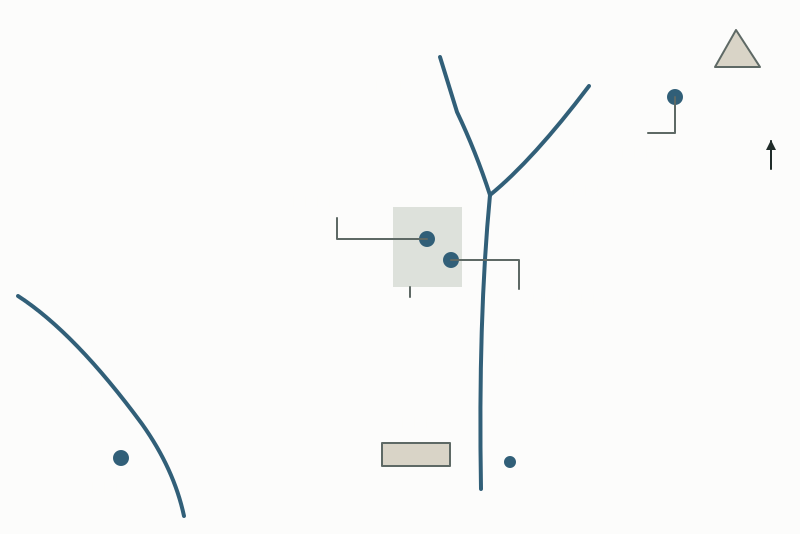
Where Kyoto's Four Imperial Palaces and Villas Are (Schematic Map)
How to visit and fees
The Kyoto Imperial Palace is open year-round, and you enter through the Seishomon Gate (a 5-minute walk from Imadegawa Subway Station). Since July 2016 it has been open without advance application, including on Saturdays and Sundays. The surrounding Kyoto Gyoen is a park you can enter free of charge 24 hours a day, every day.
The Sentō Imperial Palace, Katsura Imperial Villa, and Shūgakuin Imperial Villa are visited with an advance application (online, by return postcard, or at the counter) or a same-day numbered ticket, and you go around following a staff guide. You cannot go inside the buildings, and every visitor needs an identity document (a student ID or similar for junior high and high school students). Katsura Imperial Villa has no place for children without a visiting permit to wait. The Sentō Imperial Palace is a 15-minute walk from Exit 1 of Marutamachi Subway Station, Katsura Imperial Villa a 20-minute walk from the East Exit of Hankyū Katsura Station, and Shūgakuin Imperial Villa a 20-minute walk from Shūgakuin Station on the Eizan Railway. Check closed days (Mondays and others) and visiting times in the Imperial Household Agency's visitor information.
Comparing Kyoto's four imperial palaces and villas (as of October 2026)
| Site (ward) | How to visit | Fees and children |
|---|---|---|
| Kyoto Imperial Palace (Kamigyō Ward) | You can walk around freely, and staff guides are also available | Free. Anyone may visit |
| Kyoto Sentō Imperial Palace (Kamigyō Ward, inside Kyoto Gyoen) | About 60 minutes with a staff guide | Free. Only those 18 and over may visit |
| Katsura Imperial Villa (Nishikyō Ward) | About 60 minutes with a staff guide | 1,000 yen for those 18 and over; free for junior high and high school students and the like. Only junior high school students and older may visit |
| Shūgakuin Imperial Villa (Sakyō Ward) | About 80 minutes (about 3 km) with a staff guide | Free. Only those 18 and over may visit |
Mini quiz for this entry
Like the Kyoto Imperial Palace and Katsura Imperial Villa, which of these is "property for Imperial use" managed by the Imperial Household Agency?
From what age (school level) can people visit Katsura Imperial Villa in Nishikyō Ward?
The Shōsōin Shōsō, managed by the Imperial Household Agency, was designated a National Treasure in 1997. Which reason did the Imperial Household Agency give for agreeing to the designation?
Sources and verification
Content checked: October 19, 2026
Updated: October 19, 2026
References are in Japanese.
- 宮内庁「皇室用財産」(皇室用財産一覧表 令和7年3月31日現在)
- e-Gov法令検索「国有財産法」(昭和23年法律第73号)
- 国立国会図書館「国会会議録検索システム」第34回国会 衆議院文教委員会 第6号(昭和35年3月11日)岡田孝平文化財保護委員会事務局長の答弁
- 国立国会図書館「国会会議録検索システム」第58回国会 衆議院内閣委員会 第8号(昭和43年4月3日)福原匡彦文化財保護委員会事務局長の答弁
- 国立国会図書館「国会会議録検索システム」第193回国会 衆議院内閣委員会 第3号(平成29年3月10日)野村善史宮内庁長官官房審議官の答弁
- 国立国会図書館「国会会議録検索システム」第154回国会 衆議院決算行政監視委員会第一分科会 第1号(平成14年4月8日)山口均宮内庁書陵部長の答弁(陵墓)
- 国立国会図書館「国会会議録検索システム」第154回国会 衆議院決算行政監視委員会第一分科会 第1号(平成14年4月8日)銭谷眞美文化庁次長の答弁(陵墓)
- 国立国会図書館「国会会議録検索システム」第154回国会 衆議院決算行政監視委員会第一分科会 第1号(平成14年4月8日)銭谷眞美文化庁次長の答弁(正倉院)
- 国立国会図書館「国会会議録検索システム」第154回国会 衆議院決算行政監視委員会第一分科会 第1号(平成14年4月8日)山口均宮内庁書陵部長の答弁(正倉院)
- 文化庁「国指定文化財等データベース」(京都御所・仙洞御所・桂離宮・修学院離宮で検索)
- 文化庁「国指定文化財等データベース 正倉院正倉」
- 文化庁「国指定文化財等データベース 古都奈良の文化財」(世界遺産)
- 文化庁「世界遺産一覧」
- 文化庁「国指定文化財等データベース 仁和寺金堂」
- 宮内庁「よくあるご質問」(京都御所について)
- 宮内庁 京都御所「参観要領」
- 宮内庁 京都御所「アクセス」
- 宮内庁 京都仙洞御所「京都仙洞御所について」
- 宮内庁「京都仙洞御所 参観申込要領」
- 宮内庁 桂離宮「桂離宮について」
- 宮内庁「桂離宮 参観申込要領(参観は有料です)」
- 宮内庁 桂離宮「よくあるご質問(Q&A)」
- 宮内庁 修学院離宮「修学院離宮について」
- 宮内庁「修学院離宮 参観申込要領」
- 宮内庁「宮内庁参観案内」
- 環境省 京都御苑「よくあるご質問」