
Kyoto Cultural Properties to See Free with Children
Key points
At Nishi Hongan-ji, you can go inside the National Treasure Goeidō and Amidadō for free while the gates are open
At Tō-ji, visiting the Daishidō (Miedō), a National Treasure, and the Jikidō is free, and the National Treasure five-story pagoda can be seen from the grounds
At Nijō Castle, children under elementary school age, and elementary and junior high school students who live in Kyoto City or attend its schools, are free for both entry and viewing
Kyoto Gyoen is free 24 hours a day, and the Kyoto Imperial Palace is open year-round, free and with no application needed (closed Mondays)
Free grounds, paid interiors and gardens
At many temples and shrines, entering the grounds (keidai) and worshipping are free, and admission is charged only for places such as the interior of the main hall, gardens, or treasure houses. So simply by walking through the grounds you can see National Treasure and Important Cultural Property gates, main sanctuaries, and pagodas up close from outside.
National Treasures and Important Cultural Properties you can see without an admission fee
Main places where you can see National Treasure and Important Cultural Property buildings without an admission fee
| Place (ward) | National Treasure / Important Cultural Property buildings you can see | Free areas (paid parts) | Nearest station / bus stop |
|---|---|---|---|
| Kamigamo Shrine (Kita) | Important Cultural Properties: Rōmon, Hosodono, and others (the National Treasure Honden and Gonden can be seen from inside the middle gate during paid special worship) | Grounds (special worship in front of the Honden and Gonden is paid) | Right by City Bus "Kamigamo Jinja-mae" |
| Shimogamo Shrine (Sakyō) | National Treasures: East Honden and West Honden | Grounds, including Tadasu no Mori (special viewing of the Ōidono and other buildings is paid) | 12-minute walk from Keihan Demachiyanagi Station |
| Kitano Tenmangū (Kamigyō) | National Treasure: Honden (one building with the Ishi-no-ma, Haiden, and others) | Grounds (plum garden, maple garden, and treasure hall are paid) | Right by City Bus "Kitano Tenmangū-mae" |
| Senbon Shakadō (Daihōon-ji, Kamigyō) | National Treasure: Hondō (1227) | Entry to the temple and grounds (Hondō interior and Reihōden treasure hall are paid) | About a 3-minute walk from City Bus "Kamishichiken" |
| Kyoto Gyoen and the Former Main Building of the Kyoto Prefectural Office (Kamigyō) | Important Cultural Property: Former Main Building of the Kyoto Prefectural Office (the Kyoto Imperial Palace in the Gyoen is also open) | Gyoen open 24 hours; Kyoto Imperial Palace open year-round; Former Main Building free on open days | Marutamachi and Imadegawa Subway Stations |
| Heian Shrine (Sakyō) | Important Cultural Properties: Daigokuden, Ōtenmon, and others | Grounds (shrine garden is paid) | 10-minute walk from Higashiyama Subway Station |
| Nanzen-ji (Sakyō) | National Treasure: Suirokaku (Lake Biwa Canal facilities); Important Cultural Property: Sanmon | Grounds and Suirokaku (Hōjō Garden, the Sanmon's upper story, and Nanzen-in are paid) | 10-minute walk from Keage Subway Station |
| Chion-in (Higashiyama) | National Treasures: Sanmon and Miedō | Grounds (Hōjō Garden and Yūzen-en are paid) | 8-minute walk from Higashiyama Subway Station |
| Yasaka Shrine (Higashiyama) | National Treasure: Honden; Important Cultural Properties: West Tower Gate and others | Grounds (open for worship 24 hours) | About a 5-minute walk from Keihan Gion-Shijō Station |
| Mibu-dera (Nakagyō) | Important Cultural Property: Dainenbutsudō (kyōgen stage) | Grounds (Amidadō and the Mibu Mound are paid) | About a 10-minute walk from Hankyū Ōmiya Station |
| Nishi Hongan-ji (Shimogyō) | National Treasures: Goeidō, Amidadō, Karamon, and others | Grounds and the interiors of the Goeidō and Amidadō (the Hiunkaku and others are normally closed) | About a 15-minute walk from JR Kyoto Station |
| Tō-ji (Minami) | National Treasures: five-story pagoda, Daishidō, Kondō, and others | Grounds, Daishidō, and Jikidō (Kondō and Kōdō are paid) | 10-minute walk from Kintetsu Tōji Station |
| Tōfuku-ji (Higashiyama) | National Treasure: Sanmon; Important Cultural Properties: Zendō (meditation hall), Tōsu (latrine), bathhouse, and others | Grounds (Tsūtenkyō/Kaisandō and the Honbō Garden are paid) | About a 10-minute walk from JR/Keihan Tōfukuji Station |
Nearby places to visit together
Main Places to See National Treasures and Important Cultural Properties for Free (Schematic Map)
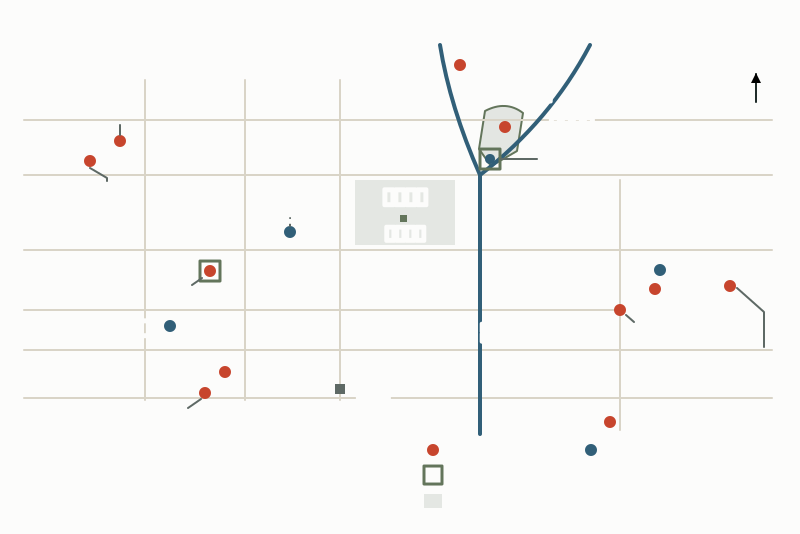
- Along the Kamo River: Kamigamo Shrine and Shimogamo Shrine are linked by City Bus Route 4.
- Nishijin and Kitano: Senbon Shakadō is east of Kitano Tenmangū, at Shichihonmatsu-dōri Imadegawa agaru, so you can visit them one after the other.
- Around the Imperial Palace: The Former Main Building of the Kyoto Prefectural Office is just west of Kyoto Gyoen, so on open days you can visit it next.
- West of Horikawa-dōri: Nijō Castle, Mibu-dera southwest of Shijō Ōmiya, Nishi Hongan-ji, and Tō-ji facing Kujō-dōri line up from north to south.
- Higashiyama and Okazaki: From Yasaka Shrine at the east end of Shijō-dōri, head north to Chion-in, Heian Shrine in Okazaki, and Nanzen-ji and the Suirokaku near Keage. For Tōfuku-ji to the south, Tōfukuji Station on the JR and Keihan lines is convenient.
Places free for Kyoto City elementary and junior high school students
Elementary and junior high school students who live in Kyoto City or attend elementary or junior high schools in the city can sometimes enter normally paid facilities for free. At Nijō Castle (Nakagyō Ward, Nijōjō-mae Subway Station), home of the National Treasure Ninomaru Palace, they are exempt from the entrance fee and also from the viewing fees for the Ninomaru Palace, the Honmaru Palace, and the Exhibition and Storage Hall, and their address or school name is checked at the entrance. Children under elementary school age are also free. The Honmaru Palace requires advance reservations, and even those entering free need to reserve.
The Former Mitsui Family Shimogamo Villa (Sakyō Ward, about a 5-minute walk from Demachiyanagi Station), west of Shimogamo Shrine's first torii, is a villa of the Mitsui family. Its main house is an 1880 building moved to the site; the villa was completed in its present form in 1925 (Taishō 14) and designated an Important Cultural Property in 2011 (Heisei 23). Elementary and junior high school students who live in Kyoto City or attend elementary or junior high schools in the city are free; show a student handbook or similar, or tell the staff (closed Wednesdays).
At Kamigamo Shrine, special worship at the Honden is normally free for junior high school students and younger when accompanied by family (during the spring and autumn special openings and the summer special program, children are charged too). At Shimogamo Shrine, special viewing of the Ōidono and other buildings is free for junior high school students and younger.
Walking the approaches, eating, play areas, and nursing rooms
- At Yasaka Shrine and some other shrines, the center of the approach is considered the path of the deities, and visitors are asked to walk along the sides.
- Nanzen-ji prohibits eating, drinking, sports, and games in its grounds; Heian Shrine also prohibits eating and drinking in its grounds in principle, and Tōfuku-ji asks visitors to refrain from eating and drinking. Packed lunches can be eaten around the Demizu Stream and the Mother and Child Forest in Kyoto Gyoen, where you can use the lawns.
- Kyoto Gyoen has a children's park in its northwest, the Forest Library, where you can read books, in the Mother and Child Forest in its northeast, and water play at the Demizu Stream. Ball games are allowed at Demizu Square, but only with balls for small children of elementary school age and younger.
- The visitor route of the Kyoto Imperial Palace is gravel, so wear comfortable shoes. Heian Shrine can be visited in a wheelchair or with a stroller, but there are steps and stairs; at Kitano Tenmangū, the side gate of the Rōmon has a ramp and the East Gate has no steps.
- Chion-in runs a free shuttle bus from the Sanmon to the Miedō from 9:00 to 16:00, except 13:00–14:00.
- Facilities for nursing and diaper changing are in the Main Rest Area at Nijō Castle. Kitano Tenmangū has no nursing room, but if you urgently need one, you can ask at the shrine office or the reception desk of the Bundō Kaikan.
- At Nishi Hongan-ji, a roughly 30-minute tour in which a priest guides you around the grounds, "Get to Know O-Nishi-san!", is held four times daily (10:00, 11:30, 13:45, and 15:30), with no application or fee needed.
Free events and Kitano Tenmangū's plum blossoms
- January 7: Kamigamo Shrine's Hakuba Sōran Shinji (white horse ritual) is open to all, and a sacred horse is led before the deity. The horse is also led every hour from noon to 15:00.
- February: On the day before Setsubun and on Setsubun itself, the Mibu Kyōgen play "Setsubun" is performed in the Dainenbutsudō of Mibu-dera every hour on the hour from 17:00 to 20:00, free of charge. At Kitano Tenmangū, about 1,500 plum trees of 50 varieties bloom throughout the grounds and are at their best from late February to early March (the plum garden "Hana no Niwa" is paid).
- Early June and September 19: Heian Shrine's garden, normally paid (adults 600 yen, children 300 yen), is open free of charge.
Before you go
Opening hours differ by temple and shrine: Tō-ji 5:00–17:00, Nishi Hongan-ji 5:30–17:00, Chion-in 6:00–16:00, and Kitano Tenmangū 7:00–17:00, while Yasaka Shrine is open for worship 24 hours (as of October 2026). The Kyoto Imperial Palace is closed on Mondays (or the following day if Monday is a holiday) and from December 28 to January 4, among other days, and the Former Main Building of the Kyoto Prefectural Office is open Tuesday to Friday and on the 1st, 3rd, and 5th Saturdays, 10:00–17:00 (except holidays and the New Year period).
Mini quiz for this entry
What are the opening hours of Tō-ji (Kyōōgokoku-ji)?
Of the regular performances of Mibu Kyōgen in the Dainenbutsudō (Important Cultural Property) of Mibu-dera, which are free to watch?
Sources and verification
Content checked: October 18, 2026
Updated: October 18, 2026
References are in Japanese.
- 環境省 京都御苑「よくあるご質問」
- 環境省 京都御苑「概要」
- 宮内庁 京都御所「参観要領」
- 京都府「旧本館の公開について」
- 文化庁「国指定文化財等データベース 京都府庁旧本館」
- 教王護国寺(東寺)「拝観のご案内」
- 教王護国寺(東寺)「交通のご案内」
- 文化庁「国指定文化財等データベース 教王護国寺大師堂(西院御影堂)」
- 本願寺(西本願寺)「参る」(本願寺の一日)
- 本願寺(西本願寺)「参拝関連施設」
- 京都市観光協会「京都観光Navi 本願寺(西本願寺)」
- 文化庁「国指定文化財等データベース 本願寺御影堂」
- 北野天満宮「参拝時間・アクセス」
- 北野天満宮「FAQ」
- 北野天満宮「梅苑『花の庭』」
- 北野天満宮「史跡御土居のもみじ苑」
- 北野天満宮「宝物殿」
- 文化庁「国指定文化財等データベース 北野天満宮(本殿、石の間、拝殿及び楽の間)」
- 大報恩寺(千本釈迦堂)「拝観案内」
- 賀茂別雷神社(上賀茂神社)「参拝・御祈祷のご案内」
- 賀茂別雷神社(上賀茂神社)「国宝本殿 特別参拝」
- 賀茂別雷神社(上賀茂神社)「上賀茂神社のひととせ」
- 賀茂別雷神社(上賀茂神社)「アクセス」
- 賀茂御祖神社(下鴨神社)「特別拝観について」
- 賀茂御祖神社(下鴨神社)「アクセス」
- 京都市観光協会「京都観光Navi 下鴨神社(紅葉だより)」
- 八坂神社「ご参拝・ご祈祷」
- 八坂神社「境内マップ・アクセス」
- 京都市観光協会「京都観光Navi 八坂神社」
- 知恩院「拝観情報」
- 知恩院「交通アクセス」
- 平安神宮「平安神宮神苑」
- 平安神宮「社殿・境内案内」
- 平安神宮「ご来宮の皆様へ(よくあるご質問)」
- 京都市観光協会「京都観光Navi 平安神宮」
- 南禅寺「拝観のご案内」
- 南禅寺「南禅寺の境内についてお願いとご注意」
- 南禅寺「三門」
- 南禅寺「アクセス」
- 文化庁「国指定文化財等データベース 琵琶湖疏水施設 南禅寺水路閣」
- 東福寺「拝観案内」
- 東福寺「アクセス」
- 壬生寺「新選組」(参拝・拝観料)
- 壬生寺「壬生狂言」
- 壬生寺「交通アクセス」
- 京都市観光協会「京都観光Navi 壬生寺」
- 文化庁「国指定文化財等データベース 壬生寺大念仏堂(狂言舞台)」
- 元離宮二条城「料金・チケット」
- 元離宮二条城「交通アクセス」
- 元離宮二条城「よくあるご質問」
- 旧三井家下鴨別邸「見学・アクセス」
- 旧三井家下鴨別邸「旧三井家下鴨別邸について」
- 賀茂御祖神社(下鴨神社)社務所「『糺の森』第3期整備計画について」(京都市審議会資料)
- 文化庁「国指定文化財等データベース 賀茂別雷神社 拝殿(細殿)」