
DICTIONARY CATEGORY
Neighborhoods & Daily Life
Motogakku, Jizo-bon and the Odoi. How the town's local systems connect to daily life today.
9 entries9 entries
Neighborhoods & Daily Life
Motogakku, Jizo-bon and the Odoi. How the town's local systems connect to daily life today.
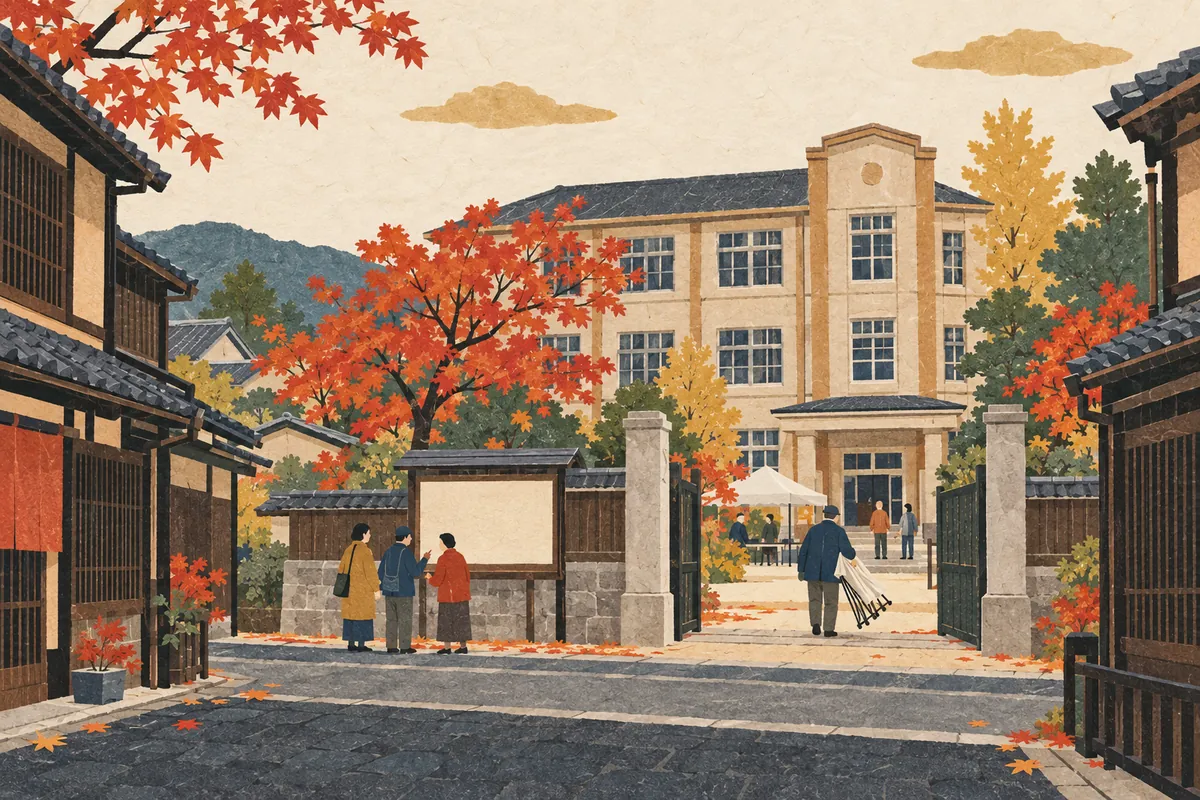
Motogakku
A motogakku (元学区, "former school district") is a unit of local community still used in Kyoto City for neighborhood activities, disaster preparedness, and more. It traces back to the areas of the bangumi elementary schools of 1869, and there are 222 of them in the city. They do not always match today's elementary-school attendance zones.
Read more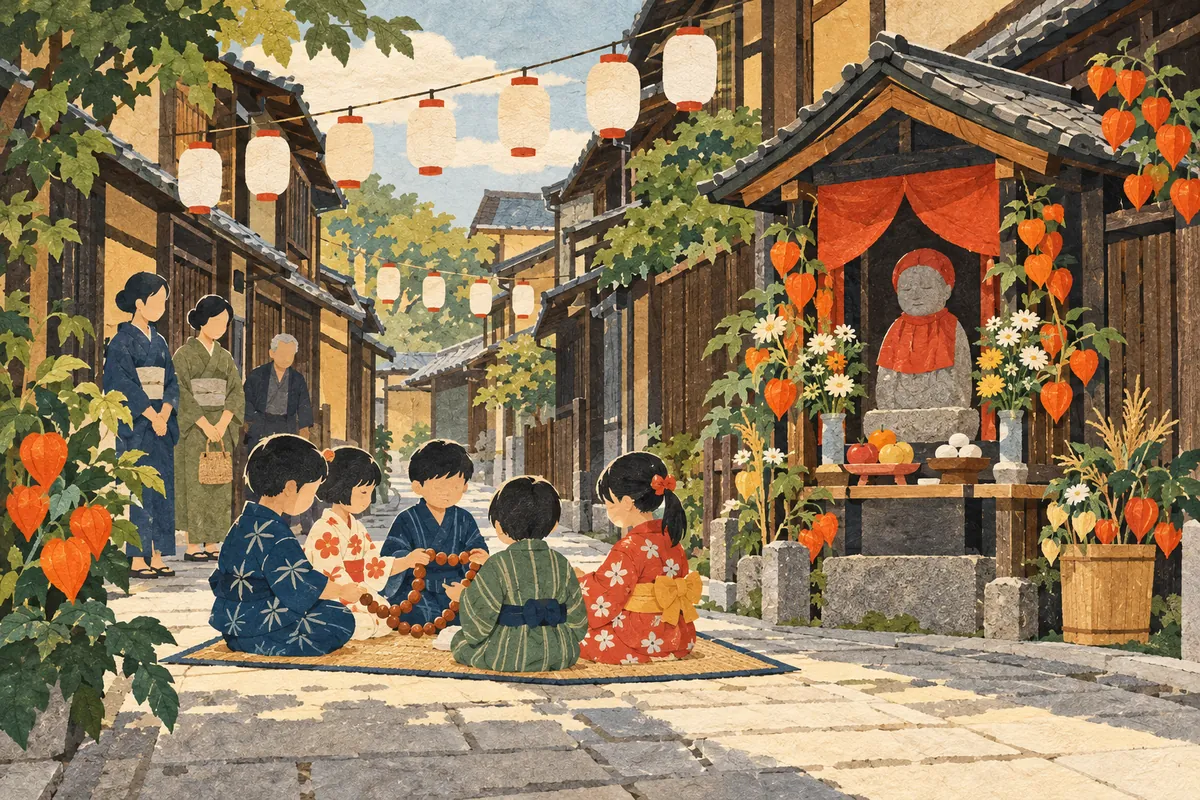
Jizo-bon
Jizō-bon is a neighborhood event that honors the local Jizō statue and prays for children's healthy growth and the safety of the neighborhood. In Kyoto it has been handed down as a summer event organized by each neighborhood, mainly on the weekend closest to August 24, the holy day (ennichi) of the bodhisattva Jizō.
Read more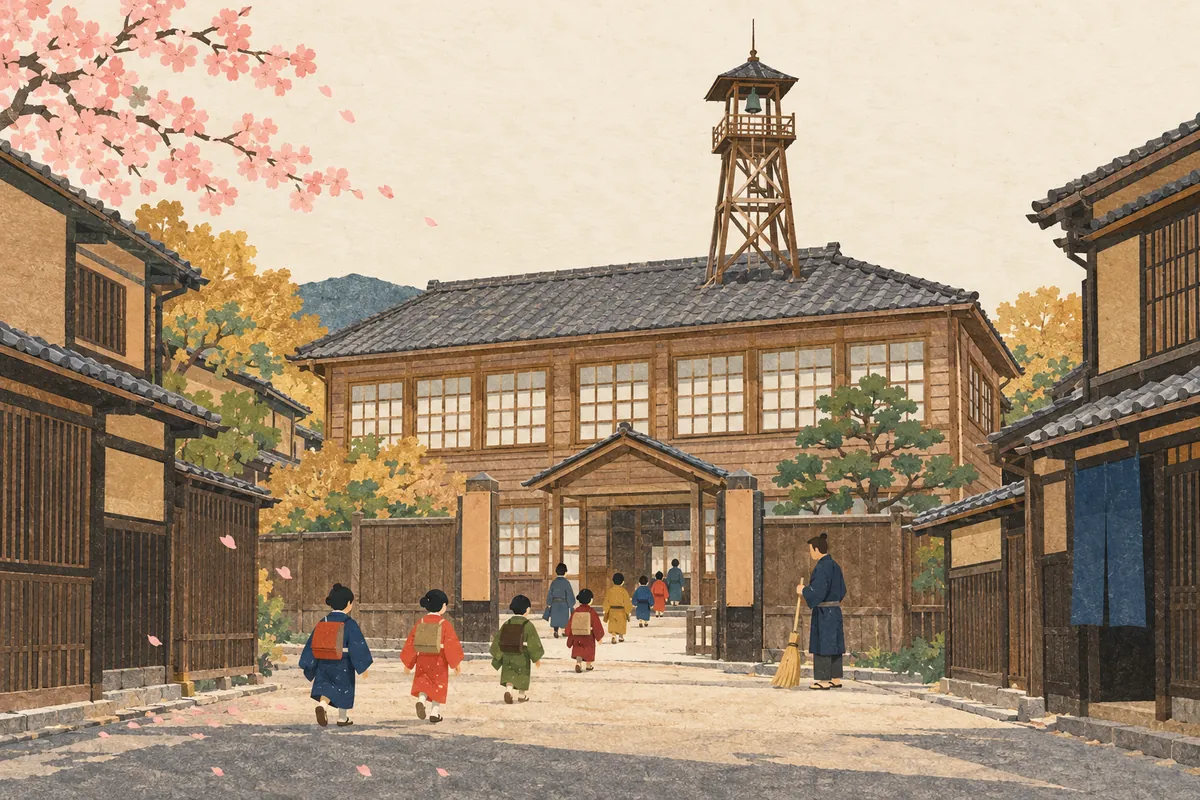
Bangumi Elementary Schools
The bangumi elementary schools were 64 schools opened in 1869 (Meiji 2), one for each bangumi—a reorganized unit of Kyoto's chōgumi (neighborhood federations). They opened three years before Japan's national school system, residents bore the costs through kamadokin and other contributions, and the schools became community hubs that also housed a town office, a police box, and a fire lookout tower.
Read more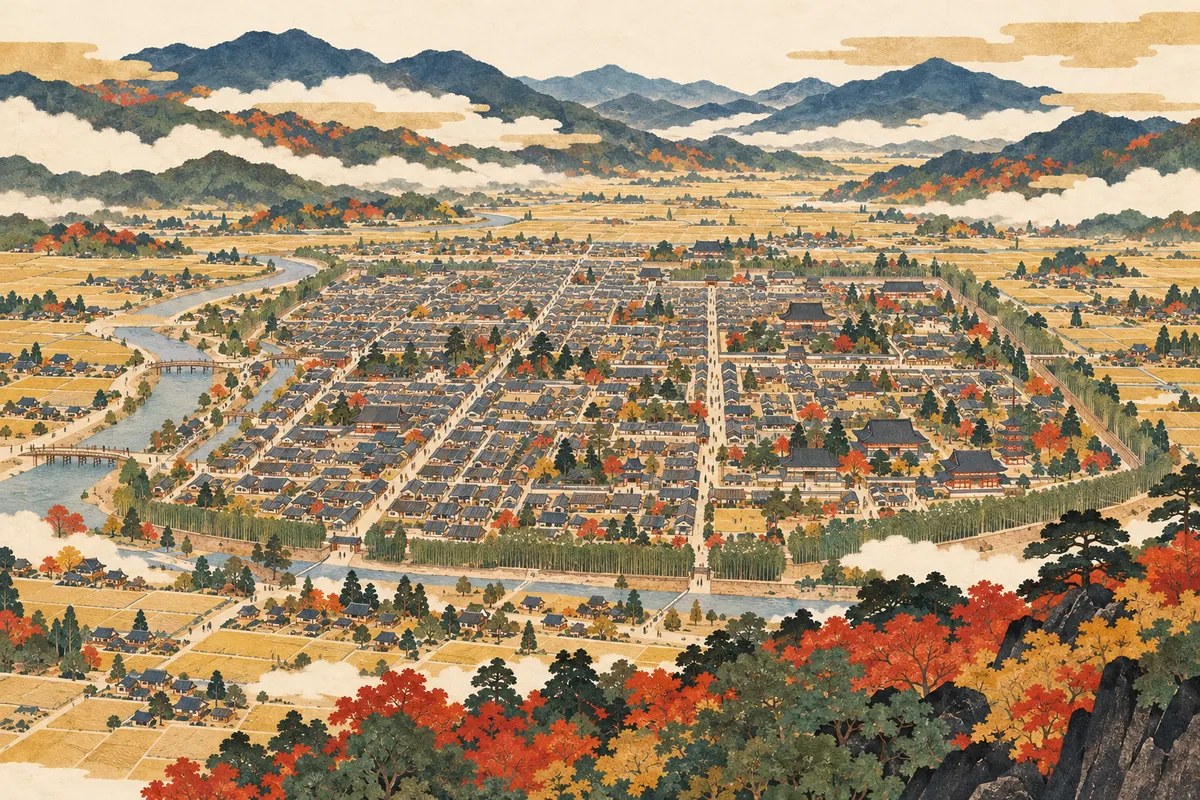
Rakuchu and Rakugai
Rakuchū (洛中) means the inside of the capital of Kyoto, and Rakugai (洛外) the outside. The extent changed over time, and after Toyotomi Hideyoshi built the Odoi earthwork in 1591, the distinction became clear: inside it was Rakuchū and outside it Rakugai. It does not match today's Kyoto City limits.
Read more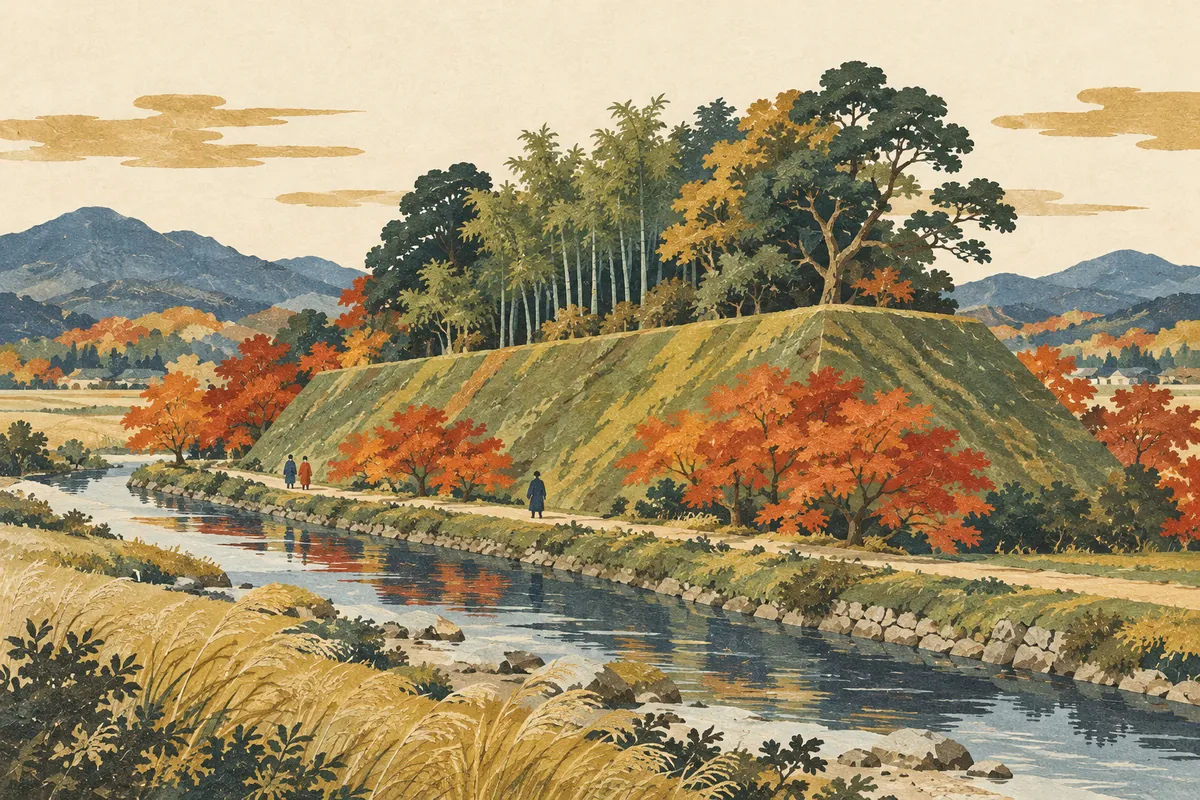
Odoi
The Odoi (御土居) was an earthen rampart and moat about 22.5 kilometers long that Toyotomi Hideyoshi built around Kyoto in 1591. It served for defense against enemies, as flood control against the Kamo River, and as the boundary between Rakuchū (inside the capital) and Rakugai (outside it). Nine sections survive today as National Historic Sites, in Kita Ward, Kamigyō Ward, and elsewhere.
Read more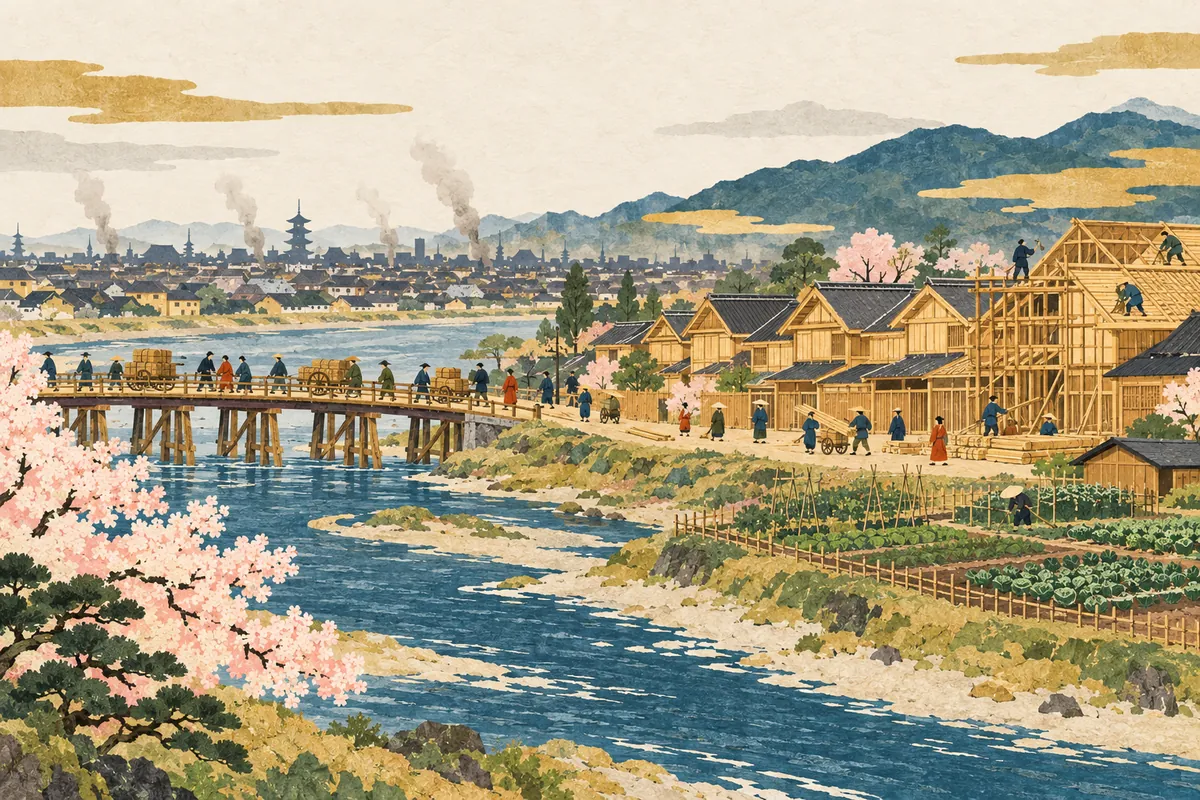
The Great Hoei Fire and Kyoto's "Shin" Streets
The Great Hōei Fire of 1708 spread from near Aburanokōji-dōri south of Aneyakōji. After the fire, to enlarge the court-noble district (kuge-machi) around the Imperial Palace, townhouses were moved to places such as Nijō-kawahigashi east of the Kamo River, and the streets there kept their original names with Shin (新, "new") added in front, as in Shin-Higashinotōin-dōri.
Read more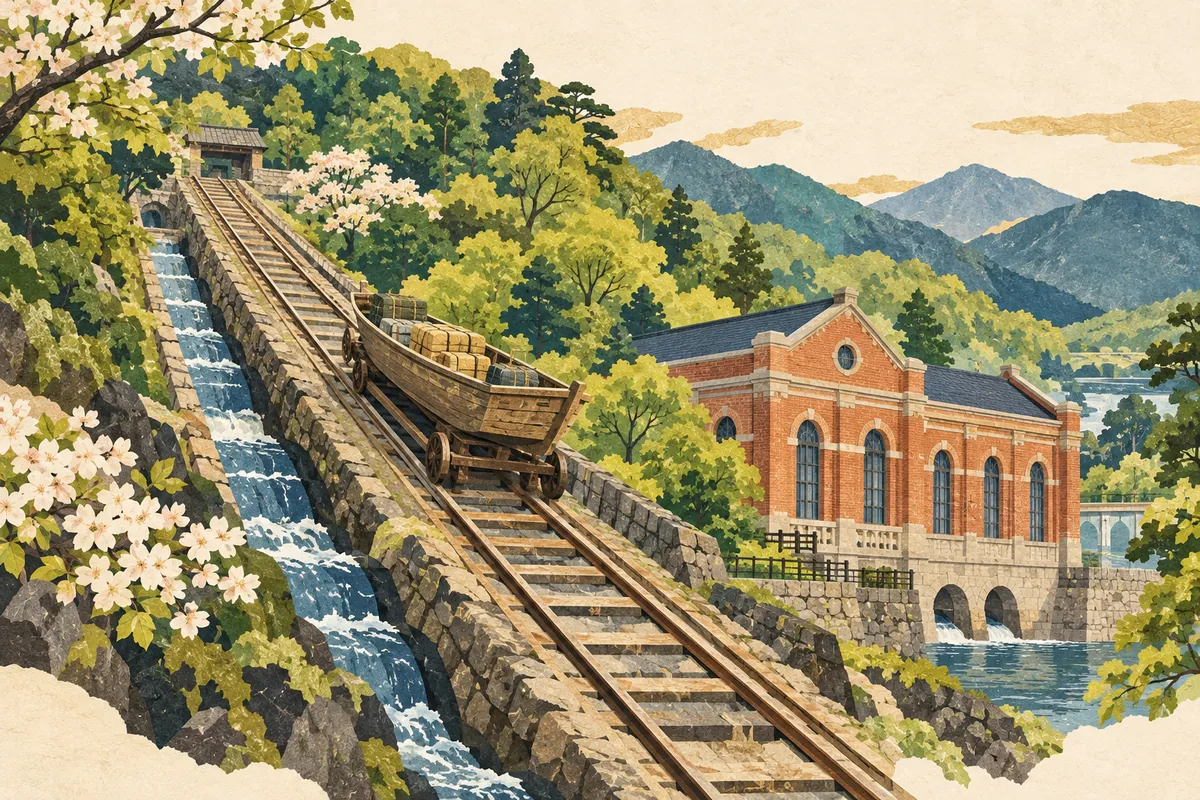
The Lake Biwa Canal and Keage Power Station
Construction of the First Lake Biwa Canal began in 1885, and it was completed in 1890 by Tanabe Sakurō and his team. Keage Power Station, which uses the canal's water power, was completed in 1891 as Japan's first commercial hydroelectric power station; it powered factories and streetcars and supported Kyoto's modernization. The canal is still a source of Kyoto's tap water today.
Read more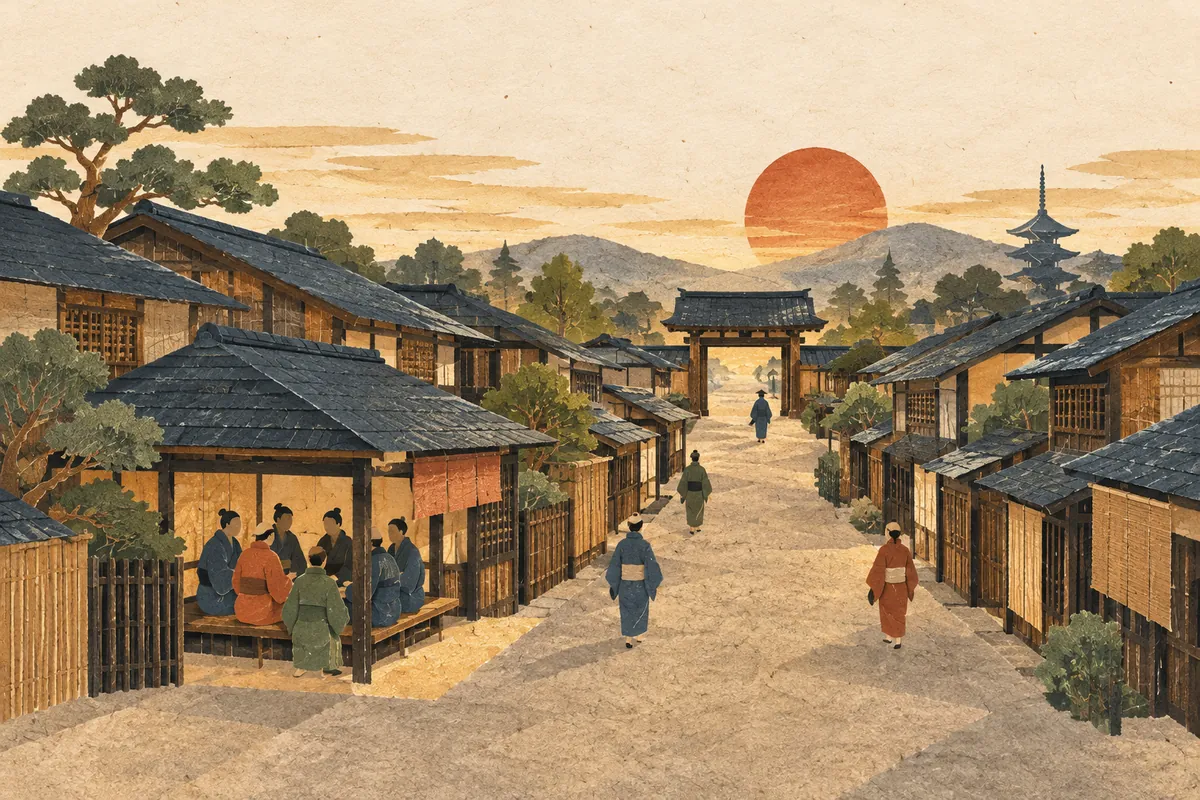
Chōgumi
A chōgumi (町組) was a self-governing organization in which several of Kyoto's chō—neighborhoods formed on both sides of a street—joined together as a regional federation. Chōgumi took shape around the 16th century and were reorganized into 65 groups in two chōgumi reforms in the early Meiji period. These groups became the units for the bangumi elementary schools and carry on in today's motogakku (former school districts).
Read more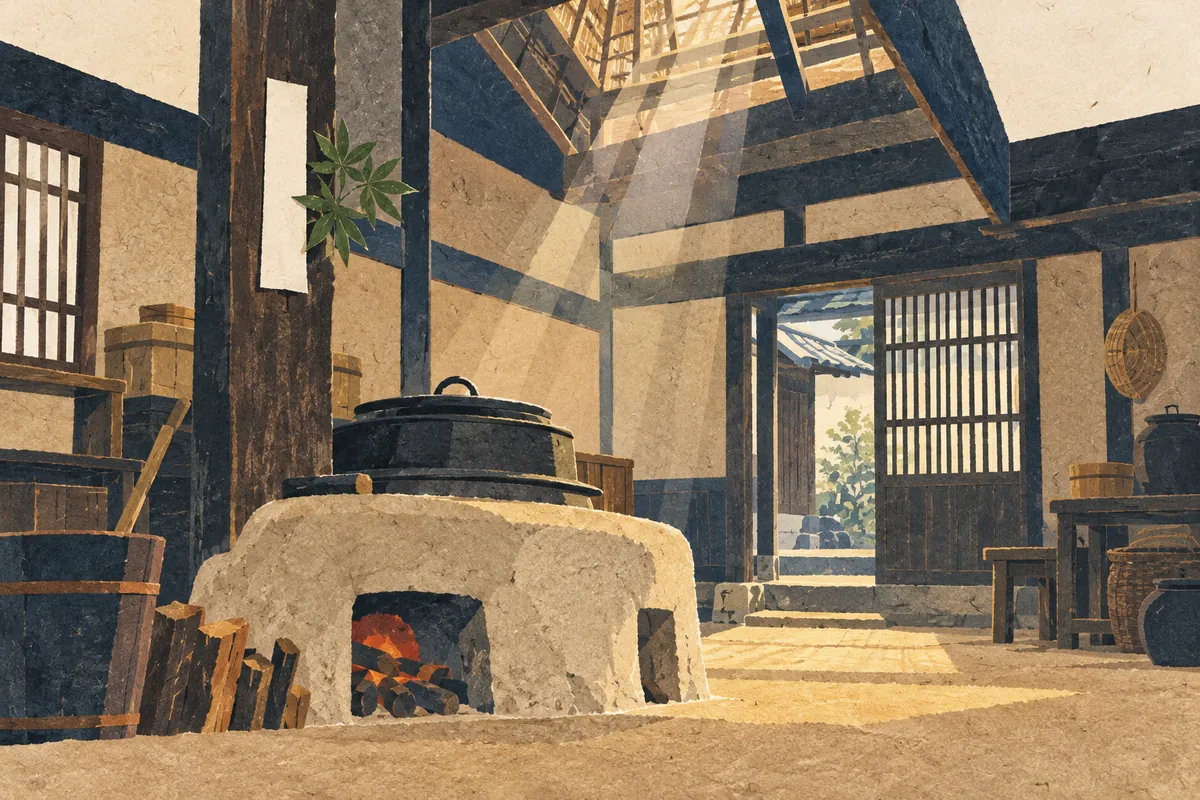
Hi-no-yojin Fire-Prevention Charm (火迺要慎)
Hi-no-yōjin (火迺要慎) is a charm against fire, issued by Atago Shrine on the summit of Mount Atago, the highest peak in Kyoto City. In Kyoto it is customary to post it in the kitchen or near the cooking stove (okudo-san) to ward off fire, and visiting during Sennichi-mairi, from the night of July 31 to the early morning of August 1 each year, is said to bring a thousand days' worth of blessings.
Read more