
National Treasure Buildings in Kyoto City
Key points
Some designation names differ from everyday names; Nishi Hongan-ji, for example, is listed as "Hongan-ji"
One item can include several structures; the Ninomaru Palace of Nijō Castle is six structures counted as one item
By ward, Higashiyama has the most, with 9
The Kinkaku (Rokuon-ji) is not a National Treasure, because it was rebuilt in 1955
Counts by temple or shrine and designated names
National Treasure buildings are counted in items (ken), and several structures are sometimes grouped as one item. The Ninomaru Palace of Nijō Castle is one item made up of six structures: the Tōzamurai with the Kurumayose, the Shikidai, the Ōhiroma, the Sotetsu-no-ma, the Kuroshoin, and the Shiroshoin; the Lake Biwa Canal facilities are one item made up of five places: the First, Second, and Third Tunnels, the Incline, and the Suirokaku aqueduct at Nanzen-ji.
Counted by structure, Kyoto Prefecture as a whole has 81 National Treasure buildings (of 303 nationwide), the most in Japan.
Some designated names differ from the everyday names: Tō-ji is listed as "Kyōōgokoku-ji," Nishi Hongan-ji as "Hongan-ji," Kamigamo Shrine as "Kamo-wakeikazuchi Shrine," and Shimogamo Shrine as "Kamo-mioya Shrine."
National Treasure Buildings in Kyoto City by Temple or Shrine
- Hongan-ji (Nishi Hongan-ji)
- Kyōōgokoku-ji (Tō-ji)
- Daigo-ji
- Daigo-ji Sanbō-in
- Jishō-ji (Ginkaku-ji)
- Daitoku-ji (main temple)
- Chion-in
List (1): Shimogyō, Minami, Nakagyō, and Kamigyō wards
Along Horikawa-dōri from south to north stand Tō-ji with Kanchi-in, Nishi Hongan-ji, and Nijō Castle.
National Treasure Buildings (1): 15 Items in Shimogyō, Minami, Nakagyō, and Kamigyō Wards (as of April 1, 2026)
| Designated name | Common name / location | Structures | Date built | Ward |
|---|---|---|---|---|
| Hongan-ji Goeidō | Nishi Hongan-ji | 1 | Early Edo (1636) | Shimogyō |
| Hongan-ji Amidadō | Nishi Hongan-ji | 1 | Late Edo (1760) | Shimogyō |
| Hongan-ji Shoin (Taimenjo and Shiroshoin) | Nishi Hongan-ji | 1 | Early Edo (1618) | Shimogyō |
| Hongan-ji Kuroshoin and connecting corridor | Nishi Hongan-ji | 2 | Early Edo (1657) | Shimogyō |
| Hongan-ji Hiunkaku | Nishi Hongan-ji | 1 | Momoyama | Shimogyō |
| Hongan-ji Karamon | Nishi Hongan-ji | 1 | Momoyama | Shimogyō |
| Hongan-ji North Noh Stage | Nishi Hongan-ji | 1 | Momoyama (1581) | Shimogyō |
| Kyōōgokoku-ji Kondō | Tō-ji | 1 | Momoyama (1603) | Minami |
| Kyōōgokoku-ji Five-Story Pagoda | Tō-ji | 1 pagoda | Early Edo (1643) | Minami |
| Kyōōgokoku-ji Daishidō (Saiin Miedō) | Tō-ji | 1 | Early Muromachi (1380) | Minami |
| Kyōōgokoku-ji Rengemon | Tō-ji | 1 | Early Kamakura | Minami |
| Kanchi-in Kyakuden | Kanchi-in, a subtemple of Tō-ji | 1 | Momoyama (1605) | Minami |
| Nijō Castle (Ninomaru Palace) | Nijō Castle | 6 | Momoyama (1625–26) | Nakagyō |
| Kitano Tenmangū (Honden, Ishi-no-ma, Haiden, and Gaku-no-ma) | Kitano Tenmangū | 1 | Momoyama (1607) | Kamigyō |
| Daihōon-ji Hondō (Senbon Shakadō) | Senbon Shakadō | 1 | Early Kamakura (1227) | Kamigyō |
List (2): Higashiyama, Sakyō, and Yamashina wards
Higashiyama Ward has 9 items, the most of any ward, lined up from south to north east of the Kamo River at the foot of the Higashiyama hills: Tōfuku-ji, Sanjūsangen-dō, Toyokuni Shrine, Kiyomizu-dera, Yasaka Shrine, and Chion-in. The Honden of Yasaka Shrine became a National Treasure in December 2020, the newest designation among the city's shrines and temples.
National Treasure Buildings (2): 14 Items in Higashiyama, Sakyō, and Yamashina Wards
| Designated name | Common name / location | Structures | Date built | Ward |
|---|---|---|---|---|
| Rengeō-in Hondō (Sanjūsangen-dō) | Sanjūsangen-dō | 1 | Early Kamakura (1266) | Higashiyama |
| Myōhō-in Kuri | Myōhō-in | 1 | Momoyama | Higashiyama |
| Toyokuni Shrine Karamon | Toyokuni Shrine | 1 | Momoyama | Higashiyama |
| Kiyomizu-dera Hondō | Kiyomizu-dera | 1 | Early Edo (1633) | Higashiyama |
| Yasaka Shrine Honden | Yasaka Shrine | 1 | Early Edo (1654) | Higashiyama |
| Chion-in Sanmon | Chion-in | 1 | Early Edo (1621) | Higashiyama |
| Chion-in Hondō (Miedō) | Chion-in | 1 | Early Edo (1639) | Higashiyama |
| Tōfuku-ji Sanmon | Tōfuku-ji | 1 | Mid-Muromachi (1405) | Higashiyama |
| Ryōgin-an Hōjō | Ryōgin-an, a subtemple of Tōfuku-ji | 1 | Early Muromachi (1387) | Higashiyama |
| Jishō-ji Ginkaku | Ginkaku-ji | 1 | Late Muromachi (1489) | Sakyō |
| Jishō-ji Tōgudō | Ginkaku-ji | 1 | Late Muromachi (1485) | Sakyō |
| Nanzen-ji Hōjō | Nanzen-ji | 1 | Momoyama | Sakyō |
| Kamo-mioya Shrine (East Honden and West Honden) | Shimogamo Shrine | 2 | End of Edo (1863) | Sakyō |
| Lake Biwa Canal facilities (First, Second, and Third Tunnels, Incline, Nanzen-ji Suirokaku) | Lake Biwa Canal | 5 places | Meiji (1888–90) | Yamashina and Sakyō (the First Tunnel extends into Ōtsu City) |
List (3): Fushimi, Kita, and Ukyō wards
Fushimi Ward's 7 items are in Daigo and Hino. Daigo-ji has 4: the five-story pagoda and Kondō in Shimo-Daigo and the Yakushidō and the Haiden of Seiryūgū in Kami-Daigo; its subtemple Sanbō-in has 2; and Hōkai-ji has 1. Of Kita Ward's 5 items, 4 are clustered at Daitoku-ji in Murasakino, and Ukyō Ward has one each at Ninna-ji, Kōryū-ji, and Kōzan-ji in Toganoo.
National Treasure Buildings (3): 15 Items in Fushimi, Kita, and Ukyō Wards
| Designated name | Common name / location | Structures | Date built | Ward |
|---|---|---|---|---|
| Daigo-ji Five-Story Pagoda | Daigo-ji (Shimo-Daigo) | 1 pagoda | Mid-Heian (952) | Fushimi |
| Daigo-ji Kondō | Daigo-ji (Shimo-Daigo) | 1 | Late Heian | Fushimi |
| Daigo-ji Yakushidō | Daigo-ji (Kami-Daigo) | 1 | Late Heian (1121) | Fushimi |
| Daigo-ji Seiryūgū Haiden | Daigo-ji (Kami-Daigo) | 1 | Mid-Muromachi (1434) | Fushimi |
| Sanbō-in Dendō (Omote-shoin) | Daigo-ji Sanbō-in | 1 | Momoyama (1598) | Fushimi |
| Sanbō-in Karamon | Daigo-ji Sanbō-in | 1 | Momoyama | Fushimi |
| Hōkai-ji Amidadō | Hōkai-ji (Hino) | 1 | Early Kamakura | Fushimi |
| Kamo-wakeikazuchi Shrine (Honden and Gonden) | Kamigamo Shrine | 2 | End of Edo (1863) | Kita |
| Daitoku-ji (Hōjō and Genkan) | Daitoku-ji main temple | 2 | Early Edo (1635–36) | Kita |
| Daitoku-ji Karamon | Daitoku-ji main temple | 1 | Momoyama | Kita |
| Daisen-in Hondō | Daisen-in, a subtemple of Daitoku-ji | 1 | Late Muromachi (1513) | Kita |
| Ryōkō-in Shoin | Ryōkō-in, a subtemple of Daitoku-ji | 1 | Early Edo (Kan'ei era) | Kita |
| Ninna-ji Kondō | Ninna-ji | 1 | Momoyama (1613) | Ukyō |
| Kōryū-ji Keikyū-in Hondō | Kōryū-ji | 1 | Early Kamakura (by 1251) | Ukyō |
| Kōzan-ji Sekisui-in (Goshodō) | Kōzan-ji | 1 | Early Kamakura | Ukyō |
Periods of construction and years of designation
The oldest National Treasure building in the city is the five-story pagoda of Daigo-ji in Fushimi Ward, built in 952 (Tenryaku 6). The newest shrine or temple buildings are the Honden and Gonden of Kamigamo Shrine and the East and West Honden of Shimogamo Shrine, rebuilt in 1863 (Bunkyū 3); the only building newer than these is the Meiji-era Lake Biwa Canal facilities (1888–1890).
By date of designation, most were designated between 1951 and 1963, later joined by the Sanmon and Hondō of Chion-in in 2002, the Goeidō and Amidadō of Nishi Hongan-ji in 2014, the Honden of Yasaka Shrine in 2020, and the Lake Biwa Canal facilities in August 2025. Note that the Kinkaku (Rokuon-ji) is not a National Treasure, because the present building is a reconstruction of 1955 after the original burned down in 1950.
National Treasure buildings by period
| Period | Items |
|---|---|
| Heian | 3 |
| Kamakura | 6 |
| Muromachi | 7 |
| Momoyama | 14 |
| Early Edo | 10 |
| Late and end of Edo | 3 |
| Meiji | 1 |
Half-day routes: Horikawa-dōri, Higashiyama, Daigo, and Murasakino
Where Kyoto City's National Treasure Buildings Are (Schematic)
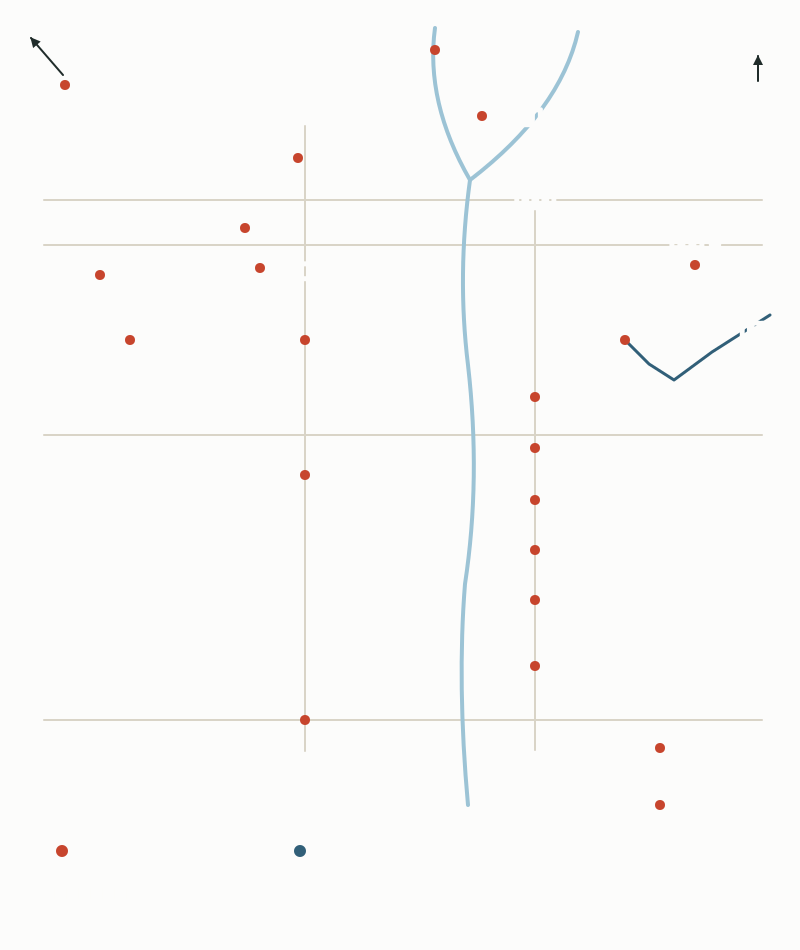
- Horikawa-dōri route: Tō-ji and Kanchi-in → Nishi Hongan-ji → Nijō Castle, linked on foot and by city bus.
- Higashiyama route: Sanjūsangen-dō → Toyokuni Shrine Karamon → Kiyomizu-dera → Yasaka Shrine → Chion-in (Sanmon and Miedō), heading north along the foot of the Higashiyama hills. Take the Tōzai subway line to Keage Station and you can also see the Nanzen-ji Hōjō and the Suirokaku aqueduct the same day.
- Daigo route: From Daigo Station on the Tōzai subway line to Daigo-ji. The five-story pagoda and Kondō in Shimo-Daigo and the Karamon and Omote-shoin of Sanbō-in are on flat ground, so you can see 4 items even if you skip the mountain climb to Kami-Daigo.
- Murasakino route: The main temple of Daitoku-ji (Hōjō and Genkan, Karamon) and its subtemples Daisen-in and Ryōkō-in. What is open to the public varies by season.
Mini quiz for this entry
As of April 1, 2026 (Reiwa 8), how many national Important Cultural Properties (buildings) are there in Kyoto City?
Of Kyoto City's 44 National Treasure buildings, two are not shrine or temple buildings. One is the Ninomaru Palace of Nijō Castle; which is the other?
Sources and verification
Content checked: October 17, 2026
Updated: October 17, 2026
References are in Japanese.