
Tōfuku-ji: Autumn Leaves at Tsūtenkyō, the National Treasure Sanmon, and the Hōjō Gardens
Other spellings and namesTōfuku-ji (東福寺) / Tsūtenkyō (通天橋) / Tōfuku-ji autumn leaves / Sengyokukan (洗玉澗) / Hassō no Niwa (八相の庭)
Key points
Three bridges cross Sengyokukan, from west to east Gaunkyō, Tsūtenkyō, and Engetsukyō, and they are called the Three Famous Bridges of Tōfuku-ji
The Honbō Garden is the work of Shigemori Mirei, completed in 1939 (Shōwa 14), and became a Place of Scenic Beauty on October 6, 2014 (Heisei 26)
The National Treasure buildings in the grounds (Honmachi 15-chōme, Higashiyama Ward) are 2: the Sanmon and the Hōjō of Ryōgin-an (as of October 2026)
In 2026 the National Treasure Sanmon and Ryōgin-an are specially opened from November 7 to December 6 (1,000 yen for adults at each)
Tsūtenkyō and Sengyokukan: where are the three bridges?
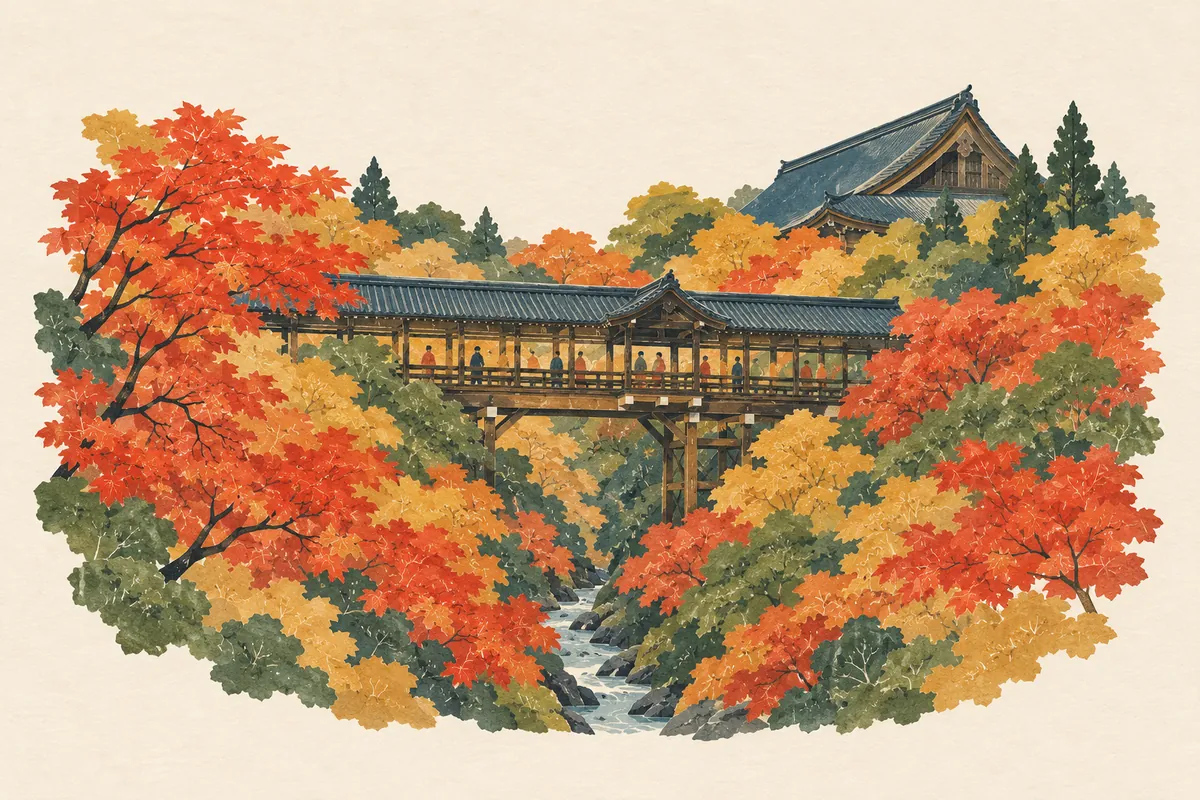
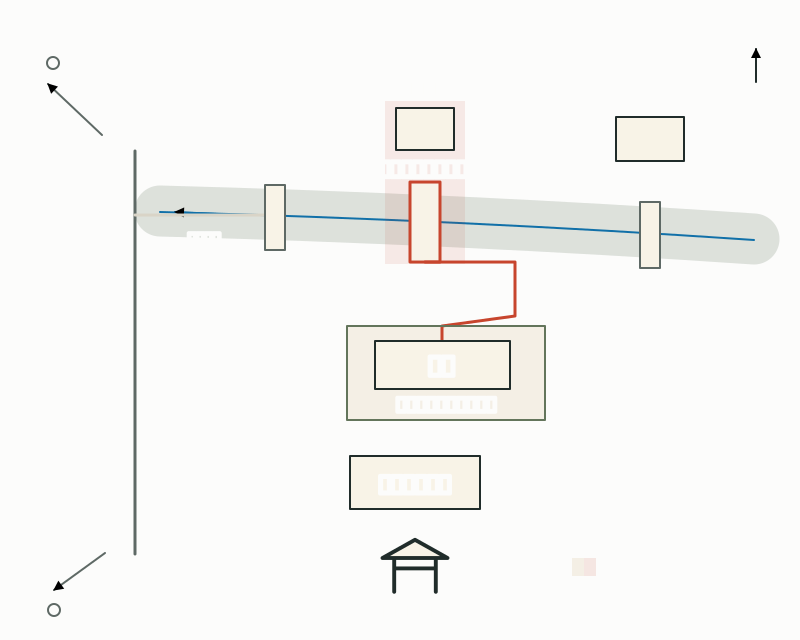
In the northern part of the Tōfuku-ji grounds, the Sannohashi River (三ノ橋川), flowing from east to west, has cut a deep valley. This valley is Sengyokukan, and three bridges cross it, from the downstream west: Gaunkyō (臥雲橋), Tsūtenkyō (通天橋), and Engetsukyō (偃月橋). They are called the Three Famous Bridges of Tōfuku-ji.
Tsūtenkyō links the Hōjō on the south side of the valley with the Kaisandō on the north, and it is known for the view down over the autumn leaves and fresh spring green. Tradition holds that the founder, Shōichi Kokushi (聖一国師), brought Chinese maples back from Song China; these are the three-lobed maples (mitsuba kaede), which turn golden in autumn. Gaunkyō is a Kyoto Prefecture designated cultural property, and people crossing it by bicycle or motorbike are asked to get off and push. Because it is crowded during the autumn special viewing period, visitors are sometimes asked not to take photos on Tsūtenkyō and Gaunkyō.
The Grounds of Tōfuku-ji: the Sanmon, Hondō, and Hōjō, and the Three Bridges over Sengyokukan
The Hassō no Niwa around the Hōjō
The Honbō Garden (Hōjō) was the first major work completed by the Shōwa-era garden designer Shigemori Mirei, in 1939 (Shōwa 14), and it is named the Hassō no Niwa (八相の庭, Garden of the Eight Aspects). The Hōjō was rebuilt in 1890 (Meiji 23) after a fire in 1881 (Meiji 14), and it has four dry landscape gardens on its south, west, north, and east sides. On October 6, 2014 (Heisei 26), it became a national Place of Scenic Beauty under the name "Tōfuku-ji Honbō Garden."
- South garden: four groups of rocks, combining large standing stones with long, low-lying stones, represent the islands of the immortals, and in the moss at the southwest corner are five mounds likened to the Five Mountains (Gozan) of Kyoto
- West garden: satsuki azaleas clipped into squares are set in an alternating pattern on white sand, drawing a large checkerboard about 2 m on each side
- North garden: cut stones about 50 cm square and moss form a small checkerboard. Just to the north, the ground slopes down into the valley of the Sannohashi River
- East garden: seven cylindrical stones of different heights represent the Big Dipper, and a hedge of Japanese blue oak (arakashi) represents the Milky Way
The National Treasures: the Sanmon and the Hōjō of Ryōgin-an
The National Treasure and Important Cultural Property buildings located in the Tōfuku-ji grounds (Honmachi 15-chōme, Higashiyama Ward) are 2 National Treasures and 13 Important Cultural Properties (as of October 2026). One National Treasure is the Sanmon of 1405 (Ōei 12), in the mid-Muromachi period; its style and the paintings in its upper story are covered in a separate entry.
The other National Treasure is the Hōjō of Ryōgin-an (龍吟庵), a subtemple (tatchū). Built in 1387 (Kakei 1), it is considered the oldest surviving hōjō, and it preserves an older form from before the hōjō took its early modern shape, with no Buddhist altar in the central front room, for example. It became a National Treasure in 1963 (Shōwa 38). The gardens of Ryōgin-an are also the work of Shigemori Mirei, made 25 years after the Honbō Garden: the south garden "Mu no Niwa" (Garden of Nothingness), of white sand only, and the west garden "Ryū no Niwa" (Dragon Garden), whose rocks are arranged in the shape of a dragon.
The Important Cultural Properties include Engetsukyō (1603, Keichō 8), the bridge at the entrance to Ryōgin-an, as well as Jōraku-an, which includes the Kaisandō (seven buildings counted as one property), the Zendō (meditation hall), the Tōsu (東司, latrine), the bathhouse, and the Rokuharamon gate.
The Kaisandō and the origin of the temple's name
The Kaisandō (Jōraku-an), across Tsūtenkyō to the north, is the hall dedicated to the founder, Shōichi Kokushi, who died in 1280 (Kōan 3). From the Sanmon in the south, the Hondō (main hall, serving as both Buddha hall and Dharma hall), the Hōjō, Tsūtenkyō, and the Kaisandō stand in that order toward the north. The Hondō dates from 1934 (Shōwa 9), and its ceiling has a painting of a blue dragon by Dōmoto Inshō.
Tōfuku-ji was named by the regent Kujō Michiie (九條道家), who took one character each from Tōdai-ji and Kōfuku-ji in Nara, and its halls were built over 19 years, from 1236 (Katei 2) to 1255 (Kenchō 7). In the ranking of the Five Mountains of Kyoto fixed in 1386 (Shitoku 3), it is fourth.
Admission and hours in autumn 2026
The charged areas are the Honbō Garden and Tsūtenkyō with the Kaisandō. During the autumn period, November 14 – December 6, the fee for Tsūtenkyō and the Kaisandō goes up and the combined ticket is not sold. In this period Tsūtenkyō opens at 8:30 and the Hōjō at 9:00; both stop admitting visitors at 16:00, and the gates close at 16:30. From November 1 to 13 the hours are 9:00–16:00 (gates close at 16:30), and from December 7, 9:00–15:30 (gates close at 16:00). Re-entry is not allowed.
If you show a disability certificate at the reception, you and one companion are admitted free. Private early-morning viewing of Tsūtenkyō (November 19 – December 6) and night viewing (November 18 – December 6) require advance application, which is accepted through JR Central's "Sōda Kyōto, ikō" ("Let's go to Kyoto") campaign.
Tōfuku-ji admission fees (autumn 2026)
| Area | November 1–13 (adults) | November 14 – December 6 (adults) | Elementary and junior high school students |
|---|---|---|---|
| Honbō Garden (Hōjō) | 600 yen | 600 yen | 300 yen |
| Tsūtenkyō and Kaisandō | 600 yen | 1,000 yen | 300 yen (500 yen from November 14 to December 6; some notices give 300 yen, so check with the temple) |
| Combined ticket (the two above) | 1,000 yen | Not sold | 500 yen |
| Special openings of the National Treasure Sanmon and Ryōgin-an (each) | 1,000 yen from November 7 | 1,000 yen | 500 yen |
Where can you see it now? Getting there and tips for visiting with children
Tōfuku-ji is at 15-chōme 778 Honmachi, Higashiyama Ward. It is about 10 minutes on foot from Tōfukuji Station on the JR Nara Line and the Keihan Main Line (about 3 minutes from Kyoto Station on the JR Nara Line, and about 5 minutes from Keihan Gion-Shijō Station), and also about 10 minutes on foot from Keihan Tobakaidō Station. By city bus, take route 88 or 208 from Kyoto Station for about 15 minutes to "Tōfukuji," then walk about 4 minutes. During the autumn-leaf season, October 25 – December 10, the parking lot in the grounds is closed, so go by train or bus.
The exterior of the Sanmon and the Hondō, and Gaunkyō, are in the part of the grounds that needs no admission fee. Visitors are asked not to eat or drink, take photos with a tripod, or sketch in the grounds, and pets are not allowed.
Mini quiz for this entry
Tsūtenkyō at Tōfuku-ji, famous for its autumn leaves, is a bridge linking which two buildings?
In the south garden of the Tōfuku-ji Honbō Garden, made by Shigemori Mirei, five small mounds rise from the moss in the southwest corner. What are they likened to?
Sources and verification
Content checked: October 29, 2026
Updated: October 29, 2026
References are in Japanese.
- 東福寺「拝観案内」
- 東福寺「拝観料金変更のお知らせ 令和8年11月1日より」(2026年7月1日)
- 東福寺「国宝三門 特別公開」(2026年秋)
- 東福寺「国宝龍吟庵 特別公開」(2026年秋)
- 東福寺「『そうだ京都、行こう』東福寺「通天橋」秋の貸切早朝拝観・貸切夜間拝観の予約方法について」(2026年10月25日)
- 東福寺「トップページ」(特別行事の一覧)
- 東福寺「縁起」
- 東福寺「アクセス」
- 文化庁「国指定文化財等データベース 東福寺本坊庭園」
- 文化庁「国指定文化財等データベース 東福寺三門」
- 文化庁「国指定文化財等データベース 竜吟庵方丈」
- 文化庁「国指定文化財等データベース 東福寺偃月橋」
- 文化庁「国指定文化財等データベース」(国宝・重要文化財(建造物)、フリーワード「本町十五丁目」で検索)
- 国立新美術館 アートコモンズ「京都五山 禅の文化展」(九州国立博物館、2008年)
- 京都市観光協会 京都観光Navi 紅葉だより「東福寺」