
Japanese久我(こが)
Koga
Other spellings and names古我 / 木賀
Key points
Read Koga. Six towns begin with 久我, and only 久我本町 is read with machi: Koga-Honmachi
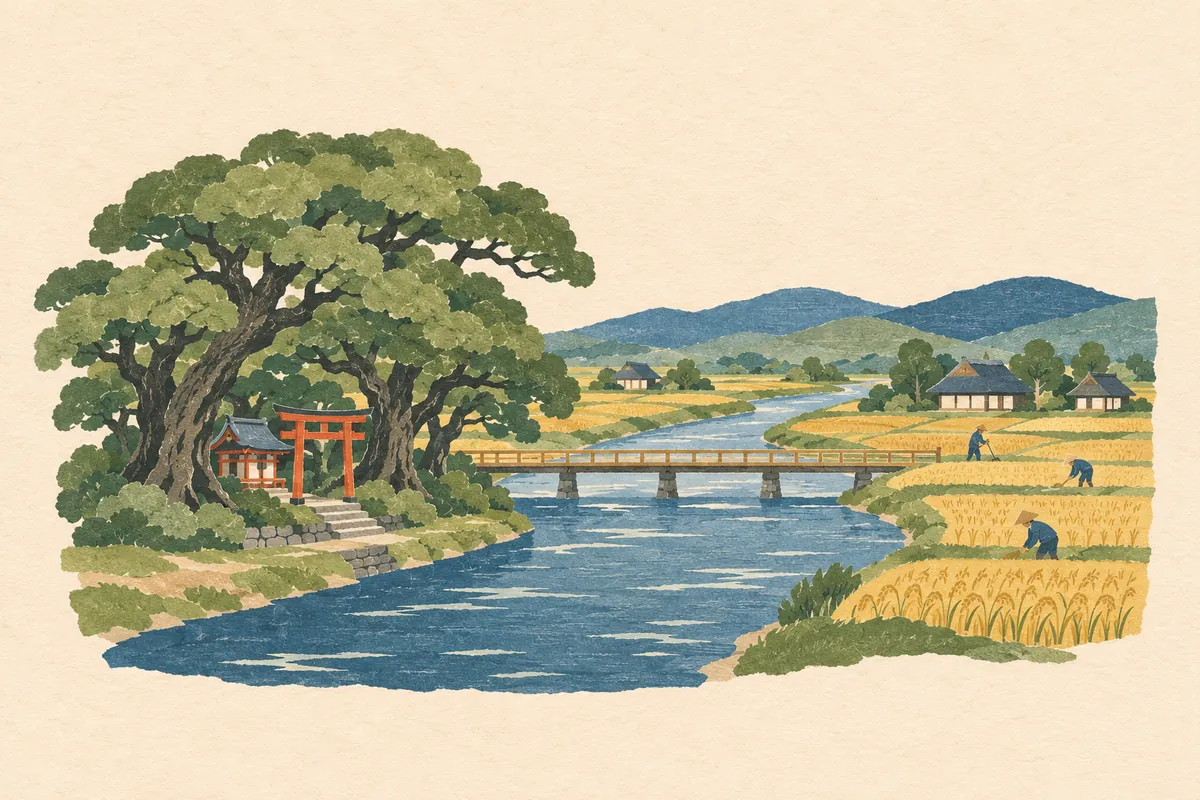
On the right bank of the Katsura River, with Hazukashi to the south; beyond it, across the Katsura River, are Yodo and Nōso
The name of the Koga family, the main line of the Murakami Genji, comes from their residence here
The woods of Koga Shrine have long been called Koga-no-mori (こがのもり)
The reading and the six towns beginning with 久我
久我 is read Koga (こが). From the on readings of the kanji you might want to read it Kuga, but as a place name in Fushimi Ward it is Koga. City bus route 18's timetable also gives the destination 久我石原町 in romanized letters as "Koga Ishiharacho" (as revised in March 2026).
Fushimi Ward has six towns beginning with 久我, and all of them are in the Kamikawa Junior High School zone. Most are read Koga-○○-chō, but only 久我本町 is read with machi, as Koga-Honmachi (こがほんまち). In Koga-Azuma-chō, Koga-Nishide-chō, and Koga-Morinomiya-chō, the elementary school depends on the lot number.
Town names in Fushimi Ward beginning with 久我
| Town name | Reading | Elementary school zone |
|---|---|---|
| 久我東町 | こがあずまちょう (Koga-Azuma-chō) | Split between Koga-no-mori and Kamikawa by lot number |
| 久我石原町 | こがいしはらちょう (Koga-Ishihara-chō) | Kamikawa |
| 久我御旅町 | こがおたびちょう (Koga-Otabi-chō) | Kamikawa |
| 久我西出町 | こがにしでちょう (Koga-Nishide-chō) | Split between Koga-no-mori and Hazukashi by lot number |
| 久我本町 | こがほんまち (Koga-Honmachi) | Kamikawa |
| 久我森の宮町 | こがもりのみやちょう (Koga-Morinomiya-chō) | Split between Koga-no-mori and Kamikawa by lot number |
Where is it? On the right bank of the Katsura River, north of Hazukashi
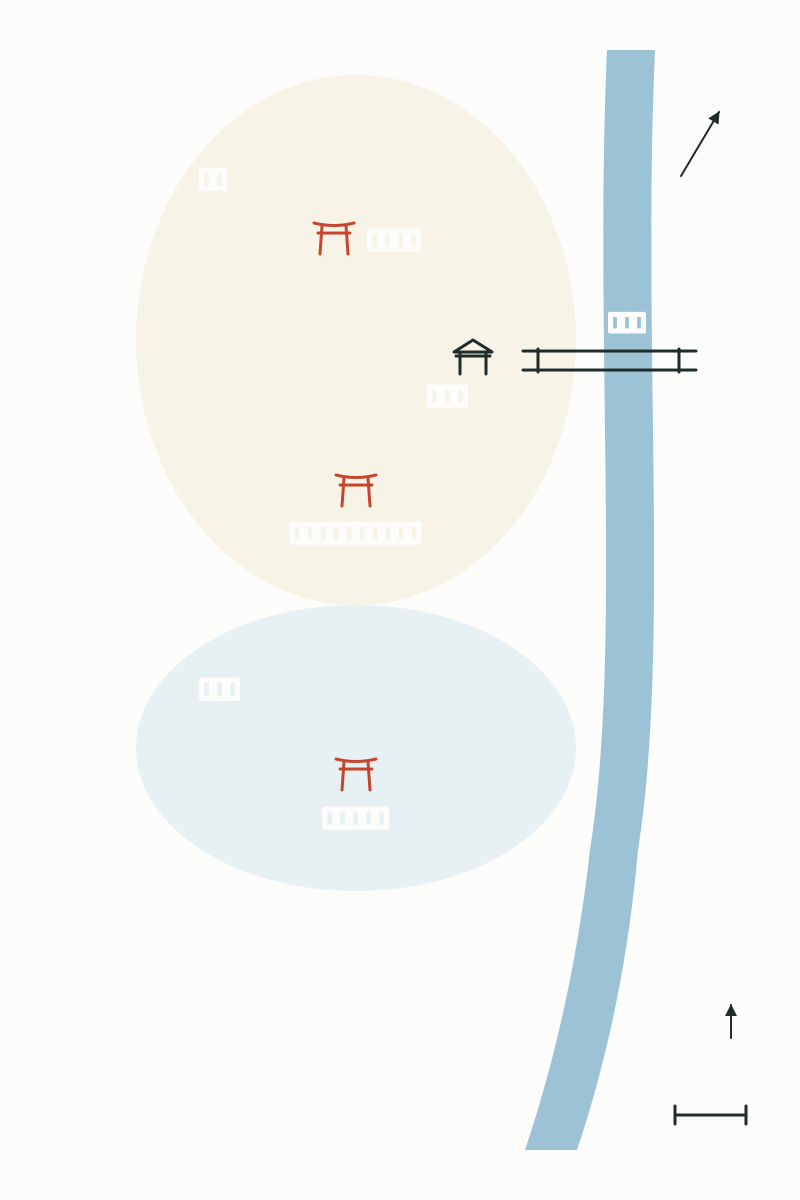
Koga is an area in western Fushimi Ward, spreading along the right (west) bank of the Katsura River. To the south is Hazukashi (はづかし), and beyond it, on the opposite (east) bank of the Katsura River, are Yodo and Nōso (のうそ). From Koga-Honmachi, the Koga Bridge crosses the Katsura River to the east.
The course of the Katsura River changed with river improvement works from the mid-Meiji to the early Shōwa era, and its confluence with the Kamo River also moved south. On today's maps the towns of Koga are on the west side of the river, but the former Koga Village also extended onto the left (east) bank of the Katsura River. The Kyoto City Fire Fighting Training Center, on the left bank northeast of the Koga Bridge, was listed in a 2017 (Heisei 29) document with the address "Koga-Ishihara-chō and others, Fushimi Ward."
Koga and Hazukashi along the right bank of the Katsura River
Origin of the name: the Koga family, who took the place name
The Koga area was opened up early; land clearance in the Koga, Koga-no-mori, and Hazukashi areas is said to have progressed from the 4th century onward, with settlements beginning to form. Koga was also written 古我 and 木賀.
The court noble Koga family (こがけ) is the main line of the Murakami Genji and one of the Seiga houses, the second-highest rank of court families. Minamoto no Masazane (みなもとのまさざね) built a residence at Koga in the southern outskirts of Kyoto and was called the "Koga Chancellor" (Koga Daijō-daijin); because he was later revered as the founder of the house, the family took Koga as its name. The place name came first, and the family took its name from it.
In the early 12th century the Koga family's villa, Koga Suikaku, stood here, and the Koga estate (Koga-no-shō) in Otokuni District, Yamashiro Province, was the estate from which the family took its name. After it passed to Minamoto (Koga) no Michichika (みちちか) at the end of the 12th century, the estate divided into an upper and a lower part, which grew prosperous as farming villages close to the capital.
The straight road that ran from northeast to southwest between the Toba-tsukuri-michi, an extension of Heian-kyō's Suzaku Ōji avenue, and the ancient Yamazaki post station is called Koga Nawate (こがなわて). It is thought to have been built around the time Heian-kyō was laid out, and in written sources it first appears in Tsurezuregusa (Essays in Idleness). In 1467 (Ōnin 1), the Yamana and Hosokawa clans fought on this road.
Koga-no-mori, Tanjō-ji, and Hishizuma Shrine
Koga Shrine in Koga-Morinomiya-chō, by its own traditions, began when a guardian deity was enshrined at the time the capital moved to Nagaoka-kyō. The woods in its grounds have been known since early times by the name Koga-no-mori (こがのもり), and the shrine itself was called Mori-no-myōjin ("the deity of the woods"). A camphor tree in the grounds, 25 meters tall with a trunk 6.3 meters around, has been chosen as one of Fushimi Ward's Trees of Pride. The local elementary school is also named Koga-no-mori.
Tanjō-ji in Koga-Honmachi stands on the site of the Koga family residence, and it is said that Dōgen was born here as the son of Koga Michichika. The ginkgo tree in its grounds is 23 meters tall. Hishizuma Shrine in Koga-Ishihara-chō is said to have been founded in the 12th century and to have drawn worshipers as a deity that puts out fires; today it is believed to bring blessings for learning and for writing.
Mini quiz for this entry
The Koga family of court nobles was the main line of the Murakami Genji. Where does their family name come from?
Sources and verification
Content checked: November 8, 2026
Updated: November 8, 2026
References are in Japanese.