
Sakamoto Ryōma and Kyoto
Key points
Several theories circulated about the killers, but the 1870 testimony of former Mimawarigumi officer Imai Nobuo made the Mimawarigumi the leading explanation
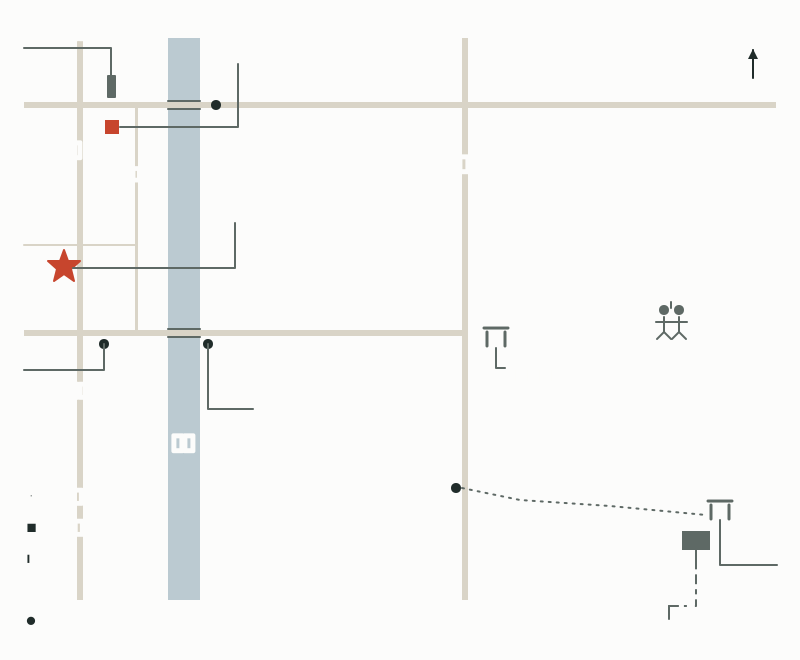
Near the Ōmiya site marker, Kawaramachi and Kiyamachi also have markers for the Tosa domain residence and Nakaoka's lodging
The Suya, where Ryōma lodged and based the Kaientai, is a timber merchant founded in 1721 and still run by the founder's descendants
The graves of Ryōma and Nakaoka are at Kyoto Ryōzen Gokoku Shrine in Higashiyama, where the Ryōma Festival is held on November 15
The attack on Ryōma and Nakaoka at the Ōmiya (15th day of the 11th month, Keiō 3)
The Ōmiya was a soy sauce merchant at Kawaramachi-dōri Takoyakushi sagaru that served as a purveyor to the Tosa domain, and Ryōma was being sheltered there. On the night of the 15th day of the 11th month of Keiō 3 (1867, lunar calendar), Sakamoto Ryōma, leader of the Kaientai, and Nakaoka Shintarō, leader of the Rikuentai, were cut down by assassins who attacked the Ōmiya. Ryōma died that night and Nakaoka two days later, on the 17th day of the 11th month, and Ryōma's servant Tōkichi also lost his life. Both men were from the Tosa domain, and they had worked hard to bring about the Satsuma–Chōshū Alliance of 1866 (Keiō 2). Their deaths came not long after the return of political power to the emperor (Taisei Hōkan).
That night, Minekichi, the son of the bookshop Kikuya, where Nakaoka had stayed after leaving his domain, had been sent by Ryōma to buy shamo (gamecock) meat, and on returning he was the first to find them.
Several theories about who carried out the attack were put forward after the incident, but Imai Nobuo, formerly a senior officer (yoriki-gashira) of the Kyoto Mimawarigumi, testified in 1870 (Meiji 3) that he had been involved in the assassination, and the view that it was an attack by the shogunate's Kyoto Mimawarigumi is now the most widely held.
The monument on the Ōmiya site and Tosa-related markers on Kawaramachi
The Ōmiya building does not survive; all that stands on the west side of Kawaramachi-dōri Takoyakushi sagaru is a stone monument erected by the Kyoto City Education Association in June 1927 (Shōwa 2). The east face of the monument is carved with the names of Sakamoto Ryōma and Nakaoka Shintarō and the words "Site of the Attack".
Markers connected with Tosa are gathered in this part of Kawaramachi and Kiyamachi. At the southwest corner of Kiyamachi-dōri and Takoyakushi stands a stone marker (1968) for the Tosa domain residence, which stood there from the early Edo period until Meiji 4, and on the east side of Kawaramachi-dōri Shijō agaru is the monument "Site of Nakaoka Shintarō's Lodging" (1936), marking the site of the Kikuya where Nakaoka stayed. The "Site of the Ikedaya Disturbance" at Sanjō-dōri Kiyamachi nishi-iru, where a walk around these monuments starts, is the place of the Ikedaya Incident of 1864 (Genji 1).
From Kawaramachi to Higashiyama: Places Connected with Ryōma
The Suya and the Kaientai
Going one block south down Kawaramachi-dōri from Sanjō-dōri and turning east, you find the timber merchant Suya on the north side. Whenever Ryōma stayed in Kyoto, he lodged here at the house of Nakagawa Kahei and made it the headquarters of the Kaientai. The stone monument marking the spot, "Site of Sakamoto Ryōma's Lodging," was erected by the Kyoto City Education Association in 1928 (Shōwa 3).
The Suya was founded on this site in 1721 (Kyōhō 6), and the founder's descendants still deal in fine timber (meiboku) and woodcraft in the same place. The second floor, where Ryōma lodged, is "Gallery Ryōma," which introduces Ryōma and the history of the Suya. Photography, recording, and note-taking are not allowed inside the shop.
The graves at Ryōzen and the Ryōma Festival on the anniversary of his death
On the night of the 17th day of the 11th month, the bodies of Ryōma, Nakaoka, and Tōkichi were buried at the Reimei-sha (now Reimei Shrine), which stood at Ryōzen in Higashiyama. Because much of the Reimei-sha's land was transferred to a shōkonsha (shrine for those who died for the nation) in the Meiji period, the graves are now owned and managed by Kyoto Ryōzen Gokoku Shrine.
Kyoto Ryōzen Gokoku Shrine began in 1868 (Meiji 1) as a shōkonsha enshrining the shishi (activists) of the Restoration, and took its present name in 1939 (Shōwa 14). The graves of many activists, including Kido Takayoshi (Katsura Kogorō), line the cemetery, and the graves of Ryōma and Nakaoka stand side by side. On November 15, the same date as the day he died, the Ryōma Festival is held before the graves.
Opposite the shrine is the Ryozen Museum of History, a museum devoted to the end of the Edo period and the Meiji Restoration that opened in 1970 (Shōwa 45). Its permanent exhibition includes a sword it presents as "the sword that cut down Sakamoto Ryōma" and swords used by Kondō Isami and Hijikata Toshizō.
The Teradaya in Fushimi
It was in the 1st month of the previous year, Keiō 2 (1866), that Ryōma was attacked by officers of the Fushimi Magistrate's Office at the Teradaya, a boat inn in Fushimi (Minamihama-chō, Fushimi Ward), and that time he escaped. The building is thought to have burned in the Battle of Toba-Fushimi, and the Teradaya of that time stood next door to the east, where there is now a park.
The Kawaramachi monuments and the slope up to Ryōzen
- The Kawaramachi monuments: about 4 minutes on foot from Kyoto Shiyakusho-mae Station on the Tōzai Subway Line to the Site of the Ikedaya Disturbance, and about 7 minutes from there to the Ōmiya monument. You can also walk from Hankyū Kyoto-Kawaramachi Station or Keihan Sanjō Station. The monuments stand along the streets and are free
- Ryōzen: about a 7-minute walk from the "Higashiyama Yasui" city bus stop. The slope leading up from Higashiōji-dōri is called the "Ishin no Michi" (Restoration Road), and past the torii it becomes a steep climb. The shrine is open 8:00–17:00 (reception from 9:00), and the cemetery fee is 300 yen for adults and 200 yen for elementary and junior high school students (as of October 2026)
- Ryozen Museum of History: 10:00–17:30 (last entry 30 minutes before closing); adults 1,000 yen, high school and university students 600 yen, elementary and junior high school students 300 yen; closed Mondays (or the following day if Monday is a holiday)
- Maruyama Park (Maruyama-chō, Higashiyama Ward): the statue of Ryōma and Shintarō on the east side of the park was erected in 1934 (Shōwa 9) and rebuilt in 1962 (Shōwa 37) after being surrendered for metal during the war. It can be seen free of charge
- Kyoto National Museum (Chaya-machi, Higashiyama Ward): holds the Materials related to Sakamoto Ryōma (Important Cultural Property), including a hanging scroll and folding screen with bloodstains said to have been in the room when Ryōma was attacked. Check the museum's information for when they are on display
Mini quiz for this entry
On the 15th day of the 11th month of Keiō 3 (1867, lunar calendar), who was the leader of the Rikuentai attacked together with Sakamoto Ryōma at the Ōmiya in Kyoto?
Whose house was Suya, the timber merchant on Sanjō where Sakamoto Ryōma lodged in Kyoto and set up the headquarters of the Kaientai?
Sources and verification
Content checked: October 19, 2026
Updated: October 19, 2026
References are in Japanese.
- 京都市「いしぶみデータベース NA011 坂本龍馬・中岡慎太郎遭難地」
- 京都市「いしぶみデータベース NA009 坂本龍馬寓居趾」
- 京都市「いしぶみデータベース NA012 中岡慎太郎寓居地」
- 京都市「いしぶみデータベース NA083 土佐藩邸跡」
- 京都市「いしぶみデータベース NA033 池田屋騒動址」
- 京都市「いしぶみデータベース HI149 幕末志士葬送の道」
- 京都市「いしぶみデータベース HI143 霊山表忠碑」
- 京都市「いしぶみデータベース HU040 寺田屋」
- 京都市観光協会 京都観光Navi「坂本龍馬と歩く京のまち:三条〜四条界わい」
- 京都市観光協会 京都観光Navi「坂本龍馬と歩く京のまち:東山界わい」
- 京都市観光協会 京都観光Navi「京都霊山護国神社」
- 京都市観光協会 京都観光Navi「幕末維新ミュージアム『霊山歴史館』」
- 霊山歴史館「ご利用案内」
- 霊山歴史館「志士たちの霊山」
- 酢屋「酢屋オフィシャルサイト」
- 酢屋「酢屋からのお知らせ」
- 国立国会図書館「近代日本人の肖像 中岡慎太郎」
- 国立国会図書館「近代日本人の肖像 坂本竜馬」
- 文化庁「国指定文化財等データベース 坂本龍馬関係資料」
- コトバンク「今井信郎」(「デジタル版 日本人名大辞典+Plus」)
- コトバンク「坂本龍馬」(「日本大百科全書(ニッポニカ)」ほか)