
Special Places of Scenic Beauty in Kyoto City
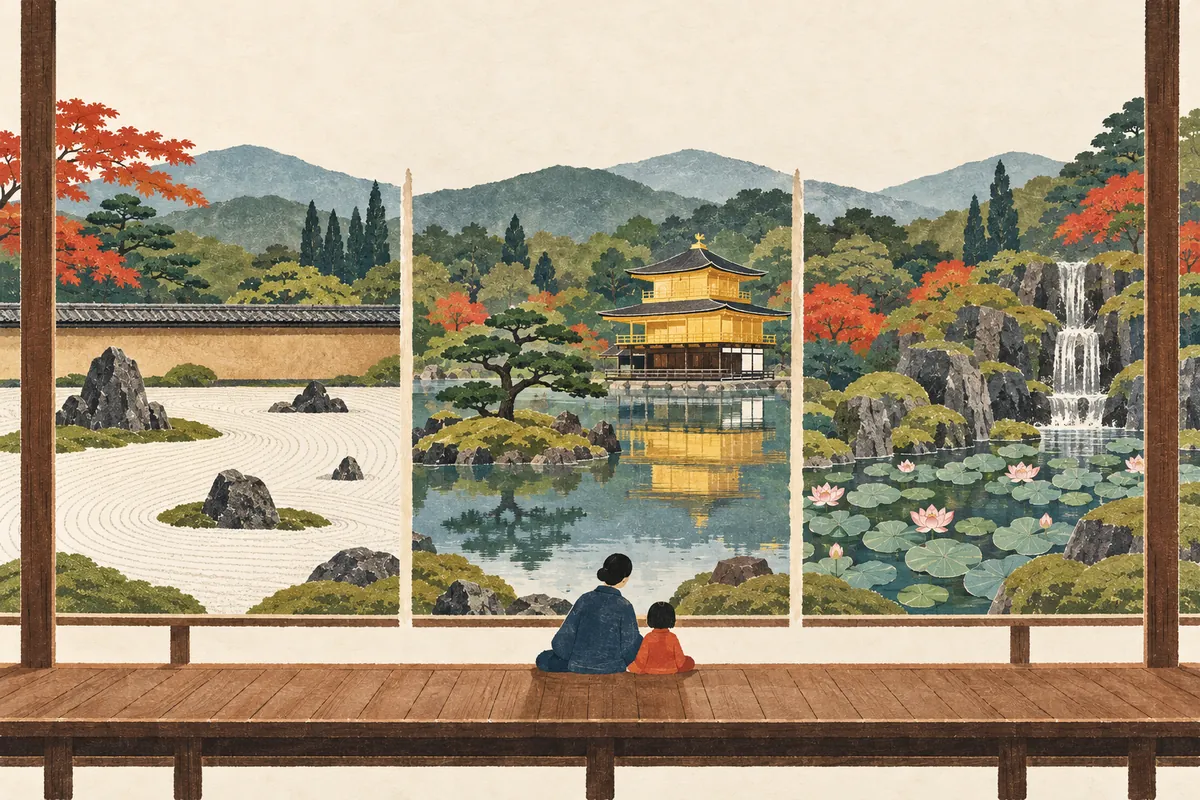
Key points
At Ryōan-ji and Daisen-in, only the garden in front of the Hōjō or Shoin is a Special Place; the gardens around it are separately Places of Scenic Beauty
Apart from the Hōkongō-in Seijo Falls, added in 1987, all were raised to Special status in the postwar years 1952–56
The Daitoku-ji Hōjō Garden and the Hongan-ji Daishoin Garden are normally closed; Saihō-ji requires advance application and admits ages 13 and up
Places of Scenic Beauty and Special Places of Scenic Beauty
Under the Law for the Protection of Cultural Properties, the national government designates important scenic sites, such as gardens, gorges, and mountains, as Places of Scenic Beauty, and designates the especially important ones among them as Special Places of Scenic Beauty. Kyoto City has 52 Places of Scenic Beauty (433 nationwide), of which 12 are Special. Exactly one third of the 36 Special Places of Scenic Beauty in Japan are in Kyoto City (as of April 2026).
Kyoto City's Special Places of Scenic Beauty by ward
- Kita
- Ukyō
- Sakyō
- Nakagyō
- Shimogyō
- Nishikyō
- Fushimi
List of the gardens
Where the name includes a building, as in "Ryōan-ji Hōjō Garden" or "Daisen-in Shoin Garden," only the garden in front of the hōjō (abbot's quarters) or the shoin (study hall) is the Special Place of Scenic Beauty. The "Ryōan-ji Garden," which includes the approach and Kyōyōchi Pond, and the "Daisen-in Garden" around the hōjō are separately designated Places of Scenic Beauty (1955).
Locations of Kyoto City's Special Places of Scenic Beauty (schematic map)
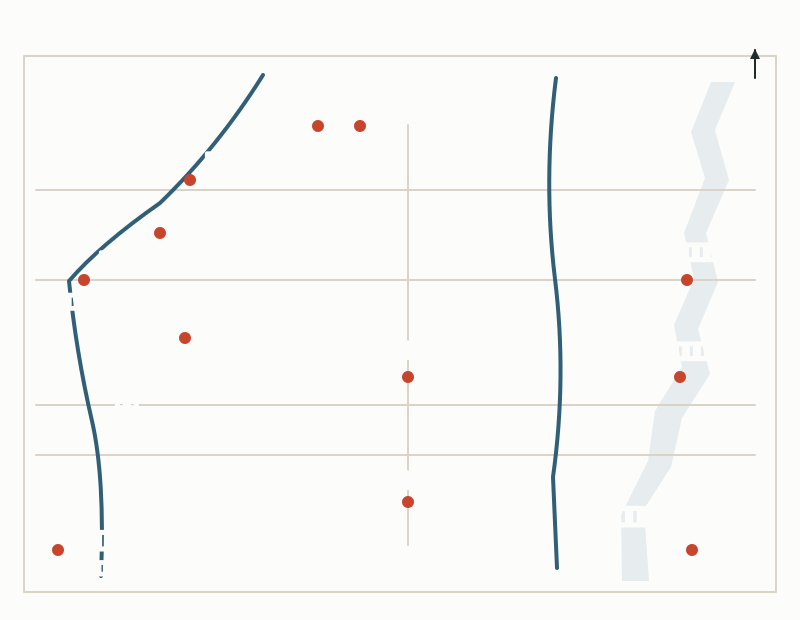
Kyoto City's 12 Special Places of Scenic Beauty
| Name | Ward | Garden type | Year designated Special | Open to visitors? |
|---|---|---|---|---|
| Rokuon-ji (Kinkaku-ji) Garden | Kita | Pond stroll garden (Kyōkochi Pond) | 1956 | Open (admission fee) |
| Jishō-ji (Ginkaku-ji) Garden | Sakyō | Pond stroll garden (Kinkyōchi Pond) | 1952 | Open (admission fee) |
| Ryōan-ji Hōjō Garden | Ukyō | Dry landscape (rock garden) | 1954 | Open (admission fee) |
| Tenryū-ji Garden | Ukyō | Pond stroll garden (Sōgenchi Pond) | 1955 | Open (admission fee) |
| Saihō-ji Garden | Nishikyō | Two tiers: pond stroll garden and dry landscape | 1952 | Advance application |
| Daisen-in Shoin Garden | Kita | Dry landscape (shoin garden) | 1952 | Open (admission fee) |
| Daitoku-ji Hōjō Garden | Kita | Dry landscape (hōjō garden) | 1952 | Normally closed |
| Hongan-ji Daishoin Garden (Kokei Garden) | Shimogyō | Dry landscape (shoin garden) | 1955 | Normally closed |
| Nijō Castle Ninomaru Garden | Nakagyō | Pond garden (viewed from the palace) | 1953 | Open (admission fee) |
| Daigo-ji Sanbō-in Garden | Fushimi | Pond garden (viewed from the shoin) | 1952 | Open (admission fee) |
| Konchi-in Garden (Crane and Turtle Garden) | Sakyō | Dry landscape (hōjō garden) | 1954 | Open (admission fee) |
| Hōkongō-in Seijo Falls with Goi-san Hill | Ukyō | Pure Land style (pond stroll garden) | 1987 | Open (admission fee) |
Dry landscapes, pond stroll gardens, and pond gardens viewed from a shoin
A dry landscape garden (karesansui) expresses mountains and water with white sand and stones, without using water. The Ryōan-ji Hōjō Garden is a rock garden with 15 stones arranged on a rectangular bed of white sand. The Daisen-in Shoin Garden sets many upright stones in a narrow space to depict mountains and a mountain stream, and the Daitoku-ji Hōjō Garden is a representative dry landscape of the early Edo period. Konchi-in's "Crane and Turtle Garden" is the work of Kobori Enshū, and Nishi Hongan-ji's "Kokei Garden" uses the roof of the Goeidō as borrowed scenery, treating it as Mount Lu (Rozan) in China.
A pond stroll garden is one you walk around, watching the scenery change. Kinkaku-ji's Kyōkochi Pond has islands large and small that change their appearance depending on where you stand; Tenryū-ji's Sōgenchi Pond preserves the garden laid out about 700 years ago by the Zen master Musō Kokushi and borrows Arashiyama and Kameyama as its backdrop. Saihō-ji was restored in 1339 by Musō Kokushi; its two-tier layout, with a dry landscape of rock groupings on the upper level above Ōgonchi Pond, is, by one theory, the model for the gardens of Kinkaku and Ginkaku.
There are also pond gardens meant to be viewed from a palace or a shoin. The Nijō Castle Ninomaru Garden is a pond garden with a waterfall, thought to have been remodeled by Kobori Enshū and other construction commissioners for the visit of Emperor Go-Mizunoo in 1626 (Kan'ei 3). The Daigo-ji Sanbō-in Garden is said to have been designed in its basic form by Toyotomi Hideyoshi himself for the "Daigo cherry-blossom viewing" of 1598 (Keichō 3). The garden of Hōkongō-in is a Heian-period Pure Land garden built at the behest of Taikenmon-in; the "Seijo Falls" on the north side of the pond was restored after a 1970 survey uncovered its buried lower stone arrangement.
Designation years for scenic and special scenic sites
Most of the 12 were designated Historic Sites or Places of Scenic Beauty between the Taishō era and the early Shōwa era, and were upgraded to Special Places of Scenic Beauty after the war, in 1952–56. The first upgrade came on March 29, 1952, when five, including Saihō-ji and Jishō-ji, became Special Places of Scenic Beauty together.
Hōkongō-in's Seijo Falls became a Place of Scenic Beauty in 1971 and a Special Place of Scenic Beauty in 1987, making it the newest of the 12; "with Goi-san Hill" (tsuketari) indicates that the hill behind the falls is designated together with it. Rokuon-ji, Jishō-ji, and Daigo-ji Sanbō-in are also Special Historic Sites, and six others, including Ryōan-ji Hōjō, are also Historic Sites.
Opening status and best seasons
Saihō-ji has required advance application since 1977: you apply by the day before, copy a sutra in the main hall, and then view the garden. Visits are limited to ages 13 and up; children of elementary school age and younger can come along only on the "Children's Days" held a few times a year. At Konchi-in, the garden is open to general visitors, while the tea house requires advance reservation.
For children's admission, Tenryū-ji is free for preschoolers and also sells a garden-only ticket (500 yen for high school students and older, 300 yen for elementary and junior high school students), Daigo-ji is free for elementary school age and younger (600 yen per area), and Nijō Castle is free for preschoolers and for elementary and junior high school students who live in or attend school in Kyoto City (800 yen for adults). Kinkaku-ji and Daisen-in charge 500 yen for adults and 300 yen for elementary and junior high school students, Ryōan-ji 600 yen for adults, and Ginkaku-ji, from April 2026, 1,000 yen for adults and 500 yen for elementary and junior high school students.
For seasons, the autumn leaves at Kinkaku-ji are usually at their best from mid to late November, and at Daigo-ji the approach becomes a tunnel of maples in November. Hōkongō-in is famous for lotuses, with a lotus-viewing event in July.
Nearest stops and visiting hours for each garden
Kinkaku-ji (1 Kinkakuji-chō, Kita Ward) is a 3-minute walk from the "Kinkakuji-michi" city bus stop, open 9:00–17:00. Ginkaku-ji (2 Ginkakuji-chō, Sakyō Ward) is about 10 minutes on foot from the "Ginkakuji-michi" city bus stop. Ryōan-ji (13 Ryōanji Goryōnoshita-chō, Ukyō Ward) is about 8 minutes on foot from Randen Ryōanji Station, open 8:00–17:00 from March to November. Tenryū-ji (68 Saga Tenryūji Susukinobaba-chō, Ukyō Ward) is right in front of Randen Arashiyama Station, open 8:30–17:00. Hōkongō-in (49 Hanazono Ōgino-chō, Ukyō Ward) is about 5 minutes on foot from JR Hanazono Station.
Daisen-in (54-1 Murasakino Daitokuji-chō, Kita Ward) is an 8-minute walk from the "Daitokuji-mae" city bus stop, open 9:00–16:30. Nijō Castle (541 Nijōjō-chō, Nijō-dōri Horikawa nishi-iru, Nakagyō Ward) is open 8:45–16:00. Daigo-ji Sanbō-in (22 Daigo Higashiōji-chō, Fushimi Ward) is about 10 minutes on foot from Daigo subway station. Konchi-in (86-12 Nanzenji Fukuchi-chō, Sakyō Ward) is about 5 minutes on foot from Keage subway station. Saihō-ji (56 Matsuo Jingatani-chō, Nishikyō Ward) is a 3-minute walk from the "Kokedera Suzumushidera" Kyoto Bus stop. At Nishi Hongan-ji (Horikawa-dōri Hanayachō-sagaru, Shimogyō Ward), you can worship free of charge in the Goeidō and Amidadō.
Mini quiz for this entry
How many stones are arranged on the rectangular bed of white sand in the rock garden of the Ryōan-ji Hōjō Garden?
At Saihō-ji (the Moss Temple), what do visitors who have applied in advance do in the main hall before viewing the garden?
Who had the Heian-period Pure Land garden at Hōkongō-in in Hanazono, Ukyō Ward, built?
Sources and verification
Content checked: October 18, 2026
Updated: October 18, 2026
References are in Japanese.
- 京都市文化財保護課「京都市内文化財件数(令和8年4月1日現在)」
- 京都市「京都の庭園文化」
- 文化庁「国指定文化財等データベース 鹿苑寺(金閣寺)庭園」
- 文化庁「国指定文化財等データベース 慈照寺(銀閣寺)庭園」
- 文化庁「国指定文化財等データベース 龍安寺方丈庭園」
- 文化庁「国指定文化財等データベース 龍安寺庭園」
- 文化庁「国指定文化財等データベース 天龍寺庭園」
- 文化庁「国指定文化財等データベース 西芳寺庭園」
- 文化庁「国指定文化財等データベース 大仙院書院庭園」
- 文化庁「国指定文化財等データベース 大仙院庭園」
- 文化庁「国指定文化財等データベース 大徳寺方丈庭園」
- 文化庁「国指定文化財等データベース 本願寺大書院庭園」
- 文化庁「国指定文化財等データベース 二条城二之丸庭園」
- 文化庁「国指定文化財等データベース 醍醐寺三宝院庭園」
- 文化庁「国指定文化財等データベース 金地院庭園」
- 文化庁「国指定文化財等データベース 法金剛院青女滝 附 五位山」
- 金閣寺「鹿苑寺」
- 金閣寺「参拝志納料改定のお知らせ」
- 京都市観光協会「鹿苑寺(金閣寺)」
- 京都市観光協会「金閣寺 紅葉情報」
- 銀閣寺「慈照寺」
- 銀閣寺「参拝志納料改定のお知らせ(2026年4月1日より)」
- 京都市観光協会「慈照寺(銀閣寺)」
- 京都市観光協会「龍安寺」
- 天龍寺「参拝・交通案内」
- 天龍寺「境内・山内案内」
- 西芳寺「参拝のご案内」
- 西芳寺「波乱と悠久の歴史」
- 西芳寺「よくあるご質問」
- 大仙院「拝観案内・アクセス」
- 京都市観光協会「大仙院」
- 臨済宗黄檗宗連合各派合議所「大徳寺」
- 京都市観光協会「大徳寺」
- 京都市観光協会「曝凉展【大徳寺本坊】」
- 本願寺「書院・能舞台」
- 本願寺「参拝のご案内」
- 京都市観光協会「本願寺(西本願寺)」
- 元離宮二条城「二の丸御殿・二の丸庭園」
- 元離宮二条城「入城料」
- 元離宮二条城「開城時間・休城日」
- 醍醐寺「三宝院」
- 醍醐寺「拝観時間・料金」
- 醍醐寺「交通案内」
- 醍醐寺「秀吉が果たせなかったモミジ狩りの名所」
- 京都市観光協会「金地院」
- 京都市観光協会「法金剛院」
- 京都市観光協会「観蓮会【法金剛院】」
- 京都市埋蔵文化財研究所「リーフレット京都 No.106 法金剛院の青女滝」