
Japanese八朔(はっさく)
Hassaku
Other spellings and namesHachigatsu sakujitsu (八月朔日) / Hassaku greetings / Hassaku in the kagai / Hassaku in Gion
In short
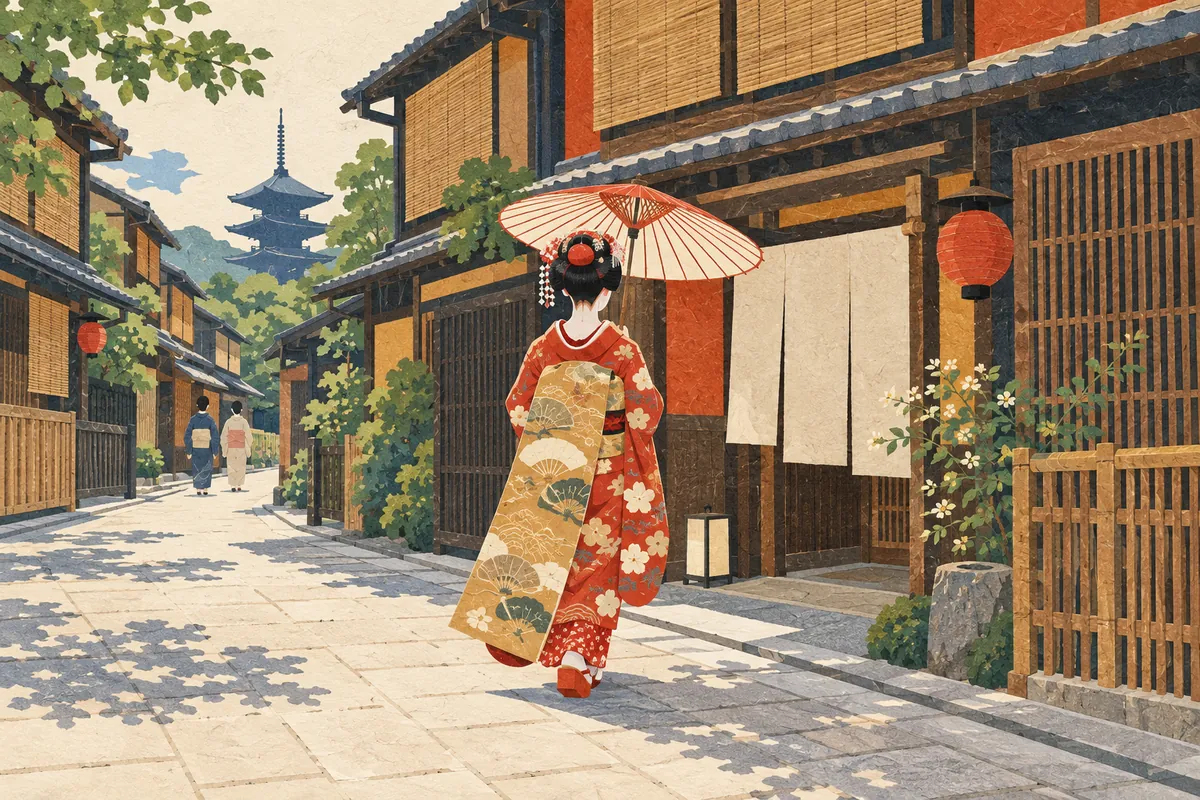
Hassaku (八朔) is short for hachigatsu sakujitsu (八月朔日, "the first day of the eighth month")—that is, August 1. In Kyoto's kagai (geisha districts), it is handed down as an event in which geiko and maiko visit their teachers of the arts and the teahouses (ochaya) on this day to express their thanks for everyday support. It is said to have spread from a farmers' custom of presenting the first rice of the harvest to benefactors.Key points in 30 seconds
Short for hachigatsu sakujitsu; it means August 1
Geiko and maiko in the kagai express thanks to their teachers and ochaya
Said to have begun as a farmers' custom of giving the first rice of the harvest to benefactors
One of the days when maiko wear the formal hairstyle yakko-shimada
Hassaku means "August 1"
Hassaku is a shortened form of hachigatsu sakujitsu (八月朔日), "the first day of the eighth month," and refers to August 1. In Kyoto's kagai, on this Hassaku (August 1), geiko and maiko hold an event in which they express their thanks for everyday support to their teachers and ochaya.
Hassaku is one of the "traditional events handed down in the five kagai"—Gion Kōbu, Miyagawa-chō, Pontochō, Kamishichiken, and Gion Higashi. It is not a custom of just one kagai but a summer event shared by Kyoto's kagai.
Its origin: the custom of giving the first rice
Hassaku was originally a long-standing farmers' custom of giving the first rice of the harvest (hatsuho) to benefactors and others. It is said to have spread to samurai and court nobles as well and to have become a day for giving gifts to people who help you in daily life.
Hassaku in the kagai can be said to carry on this meaning of "a day to show proper gratitude to those who have helped you." For geiko and maiko, the teachers who teach them the arts and the ochaya where they entertain guests at banquets are important people who support their daily work and training.
To become a maiko, a girl lives in an okiya (geiko house), helping out while learning dance, etiquette, Kyō-kotoba, and more, and after an apprenticeship she makes her debut, called misedashi. Even after becoming a maiko she continues training, and then becomes a geiko through the ceremony called erikae ("changing the collar"). The Hassaku greetings carry thanks to the people who support this long training.
The formal hairstyle: yakko-shimada
Maiko wear their hair in styles made with their own hair, and the style changes with the years: wareshinobu soon after becoming a maiko, ofuku from around the third year, and sakkō (先笄) just before erikae (becoming a geiko).
Apart from these, there are special hairstyles: yakko-shimada is worn as formal attire for occasions such as New Year and Hassaku, and katsuyama is worn during the Gion Festival. The hairstyle alone shows that Hassaku, like New Year, is a day approached in full formal dress.
Hassaku in the kagai's "calendar of greetings"
Besides Hassaku, the kagai have other events for exchanging greetings at the turning points of the year: the Shigyōshiki (opening ceremony) at New Year, Koto-hajime on December 13, and Okotōsan on New Year's Eve. In the table below, Hassaku is the only greeting event held in summer.
Hassaku and Koto-hajime are both days for expressing thanks, but their content differs slightly. Koto-hajime is the day preparations for the New Year begin; geiko and maiko present kagami-mochi (round rice-cake offerings) to those who have helped them, giving thanks for the year and greetings for the year ahead. Hassaku is a summer greeting that conveys everyday gratitude itself.
Main greeting events in the kagai
| When | Event | What happens |
|---|---|---|
| January 7 (January 9 in Kamishichiken) | Shigyōshiki (opening ceremony) | In formal black crested kimono and hairpins with ears of rice, they exchange greetings with those involved and pledge themselves to diligence for the year |
| August 1 | Hassaku | Geiko and maiko express everyday thanks to their teachers and ochaya |
| December 13 | Koto-hajime | They present kagami-mochi to those who have helped them, giving thanks for the year and greetings for the year ahead |
| New Year's Eve | Okotōsan | In Gion Kōbu, Miyagawa-chō, and Gion Higashi, geiko and maiko make the rounds of the ochaya with year-end greetings |
Not the same as the "Hassaku Festival"
The kagai greetings are not the only event with Hassaku in its name. Matsunoo Taisha's Hassaku-sai (Hassaku Festival) is held every year on the first Sunday of September; at a time when crops are vulnerable to typhoons, disease, and pests, it prays for calm wind and rain, abundant harvests, and family safety. In 2026 it was held on September 5 and 6, with dedicatory sumo, Bon dancing, and more.
In this way, Hassaku in the kagai is a greeting of thanks on August 1, while Matsunoo Taisha's Hassaku Festival is a shrine festival praying for the autumn harvest. Even with the same name, the date and content differ, so keeping them separate will prevent confusion.
Where can you see it?
The Hassaku greeting rounds take place in the streets of the five kagai. Gion Kōbu is the area on both sides of Shijō-dōri bounded by Shinbashi-dōri to the north, Kenninji-dōri to the south, Yamatoōji-dōri to the west, and Higashiōji-dōri to the east; Miyagawa-chō lies east of the Kamo River, from south of Shijō-dōri to Gojō-dōri; and Kamishichiken is a kagai that spreads east of Kitano Tenmangū.
Hassaku is not a performance put on for show but greetings to teachers and ochaya. Kagai culture is supported by many people, including the ochaya, okiya, and customers, so when walking through the area, it is important to be considerate and not get in the way of people making their greeting rounds.
Mini quiz for this entry
Check what you've read with 2 multiple-choice questions.
On what date is Hassaku held—the kagai (geisha district) event when geiko and maiko thank their teachers and teahouses (ochaya) for their everyday support?
Which special hairstyle do maiko wear as formal attire for occasions such as New Year and Hassaku?
Sources and verification
Content checked: October 11, 2026
Updated: October 11, 2026
References are in Japanese.