
Japanese辻子(ずし)と路地(ろーじ)
Zushi and Roji
Other spellings and names図子 / 辻子 / 路地 / Kyoto alleys / Fukuro-ji (袋路, dead-end alley) / Tunnel roji (トンネル路地)
In short
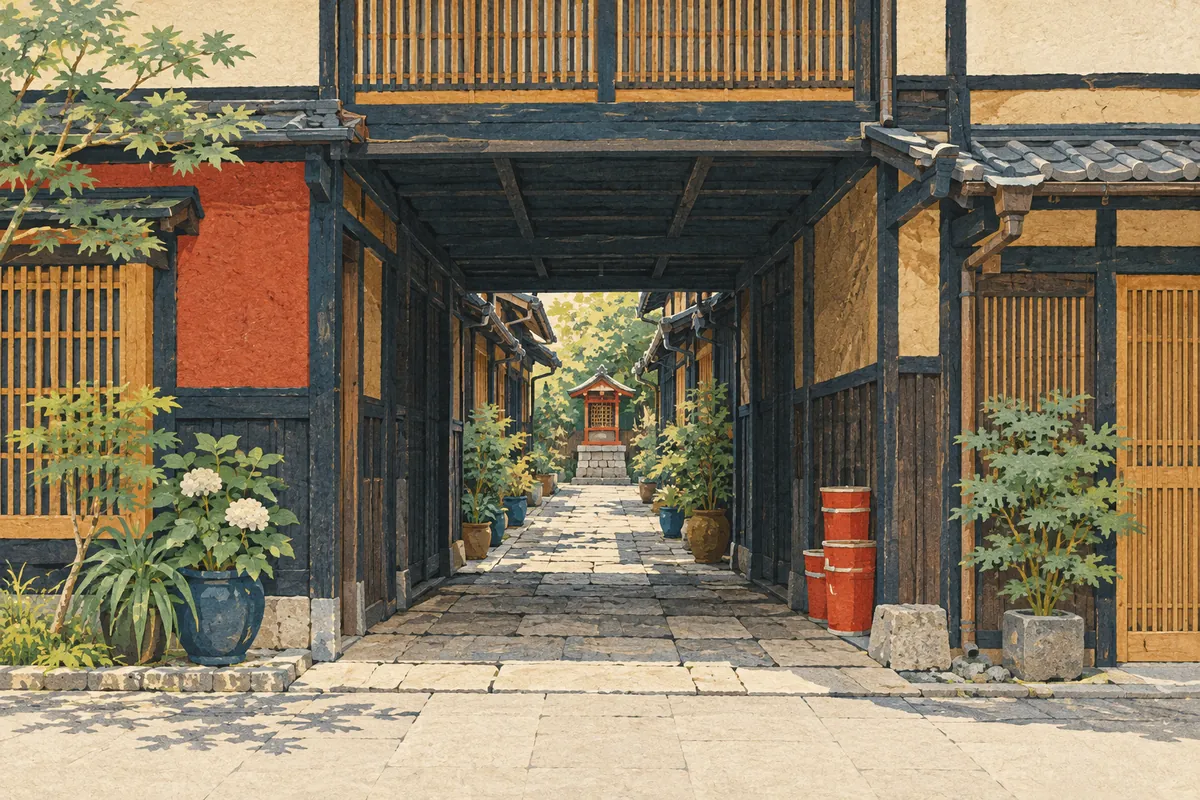
In Kyoto, a narrow lane that connects one street with another is sometimes called a zushi (辻子 or 図子), and one that dead-ends at the back is called a roji (路地, pronounced rōji locally). However, both are often lumped together as roji, and there is no clear-cut distinction.Key points in 30 seconds
A zushi (辻子/図子) is said to be a narrow lane you can pass through, and a roji a dead-end lane
However, both are often called roji collectively, and there is no clear distinction
Kamigyō and Nakagyō wards have town names containing 図子 (zushi), such as Ryōton-zushi-chō
Of Kyoto City's roads under 4 m wide, about 4,330 are dead-end alleys (fukuro-ji) (2011 survey)
Through Lanes Are Zushi, Dead Ends Are Roji
In Kyoto, narrow lanes that connect the major and minor streets (ōji and kōji) are said to be called zushi (図子 or 辻子), and lanes that dead-end are called roji (路地). Both 辻子 and 図子 are read zushi (ずし), and in Kyoto 路地 is also pronounced rōji (ろーじ).
However, zushi are often included when people speak of roji in general, and there is no clear distinction. The shapes vary too: straight, L-shaped, T-shaped, and hook-shaped. Whether you can get through is only a rough guide to the name, and it is safer not to judge by the name alone.
Zushi and Roji: What's the Difference?
Where Does the Word "Zushi" Come From?
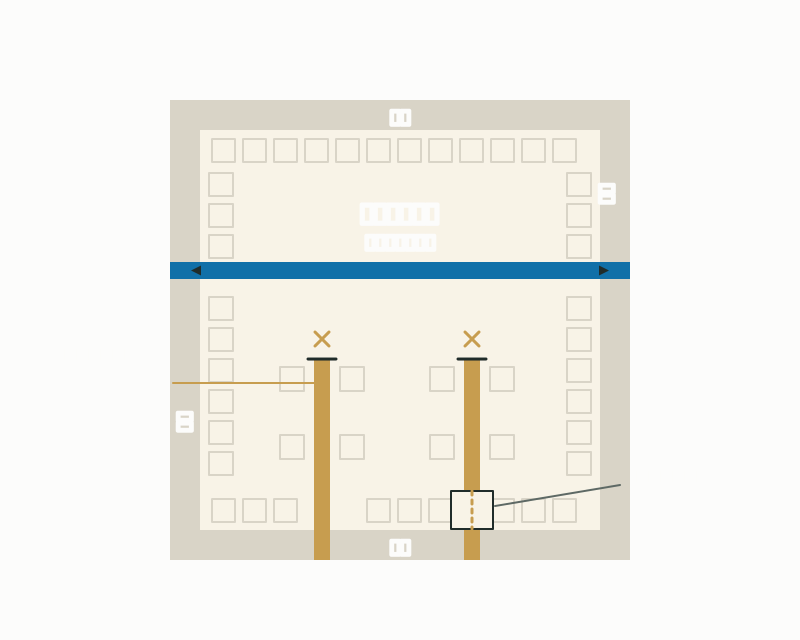
Zushi derives from the Heian-period word 十字 ("cross"), meaning a cross-shaped way; it later came to be written 辻 or 辻子, and from the Muromachi period onward spellings such as 図子, 通子, and 厨子 were also used. Heian-kyō already had zushi in the 10th century, but they are said to have been newly developed lanes rather than part of the jōbō grid of streets.
In medieval Kyoto, many zushi were opened both inside and outside the capital, creating new urban areas, and the local communities that formed there were also called zushi. Also, while the word zushi stayed in use in Kyoto from the Middle Ages on, in Edo and Osaka such lanes were mainly called roji.
Why Does Kyoto Have So Many Narrow Lanes?
In Heian-kyō's grid system (jōbō-sei), the blocks enclosed by streets tended to leave open land in the middle, and roji were made as ways to get into it. Shops and houses also lined the roji, allowing more people to live there. In some cases new lanes were also run through land left vacant when aristocratic mansions or temples moved away.
In this way, many roji formed to make use of the land inside blocks enclosed by the main roads. Streetscapes of Kyoto townhouses (kyō-machiya) lining narrow lanes, including dead-end alleys, have become part of Kyoto's distinctive charm.
Where Can You See Them Today?
Kamigyō Ward has Imazushi-chō, Ōmine-zushi-chō, Tokiwai-zushi-chō, Nakagoryō-zushi-chō, Hyōtan-zushi-chō, Motozushi-chō, and Yanagi-zushi-chō, and Nakagyō Ward has Ryōton-zushi-chō. All of them are read with zushi-chō (ずしちょう), and zushi survive as town names.
Well-known zushi include Ryōton-zushi, where the residence of the Azuchi-Momoyama-period tea master Hirono Ryōton stood; Kōyaku-zushi, whose name is said to be a corruption of the name of a memorial hall for the monk Kūya; and Donguri-zushi, where the Great Tenmei Fire of 1788 began, later widened to become Donguri-dōri. At Kōyaku-zushi (Shimogyō Ward), which opens onto Shijō-dōri, residents have set out rules for daily life called the Kōyaku-zushi Shikimoku to protect the streetscape.
Many "tunnel roji," which you enter by passing beneath a building, remain in the city, and some roji use rōji in their names, such as Murasakino Rōji and Tōji Rōji.
Kyoto's Narrow Lanes in Numbers
Within the city's urban planning area, narrow roads under 4 m wide that are lined with buildings (saigairo) totaled about 940 km in length and about 13,000 roads as of the 2011 survey. Of these, dead-end alleys (fukuro-ji) numbered about 2,650 at 1.8 m to under 4 m wide and about 1,680 under 1.8 m wide, for a total of about 4,330—roughly one-third of all narrow roads.
Dead-end alleys under 1.8 m wide are concentrated mainly in the old city. Under the Building Standards Act, it is difficult to rebuild or carry out major repairs on lots facing such lanes, and this is seen as a problem that leads to aging buildings and more vacant houses.
Number of narrow roads (under 4 m wide) in Kyoto City
- 1.8 m to under 4 m wide, through road
- 1.8 m to under 4 m wide, dead end
- Under 1.8 m wide, through road
- Under 1.8 m wide, dead end
Disaster Safety in Dead-End Alleys, and Etiquette When Walking
In dead-end lanes, especially narrow and long ones, collapsed buildings in an earthquake could make safe evacuation and rescue difficult. As of June 2026, Kyoto City subsidizes measures such as securing evacuation routes from the back of a dead-end alley to another road and making the tunnel sections at alley entrances earthquake- and fire-resistant.
In the Rokuhara school district of Higashiyama Ward, nameless narrow lanes were given names and distinguished as roji = fukuro-ji (dead end) and kōji = escape possible in two directions. It is a way of letting people know whether a lane goes through just by hearing its name, and it echoes the old distinction between zushi and roji.
The back of a roji is where residents live their daily lives. Dead-end alleys can be hard to evacuate in a disaster, and visitors entering a roji are asked to mind their manners. When walking around, be considerate of residents—for example, by just looking in from the main street.
Zushi and roji: how they are distinguished (rough guide)
| Zushi (辻子/図子) | Roji (路地) | |
|---|---|---|
| Reading | zushi (ずし) | roji, rōji (ろじ・ろーじ) |
| Layout | Narrow lane connecting one street with another | Lane that dead-ends at the back (fukuro-ji) |
| History of the word | Derived from the Heian-period word 十字 ("cross"); used in Kyoto since the Middle Ages | The usual name for narrow lanes in Edo and Osaka |
| Surviving examples | Town names such as Ryōton-zushi-chō and Yanagi-zushi-chō; Kōyaku-zushi | Tunnel roji; lanes called "... Rōji" |
Mini quiz for this entry
Check what you've read with 2 multiple-choice questions.
What are the narrow lanes in Kyoto that connect one street (ōji or kōji) to another called?
Zushi (辻子), a word for Kyoto's narrow lanes, derives from which Heian-period word meaning a cross-shaped road?
Sources and verification
Content checked: October 11, 2026
Updated: October 11, 2026
References are in Japanese.