
DICTIONARY CATEGORY
Food & Kitchen Tools
Words used in Kyoto kitchens and the background of the city's food culture.
7 entries7 entries
Food & Kitchen Tools
Words used in Kyoto kitchens and the background of the city's food culture.
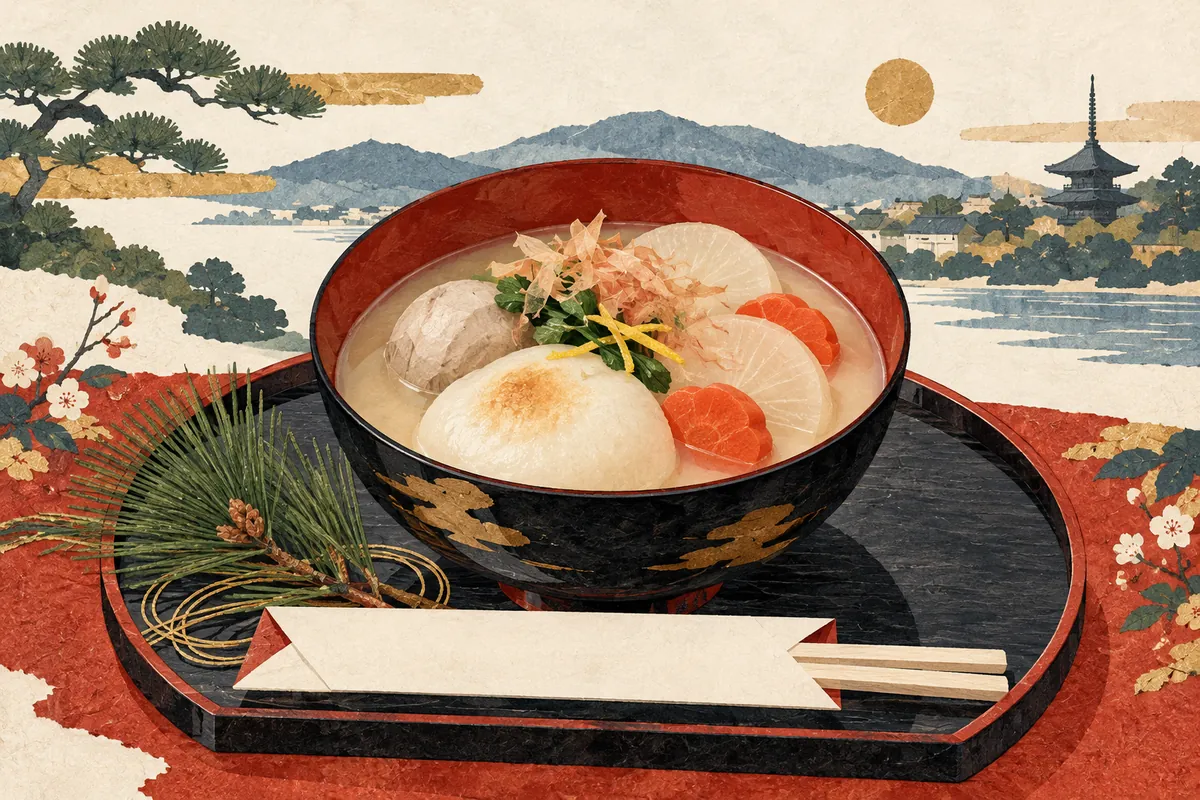
White-Miso Zoni
White-miso zōni is Kyoto's New Year soup: white miso dissolved in kombu stock with round mochi, kashiraimo (the mother corm of the taro), daikon, and other ingredients. Each household eats it during the first three days of the New Year, and recipes are said to be passed down from generation to generation. Each ingredient and the way it is cut carries wishes such as harmony and long life.
Read more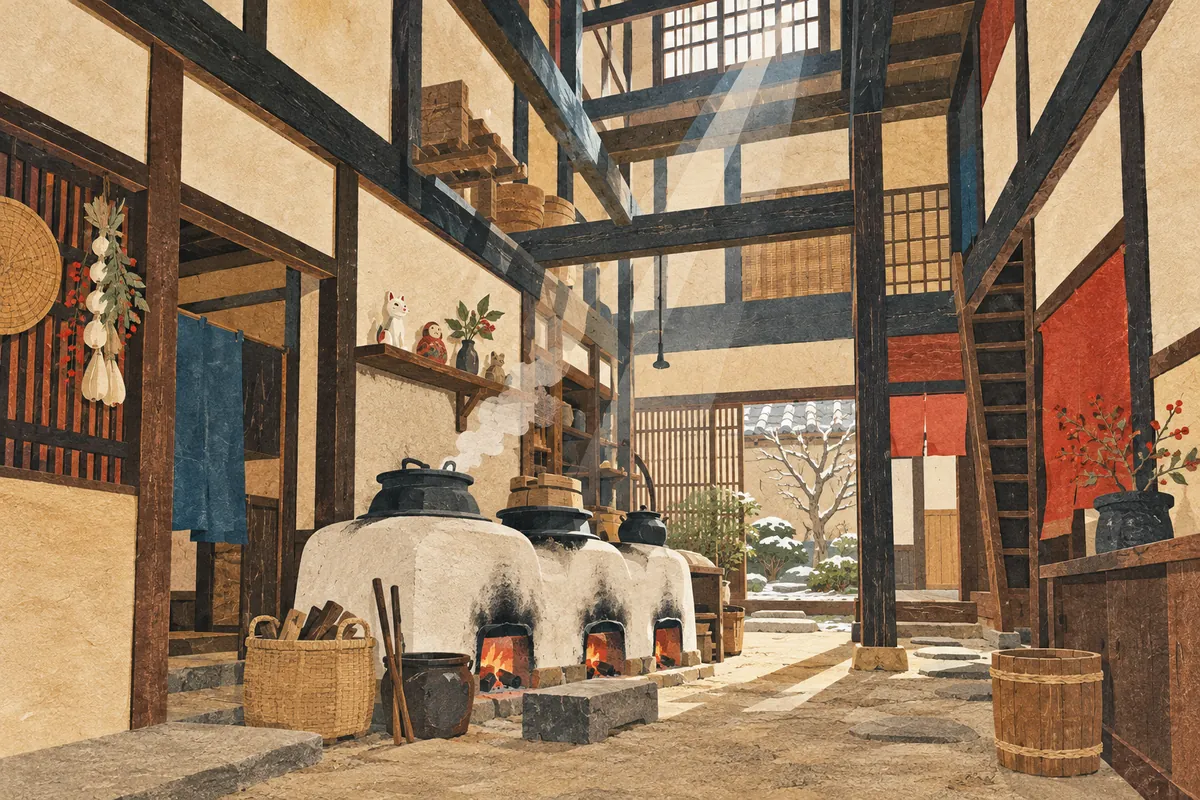
Okudosan
Okudosan (おくどさん) is the Kyō-kotoba (Kyoto dialect) word for a kamado, the stove used to cook rice and other dishes. In a Kyoto machiya townhouse, it stands on the earthen floor midway along or toward the back of the tōri-niwa passage, and above it is an open void called the hibukuro, for fire prevention and smoke ventilation. It has been closely tied to household customs, such as the Hotei figures on the kōjin-dana shelf above it and the kagami-mochi offered at New Year.
Read more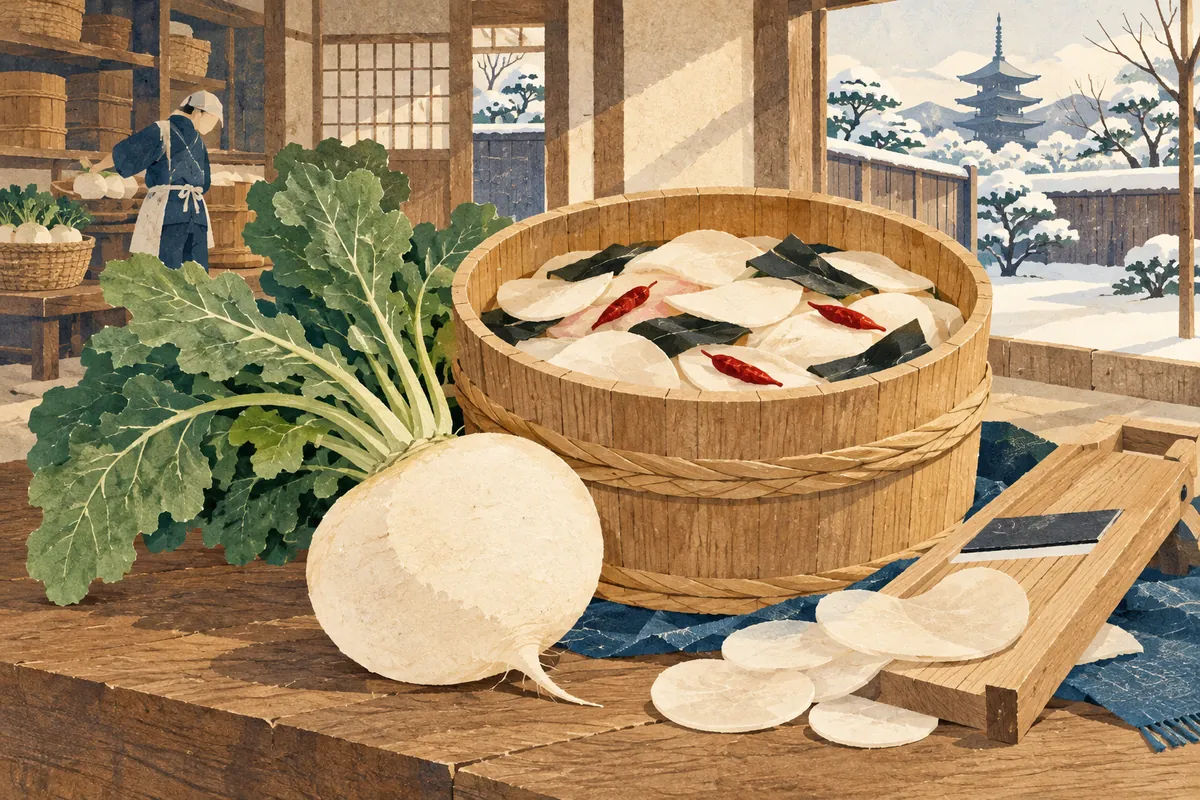
Senmaizuke
Senmaizuke (千枚漬) is a Kyoto pickle made by shaving Shōgoin turnip into thin slices and pickling them with kombu, vinegar, and other ingredients. It is counted among Kyoto's three great pickles, together with sugukizuke and shibazuke. It is not meant for long-term storage and is delicately pickled without lactic acid fermentation. It is made from around November, when Shōgoin turnips start to be shipped, and is loved as a taste of Kyoto's winter.
Read more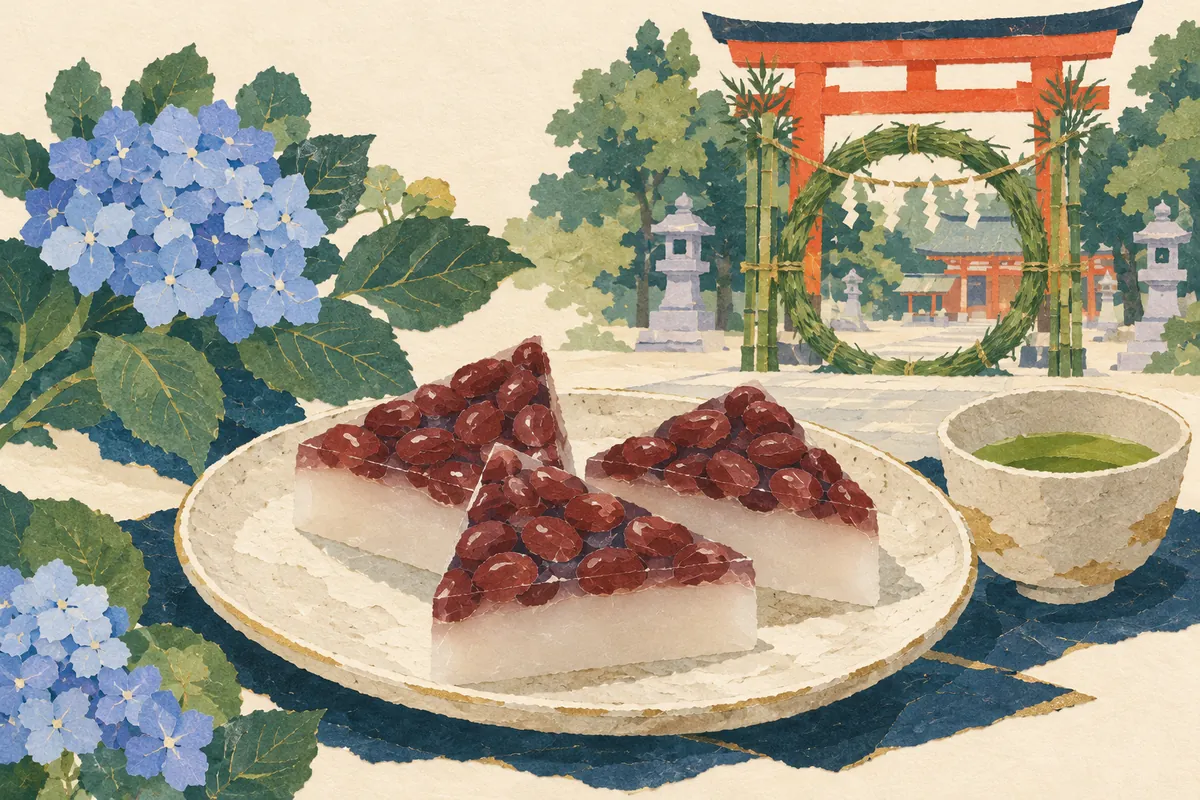
Minazuki
Minazuki (水無月) is a Kyoto wagashi made of white uirō (a steamed rice-flour cake) topped with azuki beans and cut into triangles. In Kyoto it is customary to eat it at the Nagoshi no Harae (summer purification) on June 30, to cleanse the impurities of the past half year and pray for good health for the rest of the year. The triangle is said to represent ice that drives away the summer heat, and the red of the azuki beans to ward off evil.
Read more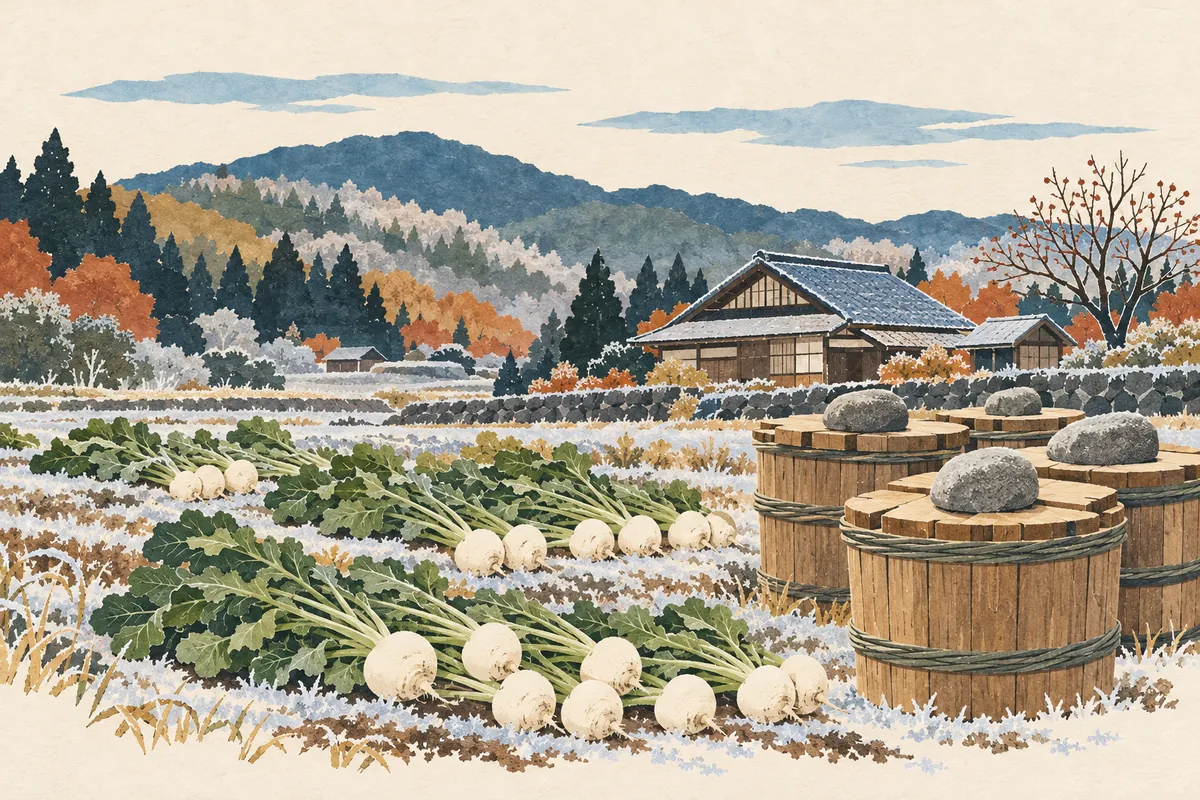
Suguki
Suguki (酸茎, "sour stem") is the name of a kind of turnip grown since long ago in Kamigamo, Kyoto, and of the pickle made by pickling it with salt alone and fermenting it with lactic acid. It is known for its distinctive sourness and is counted among Kyoto's three great pickles, together with senmaizuke and shibazuke. It is harvested and pickled from mid-November to around January and is loved as one of the representative pickles of a Kyoto winter.
Read more
Amanohashidate and Uji Tea: The Reach of Kyoto Prefecture
Kyoto Prefecture is long and narrow from north to south, stretching from its northern coast on the Sea of Japan to the south, where Uji tea is grown. Setting Amanohashidate in Miyazu City in the north side by side with the Uji tea culture of the south shows that Kyoto is more than just Kyoto City. The prefecture has 26 municipalities—15 cities, 10 towns, and 1 village—and covers 4,612.21 km².
Read more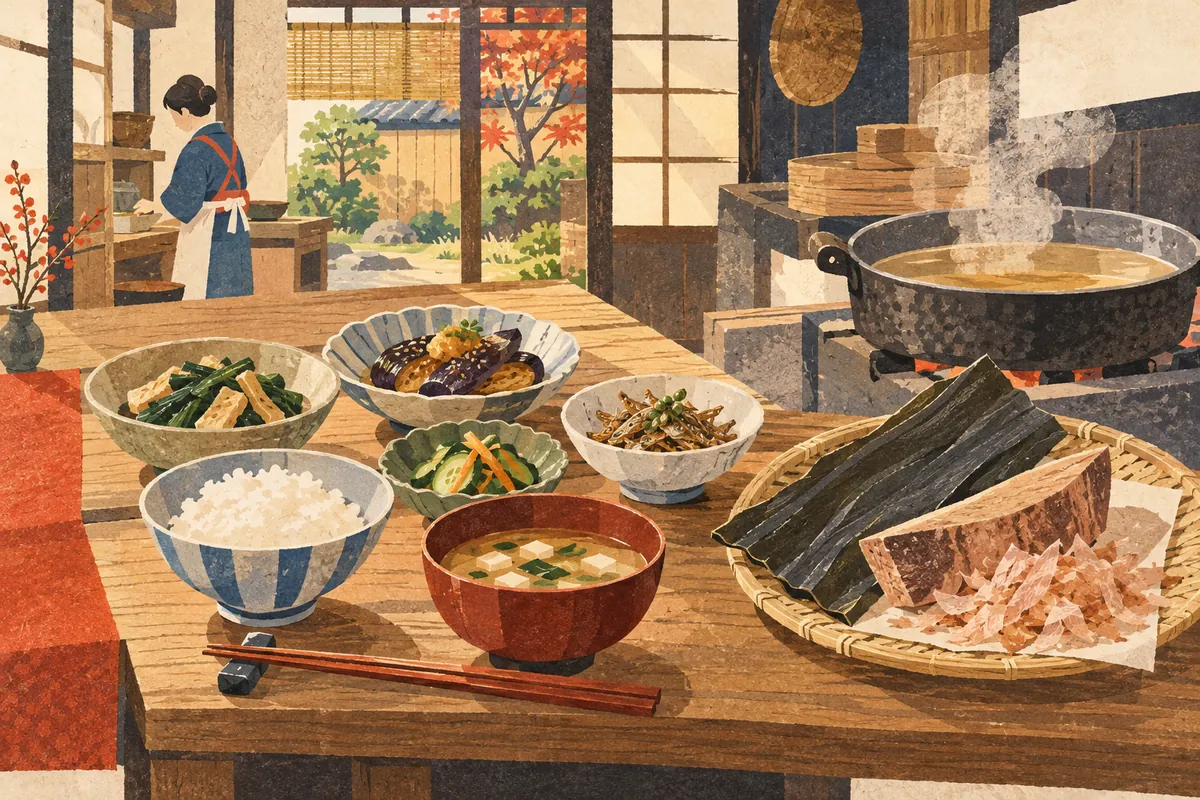
Obanzai and Kyoto's Dashi Culture
Obanzai (おばんざい) are the everyday side dishes handed down through generations in Kyoto homes. They are packed with household wisdom for making the most of seasonal ingredients, and their flavor rests on dashi (soup stock) made from kombu kelp and katsuo (bonito). Kyoto City ranks first among Japan's designated cities in household spending on both kombu and katsuobushi/shaved bonito flakes (2016–2018 average), and dashi is indispensable to Kyoto's food culture.
Read more