
Japaneseいけず
Ikezu
Other spellings and namesイケズ
Key points
Means "mean, nasty." Also used for a person or behavior like that
Also used in the forms ikezu suru and ikezu iu
Examples appear in hanashibon (joke books) of the late 17th to early 18th century
In the Edo period it could also mean a villain or a rogue
What ikezu means, with examples
Ikezu means being mean-spirited or having a twisted heart, and it also refers to a person or behavior like that. Besides describing behavior, as in ikezu na koto bakari iu ("always saying mean things"), it is often used in the forms ikezu suru ("to be mean to someone") and ikezu iu ("to say mean things").
- 人にいけずしたらあかんえ ("Hito ni ikezu shitara akan e"): "You mustn't be mean to people." This is what parents say when teaching their children manners.
- いけず言わんといて! ("Ikezu iwan toite!"): "Don't say such mean things!" This is a reply used to hide one's embarrassment when praised to one's face.
- いけずなことばかり言う ("Ikezu na koto bakari iu"): "Always saying mean things."
Ikezu said in jest, and similar words
Ikezu is not only a word for blaming someone. When a person who has been praised replies "Ikezu iwan toite," no one has really been mean to them; they are using it to cover their embarrassment. The same word is taken differently in a scene of discipline and in a relaxed conversation.
Similar words include ikezu-guchi ("spiteful words, insults") and ikezu-mono ("a bad sort, a rogue").
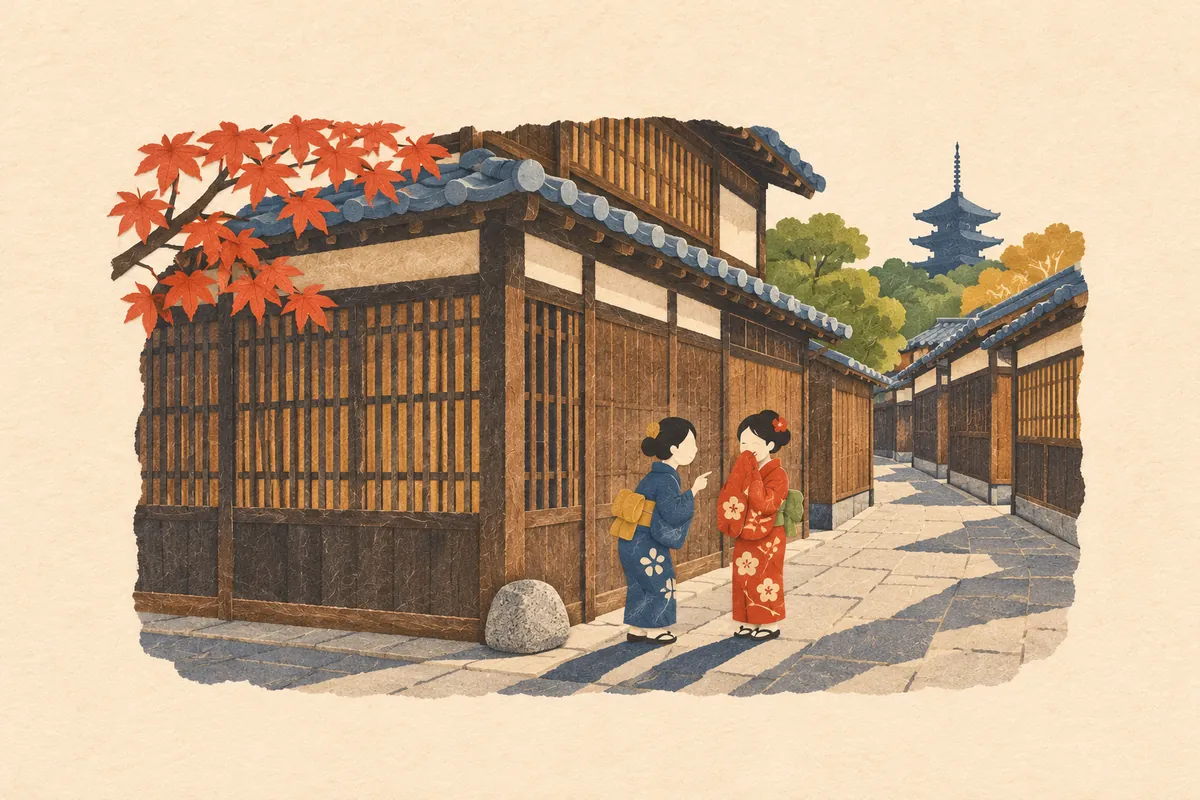
In the streets of Kyoto, stones placed at the corners of homes and shop lots are called ikezu-ishi ("ikezu stones"). They are often found in narrow alleys and on corners, and most of the people who placed them reportedly answered that they did so to keep cars from hitting and damaging their buildings (2024).
The theory that it comes from ikazu, and Edo-period examples
One explanation is that it comes from ikazu (行かず, "not going"), from the sense of not going along in the ordinary way.
There was also an early modern Kamigata word, ikazu, formed by adding the negative zu to iku ("to go"), which meant not understanding human feelings or refinement, being mean, or being useless. Ikazu was basically an early modern word and gradually disappeared from the Meiji era on. Ikezu, which has a similar meaning, is regarded as a newer form than ikazu.
An early example of ikezu appears in a hanashibon (はなしぼん, a book of comic stories) of the late 17th to early 18th century: the story of an "ikezu no musume" ("a mean-spirited girl") who, hearing that Yang Guifei was a beauty with the fragrance of yuzu citron, always carried a yuzu in the fold of her kimono. In the 1745 jōruri play Natsumatsuri Naniwa Kagami (なつまつりなにわかがみ), ikezu-tachi is used to mean villains, and Minakami Takitarō's 1925–26 novel Ōsaka no Yado includes the line of dialogue "Ikezu shiyahari man no ka" ("Are you being mean to me?").
The phrase "Kyoto people are ikezu"
The idea that "Kyoto people are ikezu" is sometimes taken up by TV programs and other media as a trait of Kyoto people. The story that being offered bubuzuke (rice with tea poured over it) is a signal to go home has also been told as an example of Kyoto ikezu, but it has been reported that only about 1 in 1,000 people connected with Kyoto had actually experienced it, and that all of them were elderly (2025).
Some people from Kyoto are uncomfortable that such phrases spread the impression that Kyoto people are "mean" or "two-faced" (reported in 2024). As a word, ikezu means mean-spirited, but that does not allow anyone to sum up the character of everyone living in Kyoto.
Mini quiz for this entry
When someone is praised and replies "Ikezu iwan toite!" ("Don't say such mean things!"), what feeling is behind it?
Which word was used in the Edo period with a meaning similar to ikezu, and fell out of use after the Meiji era?
Sources and verification
Content checked: November 8, 2026
Updated: November 8, 2026
References are in Japanese.
- 京都市観光協会 京都観光Naviぷらす(京ことば「おこしやす」と「おいでやす」の解説)
- 京都市観光協会 京都観光Navi「京の用語集 今でもよく使う京ことば2」(2023年3月時点の保存ページ。現在は公開終了)
- コトバンク「いけず」(小学館『デジタル大辞泉』・『精選版 日本国語大辞典』)
- コトバンク「嫁かず(いかず)」(『精選版 日本国語大辞典』)
- コトバンク「いかず」(小学館『デジタル大辞泉』)
- コトバンク「いけず口」(『精選版 日本国語大辞典』)
- コトバンク「いけず者」(『精選版 日本国語大辞典』)
- JR東海ツアーズ「必修!京都弁講座 京都弁 会話・単語・難解地名集」
- 日本経済新聞「家守る『いけず石』関西に集中 京都の厄よけ意識も影響?」(2024年)
- 日本経済新聞「『ぶぶ漬け=帰れ』の意? 経験した京都人、1000人に1人のみ」(2025年6月16日)
- 京都新聞「『京都人はいけず』ってホンマ? 本来は角立てない知恵、大西里枝さんに聞く」(2024年3月4日)