
Traditional Kyoto Vegetables (Kyō no Dentō Yasai)
Other spellings and names京都の伝統野菜 / Kyoto heirloom vegetables / Kyō no dentō yasai
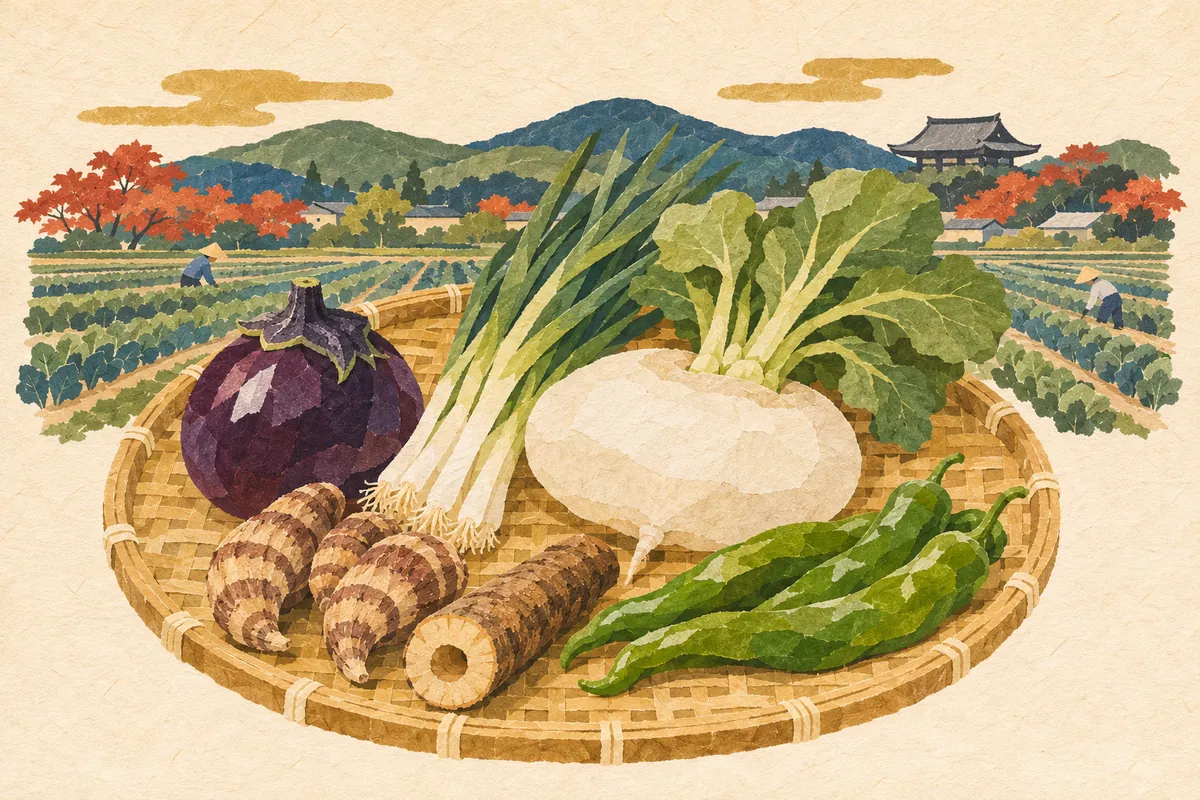
Key points
Grown since before the Meiji era; covers the whole prefecture, not just Kyoto City
37 items were set in 1988 (Shōwa 63); with the equivalent items, there are 40
As of November 2026 there are 31 Kyoto brand products, 21 of them vegetables
The name "Kyō no Dentō Yasai" was registered as a regional collective trademark in 2007
"Traditional Kyoto vegetables" as defined by Kyoto Prefecture
Kyoto, as the seat of the capital, is said to have drawn vegetables from all over Japan as offerings to the imperial court and to temples and shrines, and these were improved thanks to fertile soil, plentiful water, and the skill of farmers. Those with a long history are the traditional Kyoto vegetables, and the definition set by Kyoto Prefecture has the following five points.
- Have a history of introduction and cultivation from before the Meiji era
- Cover the whole prefecture, not only Kyoto City
- Include bamboo shoots
- Exclude mushrooms and ferns (such as zenmai and warabi)
- Include items that are grown or preserved, as well as extinct items
Number of items and seed preservation
The definition was set out in a booklet published in March 1988 (Shōwa 63) by the Kyoto Prefectural Department of Agriculture, Forestry and Fisheries (a revised edition was issued in March 2002, Heisei 14, by the Kyoto Furusato Products Price and Distribution Stabilization Association). At that time 37 items were designated as traditional Kyoto vegetables (some accounts give 1987 as the year of selection). Separately, 3 items, including Manganji pepper and hanana (rapeseed blossoms), were designated as equivalent to traditional Kyoto vegetables, making 40 items including these (as of November 2026).
Extinct items that are no longer grown are also counted as traditional Kyoto vegetables. To protect the original strains of the traditional vegetables, Kyoto Prefecture's agricultural center keeps seeds in cold storage and grows them regularly to renew the stock with seeds that germinate well. In 2020 it renewed the seeds of 4 root vegetables of the cabbage family (Brassicaceae), including Maizuru turnip and Momoyama daikon.
In August 2007 the name "Kyō no Dentō Yasai" was registered as a regional collective trademark held by the National Federation of Agricultural Cooperative Associations (JA Zen-Noh) and JA Kyoto City.
How they differ from Kyoto brand products (brand Kyoto vegetables)
Kyoto brand products are agricultural, forestry, and fishery products of Kyoto, grown under the Kyoto Kodawari Production Certification System with attention to safety and the environment, and strictly selected for quality, standards, and growing area. They are certified by the Kyoto Furusato Products Association (a public interest incorporated association) and shipped with the Kyō Mark, a design based on K, the initial of Kyoto. Certification of vegetables began in fiscal 1989 (Heisei 1) and later expanded to fruit, seafood, processed foods, and more.
Certification requires enough volume for shipping, uniform quality and standards, and a distinctiveness not found in other growing areas. As of November 2026 there are 31 brand products, 21 of them vegetables.
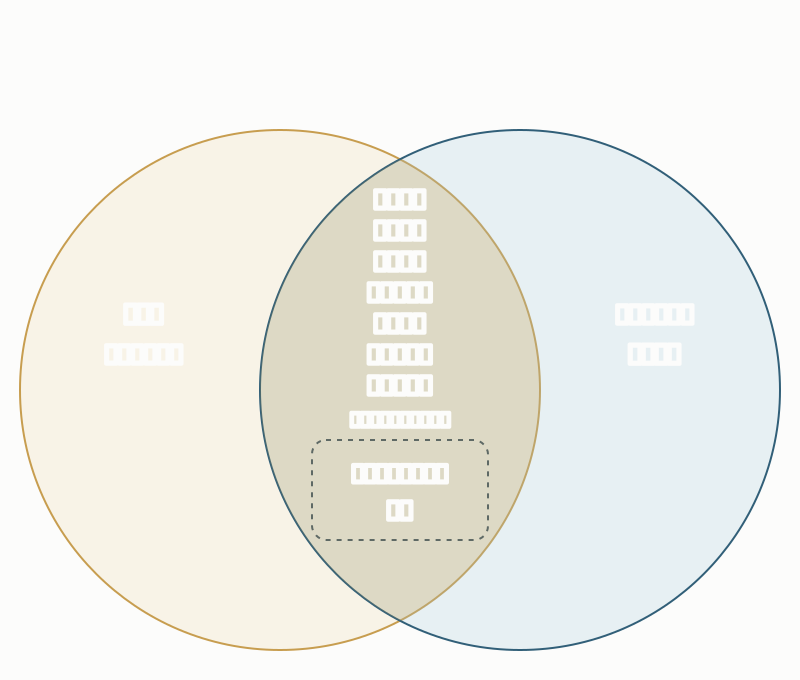
Traditional Kyoto vegetables are a category determined by a history going back to before the Meiji era, whereas Kyoto brand products are a category certified after strict selection for quality and growing area. Some vegetables, such as Kamo eggplant and Kujō green onion, belong to both, while some, such as suguki, are traditional vegetables but not on the list of brand products. Kintoki carrot and Murasaki Zukin (a black soybean edamame) are brand products that fall outside the definition of traditional vegetables.
Traditional Kyoto Vegetables and Kyoto Brand Products
Main growing areas and seasons of key items
Here are the categories of representative items and the main growing areas and seasons for shipping through agricultural cooperatives.
Main Kyoto vegetables: category, main growing areas, and season
| Item | Category | Main growing areas | Peak shipping season |
|---|---|---|---|
| Kamo eggplant | Traditional vegetable, brand product | Kameoka, Ayabe, Kyōtango, and Kyoto cities | May–October |
| Kujō green onion | Traditional vegetable, brand product | Throughout the prefecture | November–July of the following year |
| Kyō mizuna | Traditional vegetable, brand product | Throughout the prefecture | November–July of the following year |
| Fushimi pepper | Traditional vegetable, brand product | Seika Town, Kyōtanba Town, Nantan City | June–September |
| Manganji pepper | Equivalent to a traditional vegetable, brand product | Throughout the prefecture (brand growing areas: Maizuru, Ayabe, and Fukuchiyama cities) | June–October |
| Kyō takenoko (bamboo shoots) | Traditional vegetable, brand product | Kyoto, Nagaokakyō, and Mukō cities | March–April |
| Horikawa burdock | Traditional vegetable, brand product | Kyōtango City, Wazuka Town | November–December |
| Ebi-imo taro | Traditional vegetable, brand product | Kyōtanabe, Kameoka, and Kyōtango cities | November–February of the following year |
| Shōgoin turnip | Traditional vegetable, brand product | Kameoka and Kyōtango cities | December–February of the following year |
| Kintoki carrot | Brand product | Nantan and Kyoto cities | December–January of the following year |
Where each item comes from
Many items keep Kyoto place names or history in their names or origins.
- Kujō green onion: said to have been grown in Fukakusa already in the Nara period, and cultivation is said to have spread to Kujō in the early Heian period. The name comes from Kujō, in present-day Minami Ward, once the main growing area
- Ebi-imo taro: said to have begun in the An'ei era (1772–1781), when a taro that Shōren-in no Miya brought back from Nagasaki was grown in the prince's vegetable garden and became a large taro shaped like a shrimp (ebi)
- Kamo eggplant: a round eggplant long grown in Kamigamo, Kita Ward. Its origin is unknown, but it is recorded in a document of 1684 (Jōkyō 1)
- Kyō takenoko: said to have been brought from China in the time of Emperor Saga, with cultivation flourishing from the Edo period
- Manganji pepper: a large pepper said to have originated in Maizuru City; those from around Maizuru are shipped under the name Manganji Amatō
Ingredients for Kyoto pickles, and where to buy
Traditional vegetables are also the ingredients for Kyō-tsukemono (Kyoto pickles): Shōgoin turnip for senmaizuke and Kamigamo's suguki for suguki-zuke.
Vegetables grown in Kyoto Prefecture are sold as Kyō-yasai (Kyoto vegetables) at supermarkets and greengrocers, and brand products carry the Kyō Mark sticker. The Kyoto Furusato Products Association certifies shops that stock a wide range of Kyoto vegetables as "Honmamon Kyō-yasai Toriatsukaiten" (genuine Kyoto vegetable stockists) and restaurants that serve dishes of seasonal Kyoto vegetables as "Shun no Kyō-yasai Teikyōten" (seasonal Kyoto vegetable restaurants).
Mini quiz for this entry
What is the mark attached to "Kyoto brand products," which are strictly selected for quality and growing area, called?
Which of these does Kyoto Prefecture's definition of "traditional Kyoto vegetables" explicitly include?
Manganji pepper is treated as equivalent to a traditional Kyoto vegetable. Which city is said to be its birthplace?
Sources and verification
Content checked: November 8, 2026
Updated: November 8, 2026
References are in Japanese.
- 京都府「京の伝統野菜・京のブランド産品」
- 京都府「京都府の特産物は?<農業(1)>」
- 環境省 森里川海プロジェクト 取組事例「京のブランド産品を支える 京の伝統野菜」
- 京都をつなぐ無形文化遺産普及啓発実行委員会「京の食文化」ハンドブック
- 京都府農林水産技術センター 農林センター「伝統野菜の維持・保存のため種子を更新」(令和2年6月試験研究業務月報)
- 全国農業協同組合連合会京都府本部(JA全農京都)「食財図鑑」
- コトバンク「京野菜」(平凡社『百科事典マイペディア』・小学館『デジタル大辞泉』)
- コトバンク「京の伝統野菜」(日外アソシエーツ『事典 日本の地域ブランド・名産品』ほか)
- コトバンク「九条葱」(小学館『デジタル大辞泉』ほか)
- 農林水産省「うちの郷土料理 にしん茄子/茄子とにしんの炊いたん(京都府)」