
The Sanmon Gate and Hōjō of Nanzen-ji
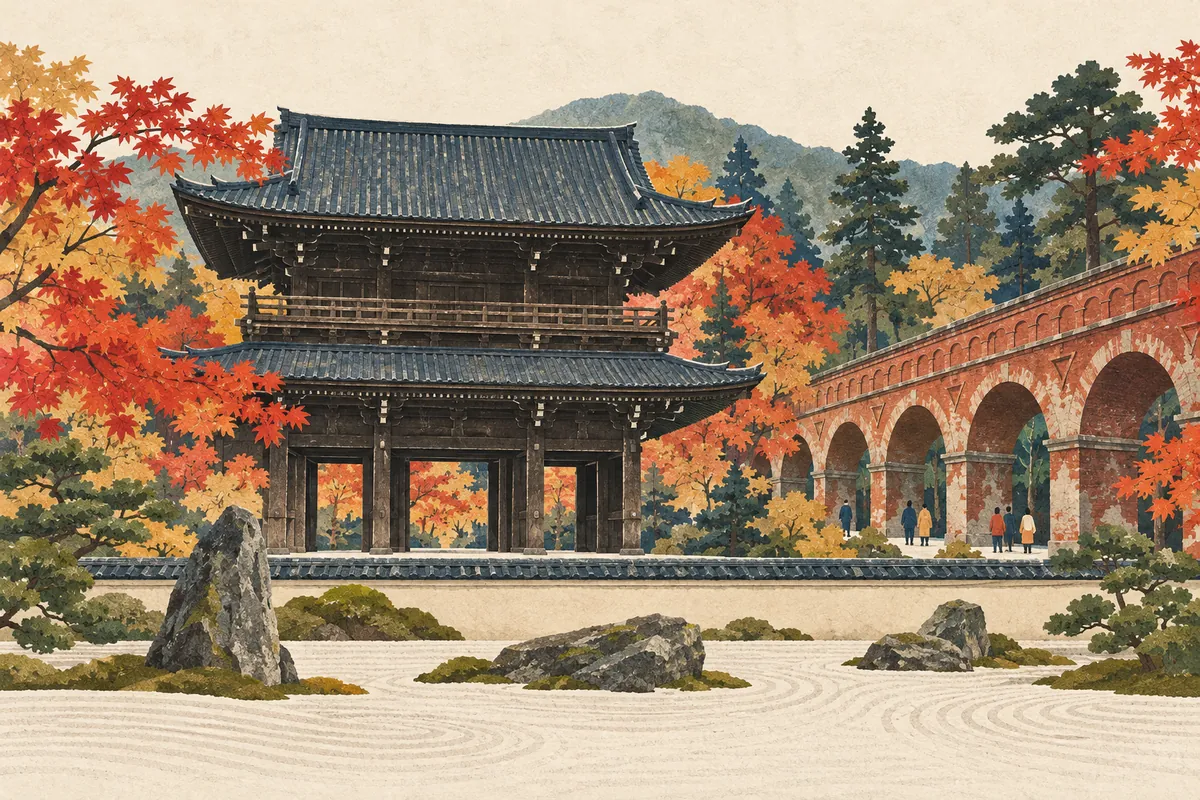
Key points
The National Treasure Hōjō consists of the Ōhōjō and Kohōjō, moved from the palace; whether the original hall was the Seiryōden or a nyoin gosho is debated
Tōdō Takatora rebuilt the Sanmon for his retainers killed in the Summer Siege of Osaka, and it is the gate where kabuki's Goemon cries "Zekkei kana!"
The Suirokaku is a brick arch bridge from 1888 (Meiji 21) and became a National Treasure in 2025
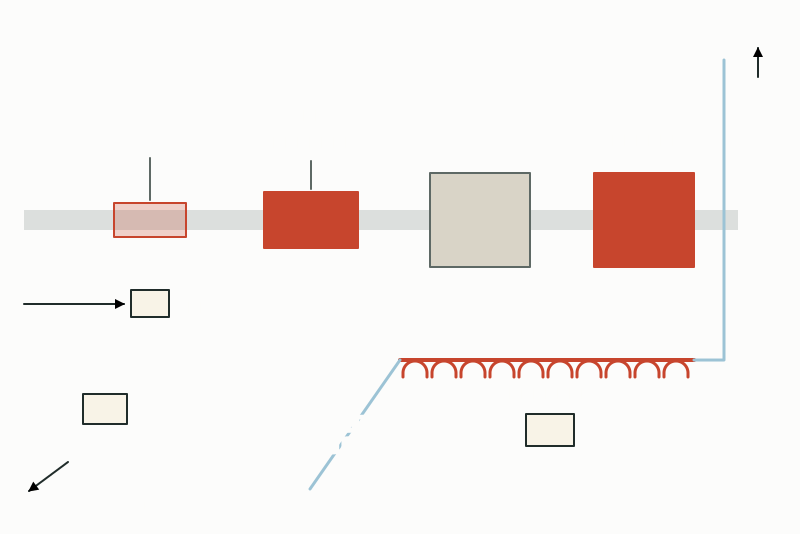
The halls line up east–west from the Chokushimon to the Hōjō, with the Suirokaku crossing to their south
Founded by Kameyama, ranked "above the Five Mountains"
The site of Nanzen-ji was once a detached palace built by the Retired Emperor Kameyama in the Kōan era (1278–1288). He took Buddhist vows here in 1289 (Shōō 2), becoming a cloistered emperor (hōō), and in 1291 (Shōō 4) he invited Mukan Fumon (Daimin Kokushi) as founding abbot and converted the palace into a Zen temple. The second abbot, Kian Soen, put the temple buildings in order over about 15 years.
In the Muromachi period, Nanzen-ji was ranked "Gozan no Ue" (Above the Five Mountains), a position even higher than the Five Mountains (Gozan) Zen temples. It lost its halls to fighting in 1467 (Ōnin 1), but at the beginning of the Edo period Ishin Sūden worked hard to restore it.
Buildings in a straight line
The main buildings stand in a straight east–west line: from the Chokushimon (Imperial Messenger Gate) in the west to the Sanmon, the Hattō (Dharma Hall), and the Hōjō. The Chokushimon (Important Cultural Property) is the "Hi no Gomon" gate of the Imperial Palace, built in the Keichō era (1596–1614), granted to the temple by Emperor Meishō in 1641 (Kan'ei 18) and moved here; today it is opened only for the shinzan ceremony, when a new head priest takes office. The Chūmon (Middle Gate) stands to its south. The Hattō burned in a fire in 1895 (Meiji 28), and the present building was rebuilt in 1909 (Meiji 42).
South of the Hattō and the Hōjō, a branch of the Lake Biwa Canal crosses the grounds from east to west on the brick Suirokaku, then heads north along the east side of the Hōjō.
Layout of the Buildings of Nanzen-ji (Schematic Diagram)
The Sanmon and "Zekkei kana"
The present Sanmon was rebuilt and donated in 1628 (Kan'ei 5) by Tōdō Takatora to pray for the repose of his retainers who fell in the Summer Siege of Osaka.
The gate is about 22 m tall, and its upper story is called the "Gohōrō" (Five Phoenix Tower). In the inner sanctum of the upper story are enshrined a seated Hōkan Shaka (crowned Shakyamuni) and the Sixteen Arhats, and the paintings of phoenixes and celestial beings on the ceiling are attributed to Kanō Tan'yū and Tosa Tokuetsu.
The Sanmon is also known as the stage of the kabuki play "Sanmon Gosan no Kiri," in the scene where the outlaw Ishikawa Goemon strikes a pose (mie) on the upper story and exclaims "Zekkei kana!" ("What a magnificent view!").
The Ōhōjō and the Kohōjō
The Hōjō (National Treasure) consists of the Ōhōjō and the Kohōjō, which is connected behind it; the building itself dates from the Tenshō era (1573–1591) of the Momoyama period. The Ōhōjō is a former palace building granted to the temple and moved here when the Imperial Palace was rebuilt in 1610 (Keichō 15), and there are two theories about the original building: that it was the Seiryōden or that it was the residence of an empress dowager (nyoin gosho). One theory holds that the Kohōjō was added around the Kan'ei era (1624–1644).
Because the Kanō school wall and sliding-door paintings (Important Cultural Properties) in the rooms of the Ōhōjō were deteriorating, 84 of the 124 panels were moved to a storehouse in December 2011 (Heisei 23), and reproductions are now in place. The Kohōjō has the 40 panels of "Gunko-zu" (Tigers) (Important Cultural Property), attributed to Kanō Tan'yū, and is called the "Tora no Ma" (Tiger Room).
The garden in front of the Ōhōjō is an early Edo-period dry landscape garden (karesansui) attributed to Kobori Enshū. It is popularly called "Tora no Ko Watashi" ("Tiger Cubs Crossing") and became a Place of Scenic Beauty on June 9, 1951 (Shōwa 26). The garden of Konchi-in, a sub-temple (tatchū), is a Special Place of Scenic Beauty.
The Suirokaku and Nanzen-in
The Suirokaku is a brick bridge of 14 arches (93.2 m long) from 1888 (Meiji 21) that carries a branch of the Lake Biwa Canal; it was designed by Tanabe Sakurō with care for the scenery of the grounds. It is designated a National Treasure as part of the Lake Biwa Canal facilities.
Nanzen-in, south of the Suirokaku, is the site of Cloistered Emperor Kameyama's detached palace and is regarded as the birthplace of Nanzen-ji. Its late Kamakura-period stroll garden with a pond was designated a Historic Site and Place of Scenic Beauty on March 7, 1923 (Taishō 12), and the mausoleum of Cloistered Emperor Kameyama stands in the southeast corner of the garden.
National Treasure and Important Cultural Property buildings of Nanzen-ji
| Building | Designation and date | Construction |
|---|---|---|
| Hōjō (Ōhōjō and Kohōjō) | National Treasure (November 14, 1953). Important Cultural Property on July 31, 1902 | Irimoya roof with shingle roofing (kokerabuki) |
| Sanmon | Important Cultural Property (April 5, 1899) | Two-story double-roofed gate, five bays with three entrances, irimoya roof with full tile roofing, with stair halls (sanrō) on both sides |
| Chokushimon | Important Cultural Property (June 28, 1956) | Four-legged gate (shikyakumon), gabled (kirizuma) roof with cypress-bark roofing (hiwadabuki) |
| Lake Biwa Canal Facilities: Nanzen-ji Suirokaku | National Treasure (August 27, 2025; also designated an Important Cultural Property on the same day) | Owned by Kyoto City |
Getting there from Keage Station, and admission
Nanzen-ji is in Nanzenji Fukuchi-chō, Sakyō Ward. It is a 10-minute walk from Keage Station on the Tōzai subway line (the route through the tunnel known as the "Nejiri-manpo" is a shortcut), or a 10-minute walk from the "Higashi Tennōchō" or "Nanzenji-Eikandō-michi" city bus stops. Viewing hours are 8:40–17:00 (until 16:30 from December to February; reception closes 20 minutes before closing), and general visits are not accepted from December 28 to 31 (as of October 2026).
Admission is charged for the Hōjō Garden, the Sanmon, and Nanzen-in. At the Sanmon you can climb to the upper story and look out over the city of Kyoto. Visitors who show a disability certificate are admitted free, together with one companion. The Suirokaku is outdoors and can be seen as you walk through the grounds. Eating and drinking, sports, and games are prohibited in the grounds.
Nanzen-in is closed to visitors until spring 2027 (Reiwa 9) for construction work, but it opens for a limited period in November 2026. Because the autumn foliage season is crowded, there is also a special early-morning visit from 7:30 (advance application required), on Saturdays, Sundays, and holidays in November (8 days).
- Free: walking around outdoor areas such as the Suirokaku
- Hōjō Garden and Sanmon: each 600 yen for adults, 500 yen for high school students, and 400 yen for elementary and junior high school students
- Nanzen-in (in 2026, only November 1–30): 500 yen for adults, 450 yen for high school students, and 350 yen for elementary and junior high school students
- Special opening of the inside of the Hattō (November 16–29, 2026, except the 26th): 500 yen for high school students and older; free for elementary and junior high school students
- Special early-morning visit (November 2026): 3,000 yen. A monk guides you through the Ohiru no Ma room of the Hōjō and the inner sanctum on the upper story of the Sanmon
Mini quiz for this entry
The Sanmon gate of Nanzen-ji is known as the stage of the scene in which Ishikawa Goemon strikes a pose on the upper story and exclaims "Zekkei kana!" ("What a magnificent view!"). In which work does this scene appear?
In 1291 (Shōō 4), who converted his own detached palace into a Zen temple and founded Nanzen-ji?
The main buildings of Nanzen-ji stand in a straight east–west line. Which shows them in the correct order from the west?
Sources and verification
Content checked: October 22, 2026
Updated: October 22, 2026
References are in Japanese.
- 南禅寺「南禅寺の歴史」
- 南禅寺「三門(重要文化財)」
- 南禅寺「方丈(国宝)」
- 南禅寺「方丈庭園」
- 南禅寺「勅使門(重要文化財)と中門」
- 南禅寺「法堂」
- 南禅寺「南禅院」
- 南禅寺「拝観のご案内」
- 南禅寺「アクセス」
- 南禅寺「南禅院 拝観についてのお知らせ」
- 南禅寺「【南禅院庭園・法堂内陣】令和8年 秋の特別拝観のご案内」
- 南禅寺「秋の南禅寺 早朝拝観のご案内」
- 南禅寺「南禅寺の境内についてお願いとご注意」
- 文化庁「国指定文化財等データベース 南禅寺方丈」
- 文化庁「国指定文化財等データベース 南禅寺三門」
- 文化庁「国指定文化財等データベース 南禅寺勅使門」
- 文化庁「国指定文化財等データベース 琵琶湖疏水施設 南禅寺水路閣」
- 文化庁「国指定文化財等データベース 南禅寺方丈庭園」
- 文化庁「国指定文化財等データベース 南禅院庭園」
- 文化庁「国指定文化財等データベース 金地院庭園」
- 文化庁「国指定文化財等データベース 金地院本堂」
- 文化庁「国指定文化財等データベース 金地院茶室」
- 文化庁「国指定文化財等データベース 東照宮(金地院)」
- 京都市観光協会 京都観光Navi「南禅寺」
- 臨黄合議所 臨黄ネット「南禅寺」