
The Gardens of Ogawa Jihei VII
Other spellings and namesUeji (植治) / Ueji gardens
Key points
Ogawa Jihei VII lived from 1860 (Man'en 1) to 1933 (Shōwa 8). His trade name was "Ueji," and he was born in Kōtari Village, Otokuni District (today's Nagaokakyō City)
Murin-an is now owned by Kyoto City
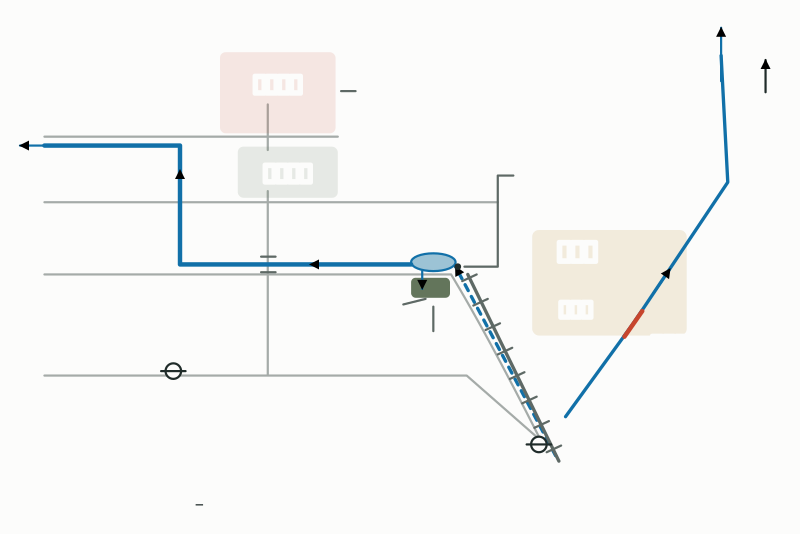
Murin-an and the villa gardens around Nanzen-ji draw their water from the Lake Biwa Canal
Murin-an's admission varies from 600 to 1,500 yen by day, and on crowded days visitors without a booking may be turned away
Garden maker Ogawa Jihei VII (Ueji)
Ogawa Jihei was a garden maker born in Kōtari Village, Otokuni District, Kyoto Prefecture (today's Nagaokakyō City). In 1877 (Meiji 10), he was adopted into the family of Jihei, a gardener's business dating back to the mid-Edo period, and became the seventh head. His trade name was "Ueji." He taught himself garden making and gained new ideas about gardens through meeting Yamagata Aritomo and other prominent figures of the Meiji era.
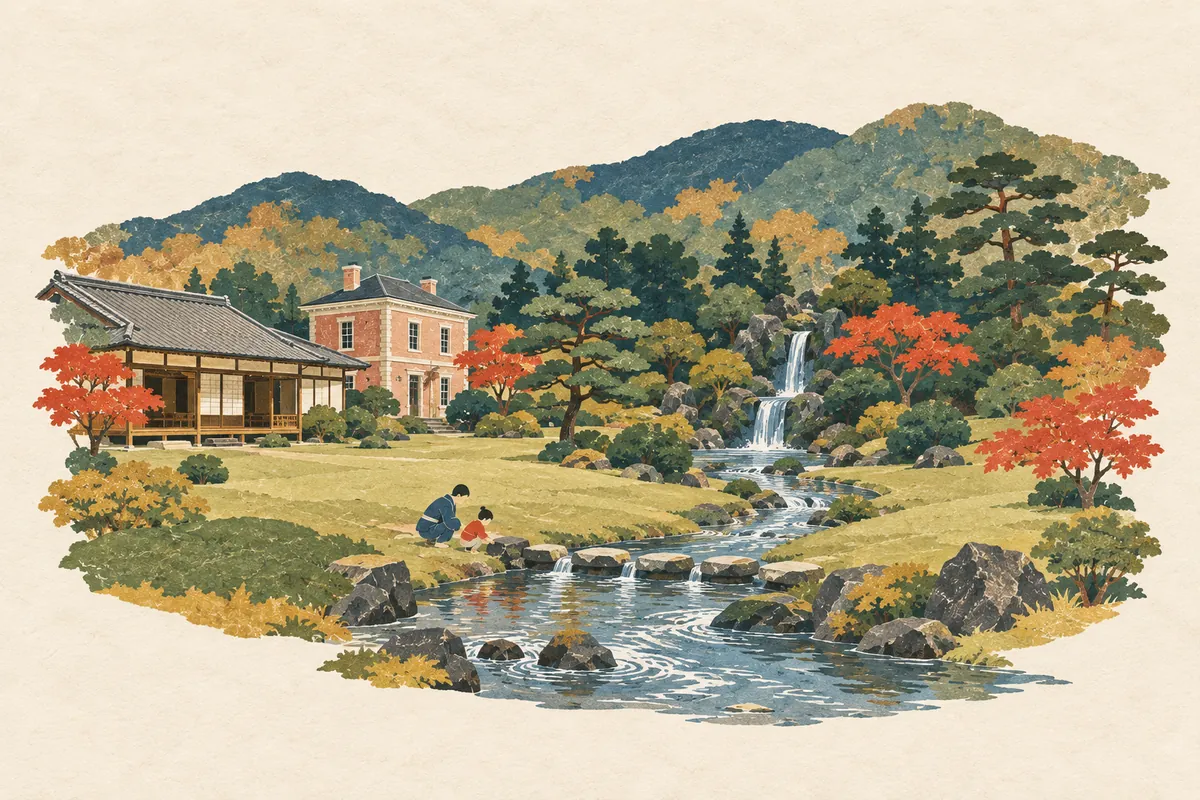
Ueji's gardens are distinctive in that, while building on the history and culture Kyoto had nurtured over a long time, he brought in water from the modern Lake Biwa Canal and made gardens to be experienced with all five senses. At Murin-an, together with his client Yamagata, he replaced the "pond" and "moss" that had been the standard elements of Japanese gardens with a "stream" and "lawn."
Murin-an
Murin-an, in Nanzenji Kusakawa-chō, Sakyō Ward, is the villa of Yamagata Aritomo, a politician of the Meiji and Taishō periods. It was built around 1894–95 (Meiji 27–28), and the garden, main house, Western-style building, and tea house stand on a site of about 1,000 tsubo. Ueji made the garden based on Yamagata's instructions: he borrowed the Higashiyama hills in front as the "main mountain," set a three-tiered waterfall at the far east end to feed a mountain stream, and created a bright garden scene with a shallow, richly rippling stream and lawns along the water. It is a new, naturalistic garden unlike earlier gardens, which treated a pond as the sea and rocks as islands.
The water for the stream is drawn directly from the Lake Biwa Canal and raised to the top of the waterfall using the siphon principle.
The second floor of the Western-style building is the room of the "Murin-an Conference," where on April 21, 1903 (Meiji 36), Yamagata Aritomo, Itō Hirobumi, Katsura Tarō, and Komura Jutarō discussed Japan's diplomatic policy toward Russia before the outbreak of the Russo-Japanese War, and it is preserved as it was then. The name is written in three ways: 無鄰菴 on the framed plaque of the main house, 無鄰庵 in the Official Gazette announcing the Place of Scenic Beauty designation, and 無隣庵 in standard characters; all are read "Murin-an." It is now owned by Kyoto City.
The villas around Nanzen-ji
When four-fifths of Nanzen-ji's grounds became state land under Meiji government policy, a plan was drawn up to build an industrial district using the canal's water power. However, once hydroelectric power made it possible to send electricity to distant places, the policy changed to preserving the landscape of this area and making it a villa district. The first villa was Murin-an, and from the Meiji 30s (around 1897) onward, many residences and villas with Ueji gardens were built on the former Nanzen-ji land that had been sold off. These developments were produced by Tsukamoto Yosaji and Ueji.
The gardens take water from the canal, and after it has been used a second and third time as it circulates through the garden ponds, it returns to the canal or to the Shirakawa River. The Tairyū Sansō garden, just west of Konchi-in, a subtemple of Nanzen-ji, is thought to have taken its present form between 1902 and 1906 (Meiji 35–39); its maker is probably Ueji, and both of its water sources, north and south, are branches of the canal (designated a Place of Scenic Beauty in 1988, Shōwa 63). These villa gardens are also included, as part of the landscape nurtured by the canal, in the Important Cultural Landscape "Cultural Landscape of Kyoto Okazaki," selected in 2015 (Heisei 27). Few of the villa gardens around Nanzen-ji are open to the public year-round, and Murin-an is one of them.
Ueji's Gardens Around Nanzen-ji and Okazaki, and the Lake Biwa Canal (Schematic Map)
The Heian Shrine garden, Maruyama Park, and Ninna-ji
The Heian Shrine garden, a pond-centered stroll garden with a total area of about 33,000 m² (about 10,000 tsubo), was laid out along with the founding of Heian Shrine in 1895 (Meiji 28). Its main parts made by Ueji are the Middle Garden, centered on Sōryū Pond east of the main sanctuary, and the West Garden, centered on Byakko Pond to the west; the South Garden and the East Garden were remodeled in later years based on Ueji's concept.
Maruyama Park in Higashiyama Ward, which became a park in 1886 (Meiji 19), is the oldest park in Kyoto City. By the end of the Meiji period it had been expanded, and a ravine making use of the natural hills, ponds in the low ground, and a fountain were laid out; it was Ueji who directed this work. Until the Shōwa 50s (around 1975–84), the streams in the park used canal water sent through a pipe from Keage.
In central Kyoto, the courtyard of the Former Main Building of the Kyoto Prefectural Office is attributed to Ueji, and at Ninna-ji in Ukyō Ward, Ueji was contracted to lay out the main parts of the Gosho garden, which was developed from the end of the Meiji period to the early Shōwa period.
Main gardens of Ogawa Jihei VII
| Name | Location | Type of cultural property | Open to the public |
|---|---|---|---|
| Murin-an Garden (designated name: 無鄰庵庭園) | Nanzenji Kusakawa-chō, Sakyō Ward | Place of Scenic Beauty (1951) | Open |
| Heian Shrine garden | Okazaki, Sakyō Ward | Place of Scenic Beauty (1975) | Open |
| Maruyama Park | Maruyama-chō, Gion-machi, and Washio-chō, Higashiyama Ward | Place of Scenic Beauty (1931) | Kyoto City park |
| Ninna-ji Gosho Garden | Ukyō Ward (palace buildings of Ninna-ji) | Place of Scenic Beauty (2021) | Open (800 yen for adults, free for high school students and younger) |
| Courtyard of the Former Main Building of the Kyoto Prefectural Office | Kamigyō Ward | The former main building is an Important Cultural Property | Open free of charge (Tuesday to Friday and the 1st, 3rd, and 5th Saturdays) |
Reservations at Murin-an and free days at the Heian Shrine garden
Murin-an (31 Nanzenji Kusakawa-chō, Sakyō Ward) is about a 7-minute walk from Keage Station on the Tōzai subway line, and about a 10-minute walk from the "Jingū-michi" or "Okazaki Kōen Bijutsukan/Heian Jingū-mae" city bus stops. It is open 9:00 to 18:00 from April to September and 9:00 to 17:00 from October to March, and closed December 29–31 (as of October 2026). Admission is normally 600 yen, and 1,000 yen or 1,500 yen on busy days (in autumn 2026, 1,500 yen from October 31 to December 6). Elementary and junior high school students who live in Kyoto City or attend school in the city, and children below elementary school age, enter free. There is a limit on the number of visitors per hour, and when it is crowded people without reservations may not be able to enter, so a timed reservation is the surest way.
The Heian Shrine garden is a paid garden: 600 yen for adults and 300 yen for children. It opens at 8:30 and closes between 17:00 and 18:00 depending on the season (on October 22, the day of the Jidai Festival, admission is from 9:30 to 11:30). It is open free of charge twice a year, in early June and on September 19. From Murin-an to Heian Shrine is less than 1 km along Niōmon-dōri, beside the canal, and Jingū-michi.
Mini quiz for this entry
Murin-an, a Place of Scenic Beauty near Nanzen-ji, was built as a villa for a certain politician in the Meiji period. Who was that politician?
Which is the oldest park in Kyoto City, made a park in 1886 (Meiji 19), where a ravine, ponds, and a fountain were laid out by the end of the Meiji period under the direction of Ogawa Jihei?
"Murin-an" (むりんあん) can be written in several ways. When it was designated a national Place of Scenic Beauty in 1951 (Shōwa 26), which spelling appeared in the Official Gazette?
Sources and verification
Content checked: October 22, 2026
Updated: October 22, 2026
References are in Japanese.
- 無鄰菴「近代日本庭園の傑作 無鄰菴とは」
- 無鄰菴「有朋・治兵衛について」
- 無鄰菴「庭について」
- 無鄰菴「洋館について」
- 無鄰菴「無鄰菴の表記について」
- 無鄰菴「時間・料金・アクセス」
- 文化庁「国指定文化財等データベース 無鄰庵庭園」
- 文化庁「国指定文化財等データベース 平安神宮神苑」
- 文化庁「国指定文化財等データベース 円山公園」
- 文化庁「国指定文化財等データベース 對龍山荘庭園」
- 文化庁「国指定文化財等データベース 仁和寺御所庭園」
- 文化庁「国指定文化財等データベース 京都岡崎の文化的景観」
- 京都市文化財保護課「京都岡崎の文化的景観」(重要文化的景観選定記念パンフレット)
- 平安神宮「平安神宮神苑」
- 京都市「東山区・区民の誇りの木 エリアA(区民の誇りの木 東山区4 円山公園)」
- 京都市上京区「滋野学区まち歩きマップ 古代より連なる政庁街の系譜、滋野を往く」
- 京都府「旧本館の公開について」
- 仁和寺「拝観・交通案内」