
Sabazushi
Other spellings and namesさば寿司 / 鯖ずし / Saba-zushi (mackerel sushi)
Key points
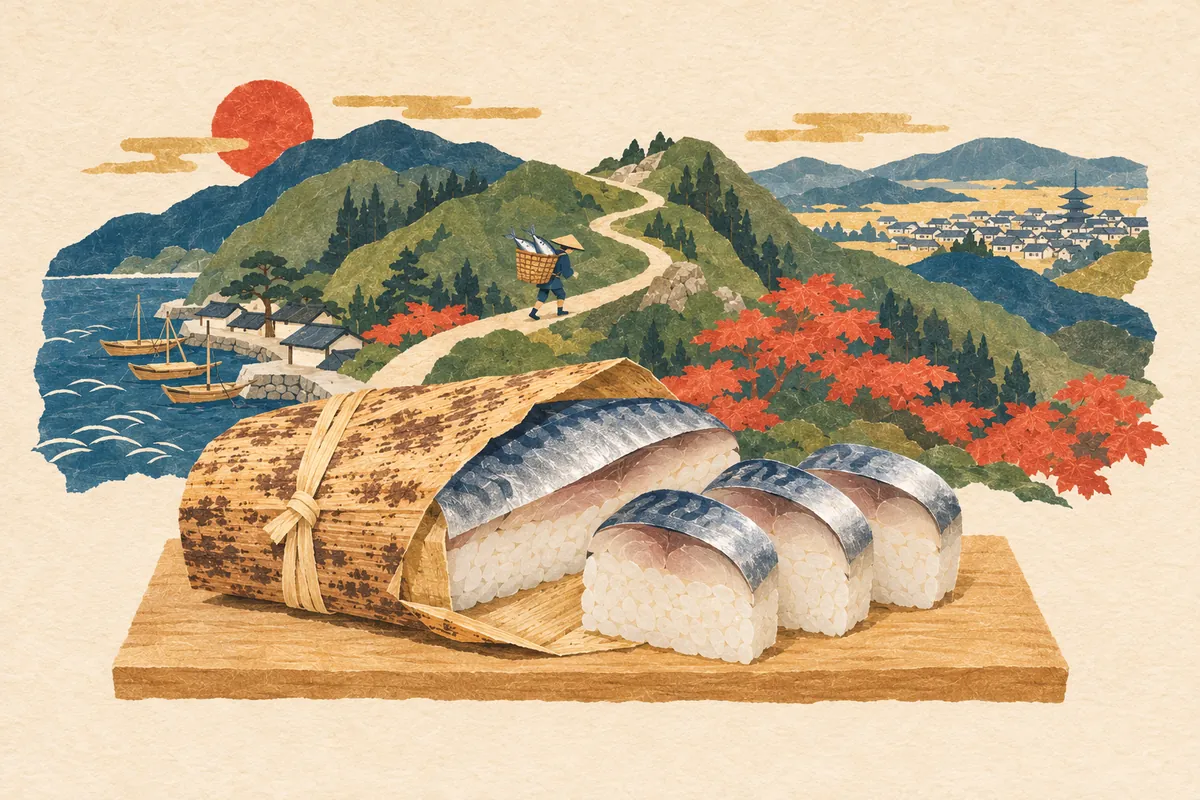
Salted mackerel is cured in vinegar, laid on a bar of sushi rice, and shaped with a makisu (bamboo mat)
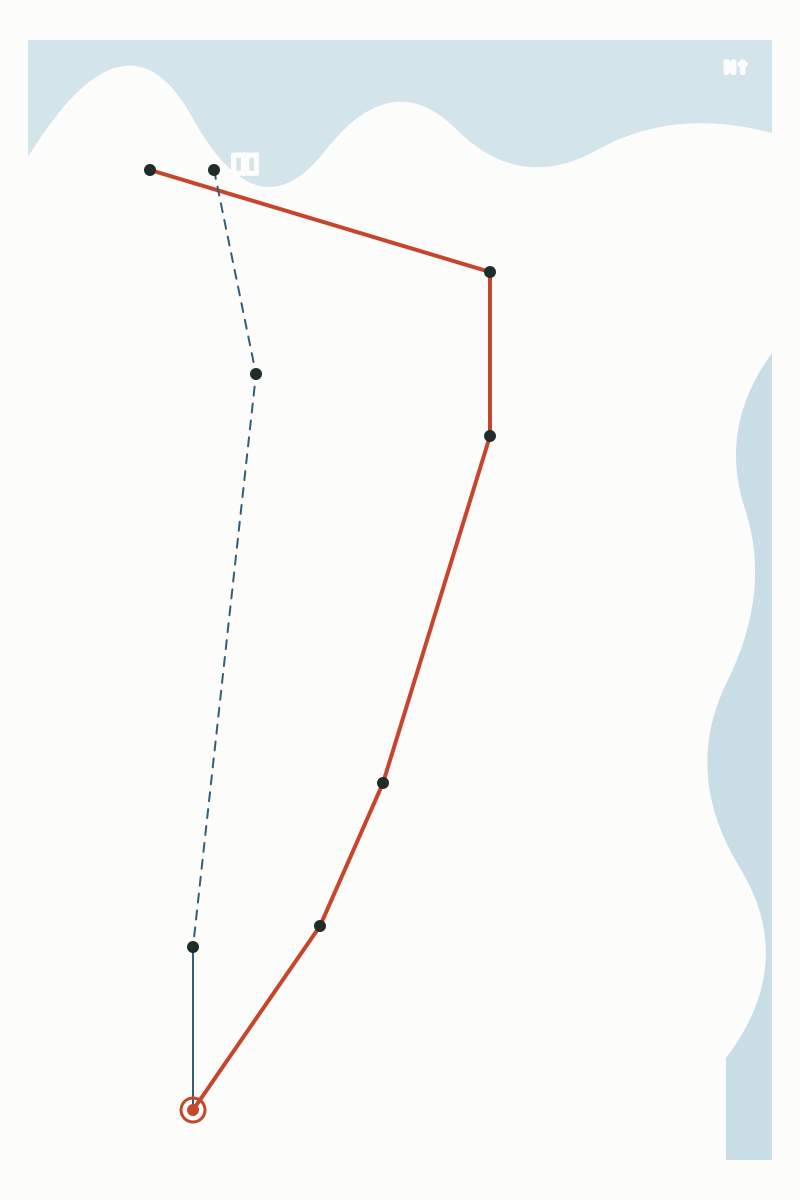
The Wakasa Kaidō runs about 70 km from Obama via Kumagawa, Kutsuki, and Ōhara to Demachi
The Saba Kaidō story of Obama City and Wakasa Town was recognized as Japan Heritage in 2015 (Heisei 27)
It is customary to eat it at Kyoto's three great festivals and at autumn festivals across the prefecture
Bar sushi of salted mackerel cured in vinegar
Sabazushi is sushi made with salt-cured mackerel. The dark flesh is removed from salted mackerel that has been filleted into three pieces, and after a quick rinse in vinegared water it is cured for about 30 minutes in enough vinegar to cover the flesh. Sushi rice shaped into a bar is placed on the flesh side of the mackerel, firmly shaped with a makisu (bamboo rolling mat), wrapped in bamboo sheath, and left under a light weight. It is sliced the next day, once the flavors have settled in.
It can be eaten as it is or with soy sauce. Some recipes put gari (sweet-vinegared ginger) between the mackerel and the rice. Because it is made in a long, thin bar, Kyoto's sabazushi is known as bō-zushi (bar sushi).
Salted mackerel carried from Wakasa to Kyoto
Mackerel was caught in abundance in Wakasa Bay. In the days before refrigeration, mackerel, which spoils easily, was often carried as salted mackerel, with the head and innards removed and salt sprinkled on, and so the roads that carried seafood from Wakasa to Kyoto are called the Saba Kaidō (Mackerel Road). The Saba Kaidō is not a single road but a group of highways that came to be called by this name only in recent times.
The route that carried the most goods was the Wakasa Kaidō, running from Obama through Kumagawa, Kutsuki (朽木), the Hanaore Pass (花折峠), and Ōhara to Demachi. It is said that salted mackerel carried on foot over the roughly 70 km (18 ri) in a day and a night had firmed up by the time it reached Kyoto and was just right in saltiness (some accounts say the journey took two to three days).
The Harihata-goe was used as the shortest route, though it is a steep mountain path: it leads from the village of Onyū (遠敷), where the provincial government of Wakasa stood, over the Harihata Pass and through Kutsuki toward Kurama. The people of Wakasa are said to have crossed the pass carrying lightly salted mackerel on their backs, saying "Kyō wa tōte mo jūhachi ri" ("Kyoto may be far, but it's only 18 ri"), and this road is also said to be the oldest Saba Kaidō.
The Wakasa Kaidō and the Harihata-goe
The name "Saba Kaidō" and Japan Heritage
The name Saba Kaidō is said to come from a line in the "Ichiba Nakagai Monjo," records of the Obama fish market: "nama saba shio shite ninai Kyō ni iki tsukamatsuru" ("we salt fresh mackerel and carry it on our shoulders to Kyoto"). This fish market was set up in the early Edo period by Kyōgoku Takatsugu, the first lord of the Obama domain, together with the castle town, and throughout the Edo period it kept sending seafood to Kyoto. The starting point of the Saba Kaidō is said to be the Izumi-chō shopping street in Obama City.
In ancient times, Wakasa was one of the miketsukuni, provinces that sent seafood and salt to the capital and supplied the imperial court's table. Obama City and Wakasa Town's Japan Heritage "Wakasa's Cultural Heritage of Comings and Goings Linking the Sea and the Capital" was recognized in 2015 (Heisei 27) as the story of the miketsukuni Wakasa and the Saba Kaidō. Post towns such as Kumagawa-juku survive along the road, and events that came from Kyoto, such as the Gion Matsuri, Jizō-bon, and Rokusai Nenbutsu, are still carried on there.
Demachi, the end point
Demachi is the Kyoto-side entrance of the Wakasa Kaidō. In the days when few bridges crossed the Kamo River, Demachi Bridge was the way into the capital from the north. Demachi is regarded as the end point of the Saba Kaidō, and a stone monument reading "Saba Kaidō-guchi" stands near Demachi Bridge. Sabazushi, a dish for celebrations, is one of Demachi's specialties. The origins of the place name and station name Demachi, and Ōhara-guchi, one of the Kyō no Nanakuchi (Seven Entrances to Kyoto), are covered in separate entries.
A feast for festivals and special days
Sabazushi is said to have originated in the Edo period, and it became a way for ordinary people to enjoy precious blue-backed fish (aozakana). Dishes using salted mackerel were often made on hare no hi, such as festivals and days when relatives gathered, and this is still often the case. There is a custom of eating sabazushi at Kyoto's three great festivals, the Aoi Matsuri, the Gion Matsuri, and the Jidai Matsuri, and at autumn festivals across the prefecture.
When festival season comes, families still make sabazushi at home and treat guests to their own household's version. Many restaurants make and sell their own sabazushi, and it can also be bought at supermarkets and fishmongers.
Other mackerel dishes in Kyoto Prefecture
Besides sabazushi, other processed foods using mackerel are handed down in Kyoto Prefecture.
- Saba no narezushi: made in parts of the Tango region and the Keihoku area. Rice and salted mackerel are layered between bamboo-grass leaves, weighted with stones, and fermented for about a week to 10 days
- Heshiko: salted mackerel packed in rice bran, powdered chili pepper, and other ingredients and aged for six months to a year. It is very salty and keeps well
- Tango no barazushi: vinegared rice is spread in a wooden box called a matsubuta and scattered with sweet-savory simmered mackerel oboro (flakes) and other toppings. It is not pressed with weights but cut into portions with a spatula
Mini quiz for this entry
Sabazushi is customarily eaten at Kyoto's three great festivals. Besides the Aoi Matsuri and the Gion Matsuri, which is the third?
The name "Saba Kaidō" is said to come from a line in a historical record. Whose record is it?
Sources and verification
Content checked: November 8, 2026
Updated: November 8, 2026
References are in Japanese.