
Kōdai-ji and Entoku-in: Nene's Temple and the Maki-e of the Otamaya
Other spellings and namesKōdai-ji (高台寺) / Entoku-in (圓徳院) / 円徳院 / Otamaya (霊屋, mausoleum hall) / おたまや / Kōdai-ji maki-e / Karakasa-tei / Shigure-tei / Nene-no-michi / Ishibe-kōji
Key points
The Important Cultural Property buildings are 5 items: the Otamaya, the Kaisan-dō, the Front Gate, the Kangetsudai, and the Karakasa-tei and Shigure-tei (as of October 2026)
Kōdai-ji Garden became a Historic Site and Place of Scenic Beauty in 1927, and Entoku-in's north garden (Former Entoku-in Garden) a Place of Scenic Beauty in 1975
Admission is 800 yen for adults and 400 yen for junior high and high school students at Kōdai-ji, and 500 yen for adults and 200 yen for junior high and high school students at Entoku-in. Free for elementary school age and under with a guardian
Kōdai-ji's autumn special night viewing in 2026 runs from October 23 to December 13
A temple founded by Nene: Ieyasu's support and the name "Kōdai-ji"
After Hideyoshi's death, Kita no Mandokoro received the title Kōdai-in from Emperor Go-Yōzei in 1603 (Keichō 8), and this is said to have led her to seek to build a temple. In 1606 (Keichō 11) she founded a temple to pray for Hideyoshi's soul at the foot of Ryōzen in Higashiyama, and Tokugawa Ieyasu is said to have provided much of the money for its construction. In the seventh month of 1624 (Kan'ei 1), Sankō Jōeki (三江紹益) of Kennin-ji was invited as founding abbot and the temple was named Kōdai-ji; Kita no Mandokoro died on the sixth day of the ninth month of the same year.
The temple suffered several fires, and today the Front Gate, the Kaisan-dō (Founder's Hall), the Otamaya, the Karakasa-tei, the Shigure-tei, the Kangetsudai, and other structures remain. The Otamaya and the Kaisan-dō are dated to 1605 (Keichō 10), the year before the temple is said to have been founded. The temple also has a bonshō (temple bell, Important Cultural Property) from 1606 (Keichō 11).
The Otamaya and "Kōdai-ji maki-e"
The Otamaya is a hall with a pyramidal (hōgyō) roof covered in cypress bark, standing partway up the slope east of the Kaisan-dō at the top of the Garyōrō, a covered corridor over Garyō-chi Pond; it became an Important Cultural Property in 1900 (Meiji 33). The inner sanctum enshrines seated statues of Hideyoshi and Kita no Mandokoro, and beneath her statue is her grave.
The brilliant maki-e (gold and silver lacquer) adorning the couple's shrine cabinets (zushi) and the altar platform (shumidan) is called "Kōdai-ji maki-e" and is regarded as a leading example of Momoyama-period art. They are said to be the work of the school of Kōami Chōan (幸阿弥長安), a maki-e artist who served Hideyoshi, and the paintings inside are said to be by Kanō Mitsunobu and his school. The temple also has Momoyama-period "Maki-e furnishings" (Important Cultural Property).
The Kaisan-dō, Kangetsudai, Karakasa-tei, Shigure-tei, and the garden
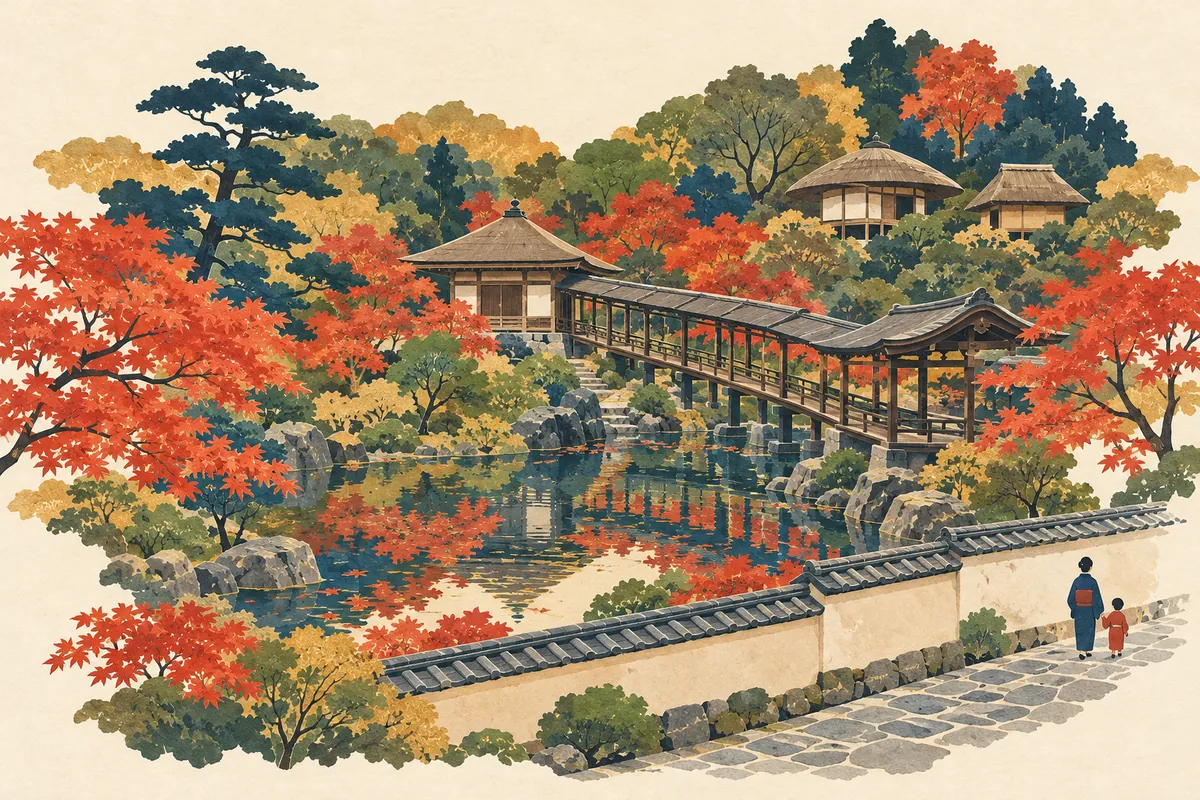
The Kaisan-dō was originally a hall for a personal Buddha image, and became the founder's hall after the founding abbot Sankō Jōeki was buried there. Its ceiling is said to use parts of Hideyoshi's boat and Kita no Mandokoro's ox carriage. On either side of the Kaisan-dō lie Engetsu-chi Pond (偃月池) and Garyō-chi Pond (臥龍池), and on Engetsu-chi stands the Kangetsudai (moon-viewing platform), said to have been a favorite of Hideyoshi. This pond garden, said to be the work of Kobori Enshū, was designated a Historic Site and Place of Scenic Beauty as the "Kōdai-ji Garden" in 1927 (Shōwa 2).
At the highest point of the grounds stand two tea houses said to have been moved from Fushimi Castle, the Karakasa-tei (傘亭) and the Shigure-tei (時雨亭), linked by a corridor with an earthen floor. The Karakasa-tei has no ceiling boards, and its name comes from the way the roof framework of bamboo and logs looks like an open paper umbrella (karakasa); it is also called Ankan-kutsu (安閑窟). The tea room of the Shigure-tei is on the second floor. The Karakasa-tei is dated to the Momoyama period and the Shigure-tei to the early Edo period (some explanations date the Shigure-tei to the Momoyama period as well).
National designated cultural properties of Kōdai-ji and Entoku-in (main items)
| Name | Date | Type of cultural property |
|---|---|---|
| Kōdai-ji Otamaya | 1605 (Keichō 10) | Important Cultural Property (1900) |
| Kōdai-ji Kaisan-dō | 1605 (Keichō 10) | Important Cultural Property (1900) |
| Kōdai-ji Front Gate | Momoyama period | Important Cultural Property (1907) |
| Kōdai-ji Kangetsudai | Momoyama period | Important Cultural Property (1953) |
| Kōdai-ji Karakasa-tei (Ankan-kutsu) and Shigure-tei | Karakasa-tei Momoyama period, Shigure-tei early Edo period | Important Cultural Property (1936) |
| Bonshō (Kōdai-ji) | 1606 (Keichō 11) | Important Cultural Property (1978) |
| Maki-e furnishings (Kōdai-ji) | Momoyama period | Important Cultural Property (1907) |
| Kōdai-ji Garden | Said to have been made when the temple was founded in 1605 (Keichō 10) | Historic Site and Place of Scenic Beauty (1927) |
| Former Entoku-in Garden (Entoku-in north garden) | Said to have been moved from Fushimi Castle in the Keichō era | Place of Scenic Beauty (1975) |
| Landscapes, ink on paper (attributed to Hasegawa Tōhaku; mounted on the sliding doors of the Ōhōjō), 32 panels (Entoku-in) | Momoyama period | Important Cultural Property (1958) |
Entoku-in: the subtemple where Nene spent her last years
Entoku-in is a subtemple of Kōdai-ji. In 1605 (Keichō 10), Kita no Mandokoro is said to have moved the Keshō Goten (her private residence) of Fushimi Castle and its front garden to this site and lived here for the 19 years until her death. In 1632 (Kan'ei 9), Toshifusa, the second son of her elder brother Kinoshita Iesada, founded Entoku-in as the family temple of the Kinoshita family.
The north garden is the front garden of the Keshō Goten, moved here: two islands are set in a dry pond and linked by three stone bridges, and a dry waterfall is arranged on the artificial hill to the east. Because its bold stone arrangements show the features of a Momoyama-period shoin garden, it became a Place of Scenic Beauty in 1975 (Shōwa 50) under the name "Former Entoku-in Garden." It is said to have been made by Kentei (賢庭) and later reworked by Kobori Enshū.
Nene-no-michi, Ishibe-kōji, and special night viewings
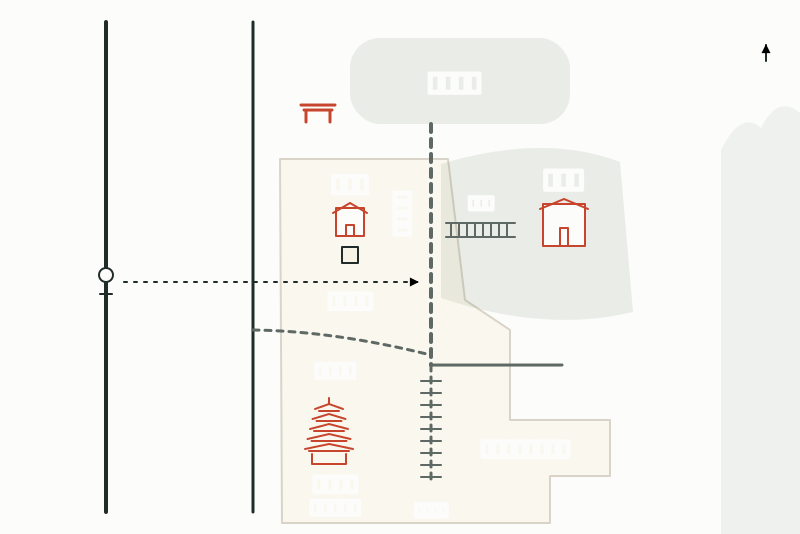
The stone-paved road running north–south, centered on the front of Kōdai-ji, is called "Nene-no-michi" (Nene's Road) after Nene. It runs about 460 m from the south of Maruyama Park to the approach to Ryōzen Kannon; it was improved in 1998 (Heisei 10) by burying the power lines, and to the south it continues to Ninenzaka and Sanneizaka. Ishibe-kōji, which links it to Shimokawara-dōri to the west, is a lane developed as a district of rental houses from the end of the Meiji era to the beginning of the Taishō era, lined with stone paving and stone walls. The route from Kōdai-ji's Front Gate to Maruyama Park and Ishibe-kōji are within the "Sanneizaka District," an Important Preservation District for Groups of Traditional Buildings.
Kōdai-ji holds special night viewings in spring, summer, and autumn, and the dates change each year. In 2026, the spring period was March 13 – May 6 (Entoku-in was also illuminated during the same period), in summer there were night viewings from July 11 to August 23 to coincide with "Higashiyama Kangetsu-ji" (at a special fee: 1,500 yen for general admission, free for elementary school age and under), and the autumn special night viewing runs from October 23 to December 13. In autumn the lights come on at 17:00, last entry is at 21:30, and the fee is the same as in the daytime.
Roads and Temples Around Kōdai-ji (Schematic)
Where can you see it now? / Getting there
Kōdai-ji is at 526 Kōdaiji Shimokawara-chō, Higashiyama Ward, and Entoku-in at 530 Shimokawara-chō, a 7-minute walk east from the "Higashiyama Yasui" city bus stop. The Otamaya, Kaisan-dō, Karakasa-tei, Shigure-tei, and garden can be seen with Kōdai-ji admission; the bamboo grove is also inside the garden, so admission is required.
- City bus: about 15 minutes on route 206 from Kyoto Station, or route 207 from Keihan Gion-Shijō Station or Hankyū Kyoto-Kawaramachi Station, to "Higashiyama Yasui." Route 100 does not stop at Higashiyama Yasui, so get off at "Kiyomizu-michi"
- Kōdai-ji: 9:00–17:30 (reception closes at 17:00). 800 yen for adults, 400 yen for junior high and high school students. Free for elementary school age and under when accompanied by an adult guardian (at least 1 adult per 5 children)
- Entoku-in: 10:00 until reception closes at 17:00 (gate closes 17:30). 500 yen for adults, 200 yen for junior high and high school students, free for elementary school age and under (1 guardian per 5 elementary school children). Cash only
- Combined discount ticket for Kōdai-ji and Entoku-in: 1,200 yen for adults (no ticket for junior high and high school students)
- Shō Museum (Kōdai-ji Shō Bijutsukan): on the 2nd floor of Kyō Rakuichi "Nene." Until January 27, 2027, it shows the Daizuigu Bosatsu said to have been Hideyoshi's personal Buddha image
Mini quiz for this entry
The tea house "Karakasa-tei" stands at the highest point of Kōdai-ji's grounds. Where does its name come from?
The north garden (a national Place of Scenic Beauty) of Entoku-in, a subtemple of Kōdai-ji, is said to have originally been which garden?
Sources and verification
Content checked: October 28, 2026
Updated: October 28, 2026
References are in Japanese.
- 高台寺「高台寺の歴史」
- 高台寺「拝観」(拝観案内・境内案内・掌美術館)
- 高台寺「訪問」(アクセス)
- 高台寺「催事 秋の夜間特別拝観」(2026年)
- 高台寺「重要なお知らせ」(2026年3月10日、拝観料改定)
- 高台寺掌美術館「展示案内」
- 圓徳院「拝観」
- 圓徳院「圓徳院由来」
- 圓徳院「圓徳院の見どころ:北庭」
- 文化庁「国指定文化財等データベース 高台寺霊屋」
- 文化庁「国指定文化財等データベース 高台寺開山堂」
- 文化庁「国指定文化財等データベース 高台寺表門」
- 文化庁「国指定文化財等データベース 高台寺観月台」
- 文化庁「国指定文化財等データベース 高台寺傘亭(安閑窟)及び時雨亭(傘亭)」
- 文化庁「国指定文化財等データベース 高台寺傘亭(安閑窟)及び時雨亭(時雨亭)」
- 文化庁「国指定文化財等データベース 梵鐘(高台寺)」
- 文化庁「国指定文化財等データベース 蒔絵調度類(高台寺)」
- 文化庁「国指定文化財等データベース 高台寺庭園」
- 文化庁「国指定文化財等データベース 旧円徳院庭園」
- 文化庁「国指定文化財等データベース 紙本墨画山水図〈伝長谷川等伯筆/大方丈襖貼付〉」
- 文化庁「国指定文化財等データベース」(国宝・重要文化財〈美術工芸品〉、所有者「高台寺」で検索)
- 京都市観光協会「京都観光Navi 高台寺」
- 京都市観光協会「京都観光Navi 2026年春の夜間特別拝観【高台寺】」
- 京都市観光協会「京都観光Navi 東山観月路【高台寺】」(2026年)
- 京都市観光協会「京都観光Navi 圓徳院特別展と夜間ライトアップ」(2026年)
- 京都市観光協会「きょうと修学旅行ナビ ねねの道」
- 京都市観光協会「きょうと修学旅行ナビ 石塀小路」
- 京都市「産寧坂伝統的建造物群保存地区保存計画」